

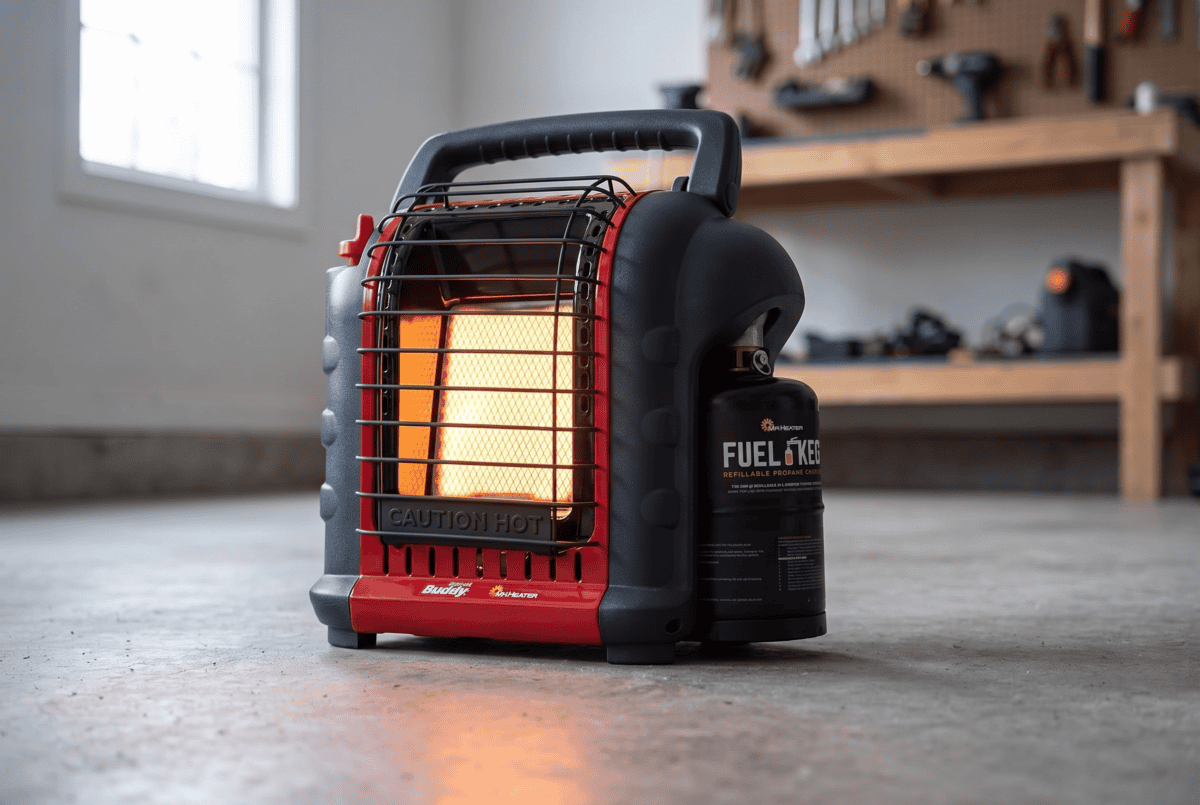
A Mr. Heater Buddy that won’t light or won’t stay lit usually has air in the propane line, a partly depressed pilot knob, or a dirty ODS (oxygen-depletion sensor) pilot assembly — and the fix is to purge the line, hold the control knob down for 30–60 seconds while igniting, and clean the pilot. This guide from heatersforlife.com walks through Buddy-style portable propane heater lighting problems in order, from the fastest fixes to the parts that need cleaning or replacing.
Last Updated: August 2026 | Will Montgomery has an engineering background and has spent years installing, testing, and troubleshooting electric and propane heaters in homes, apartments, and uninsulated garages.
Quick Answer: Why a Buddy Heater Won’t Light or Stay Lit
The most common cause is air trapped in the propane line after a cylinder change, followed by not holding the pilot knob down long enough to heat the thermocouple. Purge the air by holding the knob in the pilot position for 30–60 seconds before igniting, keep holding it 30–60 seconds after the pilot lights, then release. If it still won’t stay lit, suspect a dirty ODS pilot, a low or cold propane cylinder, a spider or dust blockage in the pilot tube, or operation above the heater’s altitude limit.
Buddy Heater Lighting Problems and Fixes
Work down this table in order — the top items solve most no-light complaints.

| Symptom | Likely cause | Fix |
|---|---|---|
| No pilot after a cylinder change | Air in the propane line | Hold knob in pilot 30–60s to purge, then ignite |
| Pilot lights but dies on release | Thermocouple not hot yet | Hold knob down 30–60s after it lights |
| Weak or no spark | Igniter gap or dead piezo | Light manually with a long match; check igniter |
| Pilot won’t stay lit, runs low | Low, cold, or overtightened cylinder | Warm the tank, don’t overtighten, swap cylinder |
| Lights then shuts off after minutes | ODS sensor tripping (low O2 or dust) | Ventilate; clean the pilot assembly |
| Won’t stay lit at elevation | ODS cutting fuel at altitude | Expect this above ~7,000 ft |
Step 1: Purge Air From the Propane Line
After connecting a fresh cylinder, air in the line is the number-one reason a Buddy heater won’t light. Press and turn the control knob to the pilot position and hold it down for a full 30–60 seconds before you hit the igniter. This bleeds trapped air so a steady stream of propane reaches the pilot. If nothing lights on the first try, release, wait a moment, and repeat — it can take two or three purge cycles after a cylinder swap or when connecting a bulk tank through a hose for the first time.
Step 2: Hold the Pilot Knob Long Enough
If the pilot lights but dies the moment you let go of the knob, the thermocouple hasn’t gotten hot enough to hold the gas valve open. The thermocouple is a safety sensor that must sense pilot heat before it lets fuel keep flowing. Light the pilot, then keep the knob pressed down for another 30–60 seconds so the flame heats the sensor tip. Release slowly. If the pilot still goes out, the thermocouple may be misaligned, sooted, or failing — clean it or have it replaced.
Step 3: Check the Igniter (or Light It Manually)
A weak or missing spark points to a piezo igniter gap or a failed igniter, not a fuel problem. Watch the pilot area while you click the igniter — you should see a spark jump to the pilot. If there’s no spark, the electrode may be bent, dirty, or the piezo unit dead. As a test, carefully light the pilot with a long fireplace match while holding the knob in pilot position; if it lights and runs fine that way, the fuel path is good and the igniter is your problem.
Step 4: Rule Out a Low, Cold, or Overtightened Cylinder
A nearly empty, very cold, or overtightened propane cylinder starves the pilot and prevents a stable flame. Propane pressure drops in cold weather, so a tank left outside overnight may not feed the burner until it warms. Overtightening a 1-pound cylinder can crush the connection seal and block flow — snug is enough. Try a known-full cylinder at room temperature. If you run the heater off a bulk tank through a hose, a filter or regulator is required, and a frozen regulator can also cut fuel in cold conditions.
Step 5: Clean or Service the ODS Pilot Assembly
If the heater lights but shuts off after a few minutes, the ODS (oxygen-depletion sensor) is doing its job — it cuts fuel when oxygen drops or when dust and spiderwebs block the pilot. The ODS is a safety feature that protects you from carbon monoxide by shutting the heater off in a poorly ventilated space. First, add ventilation: crack a window or door. Then, with the heater cold and disconnected, blow out the pilot assembly with compressed air to clear dust, lint, and insect nests, which commonly clog the small pilot orifice on stored heaters.

If the ODS assembly is cracked, corroded, or still cutting out after a thorough cleaning, replacement is usually the practical call — a full ODS/pilot service kit often costs a large share of a new heater. The current Mr. Heater Portable Buddy (MH9BX) puts out 4,000 or 9,000 BTU/hr, heats roughly 225 square feet, and carries the same low-oxygen shutoff system, so a swap keeps the indoor-rated safety features intact.
Step 6: Account for Altitude
Buddy-style heaters are rated for use below roughly 7,000 feet, and above that the ODS will cut the flame because the thinner air reads as low oxygen. This isn’t a malfunction — it’s the safety sensor responding to genuinely lower oxygen at elevation. If you camp or work at high altitude and the heater keeps shutting off despite good ventilation and a clean pilot, you’re likely past its rated altitude and the heater simply isn’t designed to run there.
The Correct Lighting Sequence, Step by Step
Most lighting failures disappear when you follow the sequence exactly, because timing the knob-hold is what heats the thermocouple and purges the line. Do it in this order every time:

- Connect a full cylinder hand-tight — snug, never overtightened, so you don’t crush the seal.
- Press and turn the knob to Pilot and hold it down. Keep holding for 30–60 seconds on the first light after a cylinder change to purge air.
- Click the igniter while still holding the knob. Watch for the spark to jump to the pilot.
- Keep holding the knob 30–60 seconds after the pilot lights so the flame heats the thermocouple.
- Release slowly. If the pilot stays lit, turn to your heat setting. If it dies, repeat — a fresh connection often needs two or three cycles.
If you get no spark at all, light the pilot carefully with a long fireplace match while holding the knob in Pilot; running fine that way confirms the fuel path is good and the igniter is the fault.
Off-Season Storage and Maintenance
Most no-light problems on a heater that worked last winter come from storage — dust, spiderwebs, and a stale cylinder connection. Before storing, disconnect the cylinder, and store the heater in a sealed bag or bin so insects can’t nest in the pilot tube; spider and mud-dauber nests in the small orifice are a classic cause of a heater that won’t light in the fall. When you bring it back out, blow the pilot assembly clear with compressed air before the first light of the season. Inspect the hose and regulator if you run off a bulk tank, and replace a cracked hose rather than risk a leak. A clean pilot and a good connection prevent the majority of seasonal lighting failures.
From experience: critters and insects have been my main off-season problem, not the heater itself. What works for me is pulling the cylinder off completely and storing the heater sealed in a garbage bag. Nothing crawls into the pilot assembly over the summer, and I am not blowing spiderwebs out of the ODS on the first cold morning.
Is a Propane Buddy Heater Safe Indoors?
Portable propane heaters with an ODS are designed for ventilated indoor spaces like a garage or workshop, but they still consume oxygen and produce combustion byproducts, so cross-ventilation and a carbon-monoxide alarm are essential. Never run one in a sealed room or a tent without an air gap, and never sleep with it running. For choosing and sizing garage heat safely, heatersforlife.com covers the options in how to heat a garage and compares fuels in electric vs. propane vs. natural gas garage heater.

Worth being precise here: the ODS watches oxygen, not carbon monoxide. They are different things, and only one of them kills quietly. A battery-powered Kidde carbon monoxide alarm runs about $19, needs no wiring, and works just as well in a shop, cabin, or ice house as in a bedroom. If you run any fuel-burning heater indoors, this is the one purchase actually worth insisting on.
Frequently Asked Questions
Why won’t my Mr. Heater Buddy pilot light after I changed the tank?
Air got into the propane line during the cylinder change. Hold the control knob in the pilot position for 30–60 seconds to purge the air before hitting the igniter, and repeat the purge two or three times if needed. Once a steady stream of propane reaches the pilot, it will light.
Why does my Buddy heater pilot go out when I release the knob?
The thermocouple isn’t hot enough yet to hold the gas valve open. After the pilot lights, keep the knob pressed down for another 30–60 seconds so the flame heats the sensor, then release slowly. If it still dies, the thermocouple may be sooted, misaligned, or failing and should be cleaned or replaced.
Why does my Buddy heater keep shutting off after a few minutes?
The ODS oxygen-depletion sensor is cutting the fuel, usually because the space needs more ventilation or because dust and spiderwebs are blocking the pilot. Crack a window or door for cross-ventilation, then clean the pilot assembly with compressed air. At altitudes above about 7,000 feet, the ODS will cut the flame by design.
Can I use a Buddy heater at high altitude?
Only below its rated limit, which is roughly 7,000 feet. Above that, the thinner air reads as low oxygen and the ODS shuts the heater off as a safety measure. Good ventilation and a clean pilot won’t override it — the heater isn’t designed to run past its altitude rating.
Is it safe to run a propane Buddy heater indoors overnight?
No. Even with an ODS, portable propane heaters consume oxygen and produce combustion byproducts, so they should only run in ventilated spaces while you’re awake, with a carbon-monoxide alarm nearby. Never sleep with one running or use it in a sealed room. Turn it off before bed and use a safer electric option for unattended heat.