

Propane heaters can be used indoors only if they are specifically labeled “indoor-safe” with an oxygen depletion sensor, and even then only with fresh-air ventilation and a working carbon monoxide alarm. This guide from heatersforlife.com explains the real dangers of running a propane heater in a garage or workshop, what an “indoor-safe” rating actually means, and the exact ventilation rules that keep the practice from turning deadly.
Last Updated: September 2026 | Will Montgomery has an engineering background and has spent years installing, testing, and troubleshooting electric and propane heaters.
Quick Answer: is it safe to run a propane heater indoors?
Only an indoor-rated propane heater with an oxygen depletion sensor (ODS) is safe to use inside a garage or workshop, and it still requires ventilation and a carbon monoxide detector; outdoor-only propane heaters must never be used indoors.
- Use only: heaters explicitly labeled for indoor use, with an ODS auto-shutoff.
- Always: provide fresh-air ventilation and run a battery-backed CO alarm.
- Never: use a patio heater, propane torpedo, or grill-style heater indoors.
- Never: sleep with any propane heater running in an enclosed space.
The two products this article keeps mentioning
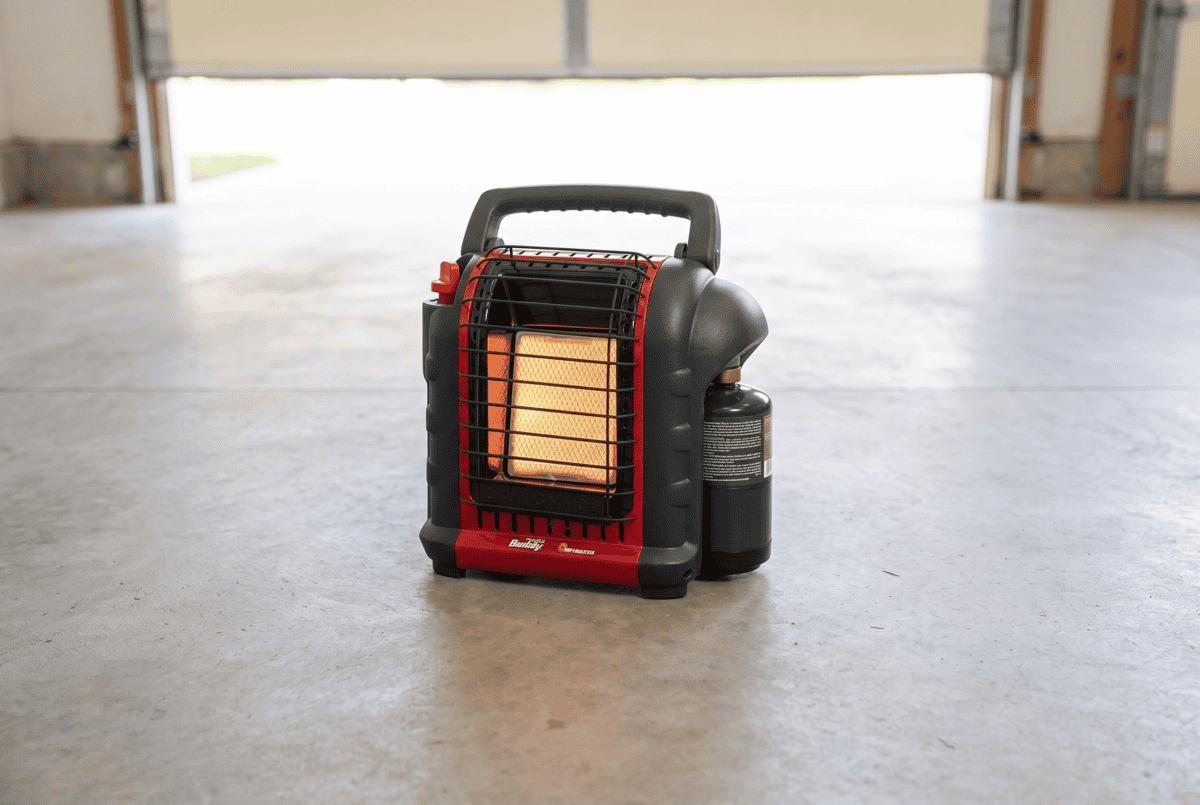
Mr. Heater Portable Buddy, 9,000 BTU (MH9BX) (about $95). The reference example of an “indoor-safe” propane heater: it carries the oxygen depletion sensor (ODS) and tip-over shutoff this article describes, and is rated for enclosed spaces — with the ventilation rules above still applying every time.
Kidde Battery-Powered Carbon Monoxide Alarm (about $28). Battery-powered, so it works in a garage with no outlet where you need it. If you burn propane indoors even once a year, this is the non-negotiable $28.
The short answer, and why it comes with conditions
A propane heater is safe indoors only when it is designed for indoor use and used with ventilation, because burning propane consumes oxygen and produces carbon monoxide, and an enclosed space concentrates both risks. The nuance is what keeps people safe, so it is worth stating plainly rather than in a simple yes or no.
Propane heaters fall into two camps. Vent-free heaters built and labeled for indoor use, such as portable “buddy”-style radiant heaters, are engineered to burn cleanly and include an oxygen depletion sensor that shuts the heater off before the air becomes dangerous. Outdoor-only heaters, including patio heaters and forced-air “torpedo” construction heaters, are not built with those protections and can produce dangerous levels of carbon monoxide in an enclosed room. Using the right category of heater is the first and most important safety decision, and it is a recurring theme in the guide to how to heat a garage.
The three real dangers of propane heat in an enclosed space
Running propane indoors carries three distinct hazards: carbon monoxide poisoning, oxygen depletion, and moisture buildup, and all three get worse as the space becomes smaller and more airtight. Understanding each one explains why the safety rules exist.
The most serious is carbon monoxide, an odorless, colorless gas produced when propane does not burn completely. It binds to the blood far more readily than oxygen, and early symptoms of poisoning, such as headache, dizziness, nausea, and confusion, are easy to mistake for simple tiredness, which is what makes it so dangerous. The second hazard is oxygen depletion: the flame consumes oxygen from the room, and in a sealed garage the level can fall far enough to be dangerous on its own, which is exactly what the oxygen depletion sensor guards against. The third is moisture; burning propane releases water vapor, so a vent-free heater adds humidity to the space, which over time can cause condensation, rust on tools, and mildew in a closed garage or workshop.

What “indoor-safe” propane heater actually means
An indoor-safe propane heater is one certified for indoor use and fitted with an oxygen depletion sensor that automatically shuts the heater off if the oxygen level in the room drops too low. That sensor is the single feature that separates a heater meant for a garage from one meant only for open air.
From experience: I have run propane heaters in my garage for years, and I always reach for the infrared plate-style burners — they burn cleaner than the open-flame types. Inside the house? Never. That is where the line is for me.
The oxygen depletion sensor, or ODS, monitors the flame and the surrounding oxygen level and cuts the propane supply before the atmosphere becomes hazardous. Many indoor-rated portable radiant heaters also include a tip-over shutoff, so the heater turns off if it is knocked over. It is important to understand what the ODS does and does not do: it protects against oxygen depletion, but it is not a substitute for a carbon monoxide detector, because a heater can still produce carbon monoxide from incomplete combustion even while oxygen is adequate. That is why an indoor-rated heater, ventilation, and a CO alarm are all required together, not as alternatives. For a full comparison of running electric versus propane heat in a garage, including the safety trade-offs, see electric vs propane garage heaters.
The ventilation rules that keep it safe
Even an indoor-rated propane heater needs a supply of fresh air, which in a garage or workshop means cracking a window or door, never fully sealing the space, and always running a carbon monoxide alarm. Ventilation is not optional with combustion heat; it is part of how the heater is meant to be used.
- Provide fresh air: crack a window or leave a door slightly open so oxygen is replenished and combustion byproducts can escape.
- Install a CO detector: a battery-backed carbon monoxide alarm in the garage or workshop is essential, mounted per its instructions.
- Follow the manufacturer’s minimum room size: indoor propane heaters specify a minimum space and required ventilation opening; smaller than that is unsafe.
- Never run it while sleeping: a person asleep cannot notice early CO symptoms or an alarm as reliably, so propane heat must be off before sleep.
- Keep clearances: keep the heater away from fuel, paint, solvents, and anything flammable, which a garage or workshop tends to have in abundance.
- Turn it off when leaving: do not leave a propane heater running unattended in an enclosed space.

Do propane garage heaters need to be vented?
Vent-free indoor-rated propane heaters do not require a flue or chimney, but they absolutely require fresh-air ventilation into the room, while larger or outdoor-style propane heaters require proper venting or must not be used indoors at all. The word “vent-free” causes real confusion, so it is worth separating the two meanings.
“Vent-free” means the heater has no exhaust flue and puts all of its heat, and its combustion byproducts, into the room. That is efficient for heat, but it is exactly why room ventilation and a CO alarm are mandatory: the byproducts have nowhere else to go. A “vented” heater, by contrast, is permanently installed with a flue that carries exhaust outside, which is the safest arrangement for continuous heating but requires professional installation. Outdoor patio heaters and torpedo heaters are a separate category that should stay outdoors or in large, well-ventilated industrial spaces, never a closed home garage. For anyone weighing a permanent solution, the best garage heater guide covers vented and electric options that avoid the indoor-combustion question entirely.
When a propane heater should never be used indoors
A propane heater should never be used indoors if it is an outdoor-only model, if the space cannot be ventilated, if there is no working CO alarm, or if anyone will be sleeping in the space. These are the situations where the risk is simply not worth it.
Patio heaters, grill-style heaters, and forced-air torpedo heaters are built for open air and can flood an enclosed room with carbon monoxide, so they are off-limits indoors regardless of how cold it is. A small, sealed, or windowless space that cannot get fresh air is unsafe for any propane heater, indoor-rated or not. And no propane heater, of any type, should run while people sleep in an enclosed area, because the early warning signs of carbon monoxide poisoning are easy to sleep through. In all of these cases, an electric heater is the safer answer, since it produces no combustion byproducts at all and can run in a sealed room without ventilation concerns.
Warning signs of carbon monoxide to act on immediately
Anyone using propane heat indoors should learn the early symptoms of carbon monoxide exposure, because recognizing them and getting to fresh air quickly is what prevents a headache from becoming an emergency. Carbon monoxide gives no smell or warning of its own, so the body’s symptoms and a working alarm are the only signals.
The early signs are easy to dismiss: a dull headache, dizziness, nausea, shortness of breath, and a foggy, tired feeling. Because they mimic ordinary fatigue or a cold, people often keep working through them, which is exactly the wrong response. If two or more people, or a person and a pet, feel unwell at the same time in the same space, that pattern is a strong clue. The correct action is immediate: turn off the heater, get everyone out into fresh air, and if symptoms are significant or a CO alarm sounds, call emergency services and do not re-enter until the space has been ventilated and checked. A carbon monoxide alarm with a digital readout is worth having because it shows rising levels before they reach the point of obvious symptoms.
The safer indoor alternative when in doubt
When a space cannot be reliably ventilated, will be occupied for long periods, or will be used for sleeping, an electric heater is the safer indoor choice because it produces no carbon monoxide, consumes no oxygen, and adds no moisture to the room. Propane earns its place where electricity cannot reach or where a quick burst of powerful heat is needed in a ventilated space, not as an all-day sealed-room heater.
Electric heat sidesteps every combustion hazard in this guide, which is why it is the default recommendation for enclosed home garages, workshops used for hours at a time, and any space where people sleep. The trade-off is that electric heat is limited by the available circuit, whereas propane delivers a lot of heat from a portable tank. Many garage owners settle on a practical split: an electric heater for routine, all-day warmth, and an indoor-rated propane heater, used with ventilation and a CO alarm, only for occasional fast heat on the coldest days. Weighing that choice for a specific garage is exactly what the comparison of electric versus propane garage heaters is designed to help with.
Frequently asked questions
Can I use a Buddy-style propane heater in my garage?
Yes, if it is an indoor-rated model with an oxygen depletion sensor, the garage is ventilated with a cracked window or door, and a carbon monoxide alarm is running. It should never be left on while sleeping or unattended.
Do indoor propane heaters produce carbon monoxide?
They can, if combustion is incomplete, even though they are designed to burn cleanly. The oxygen depletion sensor guards against low oxygen but not against carbon monoxide, which is why a separate CO detector is always required.
How much ventilation does an indoor propane heater need?
At minimum, a cracked window or door and adherence to the manufacturer’s stated minimum room size and ventilation opening. Never run a propane heater in a fully sealed space, and follow the specific requirements printed on the unit.
Is it safe to sleep with a propane heater on?
No. No propane heater should run while people sleep in an enclosed space, because carbon monoxide symptoms are easy to miss when asleep. Warm the space first, then turn the heater off before sleeping, or use an electric heater instead.
Are propane heaters safe in a workshop with wood dust or solvents?
Extra caution is required. A propane heater has an open flame, so it must be kept well clear of sawdust, paint, solvents, and other flammables common in a workshop. In dusty or solvent-heavy spaces, a flameless electric heater is the safer choice.
Written and reviewed by Will Montgomery, who has installed, tested, and repaired electric and propane heaters for years.