

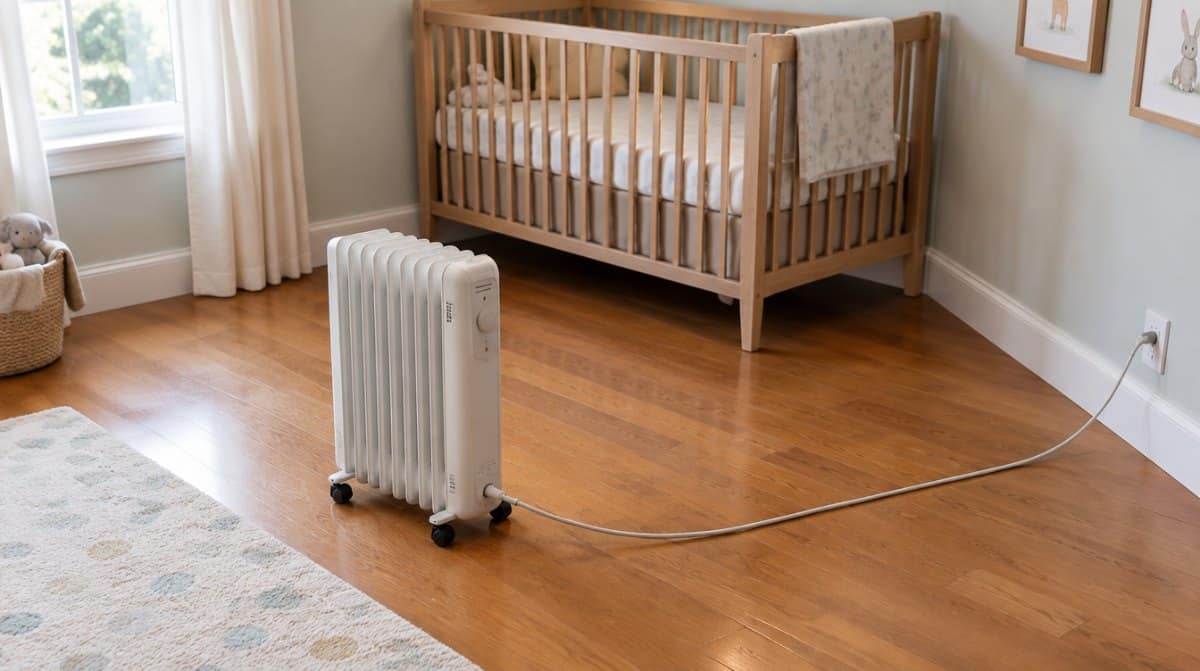
A space heater can be used in a nursery, but only a model with the right automatic safety features, placed with generous clearance and never left running unattended overnight. At heatersforlife.com we help parents separate the features that actually matter for a baby’s room from the marketing, so the room stays warm without adding risk.
Quick answer: A space heater is reasonably safe in a nursery when it has a tip-over auto shut-off, an overheat sensor, and a cool-touch exterior; sits on a hard floor at least three feet from the crib, bedding, and curtains; and plugs directly into a wall outlet rather than an extension cord or power strip. The safest overnight approach is to warm the room before bedtime and rely on a thermostat and sleep sack rather than running a heater beside a sleeping infant all night.

Last Updated: September 2026 | Will Montgomery has an engineering background and has spent years installing, testing, and troubleshooting electric and propane heaters in homes, apartments, and uninsulated garages.
The safety features a nursery heater must have
Require three automatic protections before a heater goes anywhere near a child’s room: tip-over shut-off, overheat cutoff, and a cool-touch body. Compact ceramic towers such as the DREO 1,500 W quiet space heater list tip-over and overheat protection on the box, which is the baseline to look for. A tip-over switch cuts power the instant the unit is knocked over, which matters in a room where a toddler pulls on cords and a crawling baby explores. An overheat sensor shuts the element down if airflow is blocked — by a dropped blanket, a stuffed animal, or dust — before it can reach ignition temperature. A cool-touch exterior keeps the outer housing from burning curious fingers even while the heater runs.
Ceramic and oil-filled models are the usual nursery choices because they stay cooler on the outside and have no exposed glowing element within reach. If you want to compare those safety-first styles head to head, our guide to the safest auxiliary heaters for bedrooms breaks down which features protect sleepers best.
Placement rules for a baby’s room
Give the heater a three-foot clearance in every direction and a stable, hard, flat surface it cannot be pulled from. The three-foot rule is the single most important thing a parent controls. Keep the heater at least three feet from the crib, the changing table, curtains, bedding, laundry, and anything else that can burn or trap heat. Set it directly on the floor, not on a dresser or shelf where it can be knocked down, and route the cord against the wall so it is not a pull-toy or a trip hazard.
- Plug directly into a wall outlet — never an extension cord or power strip, which can overheat under a heater’s continuous load. Our guide on why you should never plug a space heater into a power strip explains the fire risk in detail.
- Position the heater so a child in the crib cannot reach it, touch the cord, or drape a blanket over it.
- Keep a working smoke and carbon monoxide alarm and, if you use any fuel-burning heater, a carbon monoxide alarm in the room.
Should you run a space heater all night in a nursery?
The safest overnight plan is to warm the nursery before bed and then turn the heater off or let a thermostat hold a low setting, rather than leaving it running unattended beside a sleeping baby. Fire agencies consistently tie heater fires to units left on overnight, and a nursery raises the stakes. A better routine is to bring the room up to a comfortable temperature in the evening, dress the baby in a properly rated sleep sack, and let the room coast. If you do run a heater overnight, choose one with a thermostat and timer and keep the three-foot clearance absolute. Our deeper look at whether you can leave a space heater on overnight covers the conditions that make it safer.
Pediatric guidance also cautions against overheating an infant’s sleep environment, so warmer is not automatically better. A room in the roughly 68–72°F range with the baby in appropriate sleepwear is the goal, not a hot room.

Safer alternatives to a heater in the crib area
Will’s note: When I have needed auxiliary heat in a room where someone sleeps, I have reached for an oil-filled radiator every time. It felt like the safest option, it never produced that hot-dust smell, and the real selling point was that it makes no noise at all.
Often the best nursery heat is not a portable heater at all, but a warmer room delivered a gentler way. If the nursery is chronically cold, options that avoid an appliance beside the crib include sealing drafts around windows and doors, adding an oil-filled radiator with no exposed element and a cool surface, or using the home’s central heat with the nursery door open. A well-fitted sleep sack does more for a baby’s warmth, safely, than raising the room temperature with a heater ever should. Reserve the portable heater for taking the chill off before bedtime, then step it down for sleep.
Fuel-burning heaters do not belong in a nursery
Keep propane, kerosene, and other combustion heaters out of a baby’s room entirely; a nursery heater should be electric. Any heater that burns fuel produces carbon monoxide and consumes oxygen, and a small, often-closed room where an infant sleeps is the worst place for either risk. Carbon monoxide is invisible and odorless, and babies are more vulnerable to it than adults. The safe choice for a nursery is a sealed electric heater — ceramic or oil-filled — with no flame, no fuel, and no exhaust. If you rely on propane or kerosene elsewhere in the home, keep it well away from sleeping areas and pair it with a working carbon monoxide alarm.
A quick nursery-heater safety checklist
Before you leave the room, run this short list every time the heater is on. Turning it into a habit is what keeps the room safe night after night:

- Tip-over shut-off and overheat sensor both present and working.
- Cool-touch exterior, verified by a careful hand check while running.
- Three feet of clearance from crib, curtains, bedding, and toys.
- Plugged directly into a wall outlet, cord run flat against the wall.
- Set on a hard, level floor, never on furniture or carpet edges.
- Room temperature moderate — roughly 68 to 72°F — not hot.
- Smoke alarm working; carbon monoxide alarm present if any fuel heat is used nearby.
- Heater turned down or off for unattended overnight sleep whenever possible.
None of these features replace the most important safeguard, which is simply not leaving a heater running unwatched beside a sleeping baby for hours. Warm the room, dress the baby appropriately, and treat the heater as a tool for taking the edge off the cold rather than a set-and-forget appliance.
Frequently asked questions
Is it safe to have a space heater in a baby’s room?
It can be, if the heater has a tip-over shut-off, an overheat sensor, and a cool-touch body, sits three feet from the crib and anything flammable, and plugs straight into a wall outlet. The safest practice is to warm the room before sleep rather than run the heater unattended all night beside the baby.
What kind of space heater is safest for a nursery?
Ceramic and oil-filled heaters are the common nursery choices because they keep a cooler exterior and have no exposed glowing element within reach. Whichever style you pick, it must include a tip-over switch and an overheat cutoff.
How far should a space heater be from a crib?
At least three feet, in every direction, and out of a child’s reach. Keep it away from the crib, bedding, curtains, and any fabric, and set it on the floor so it cannot be pulled down.
What temperature should a nursery be?
Roughly 68 to 72°F, with the baby dressed in an appropriate sleep sack. Avoid overheating the room; a slightly cool room with proper sleepwear is safer than a hot one.
Can I leave a heater on overnight in my child’s room?
It is safer not to. Warm the room before bedtime and turn the heater off or let a thermostat hold a low setting. If you must run it, use a model with a thermostat and timer, keep the three-foot clearance, and make sure a smoke alarm is working.
Will Montgomery is an engineer and landlord who has run oil-filled and ceramic heaters in bedrooms and rentals, and has spent years installing and troubleshooting electric heaters in homes.