

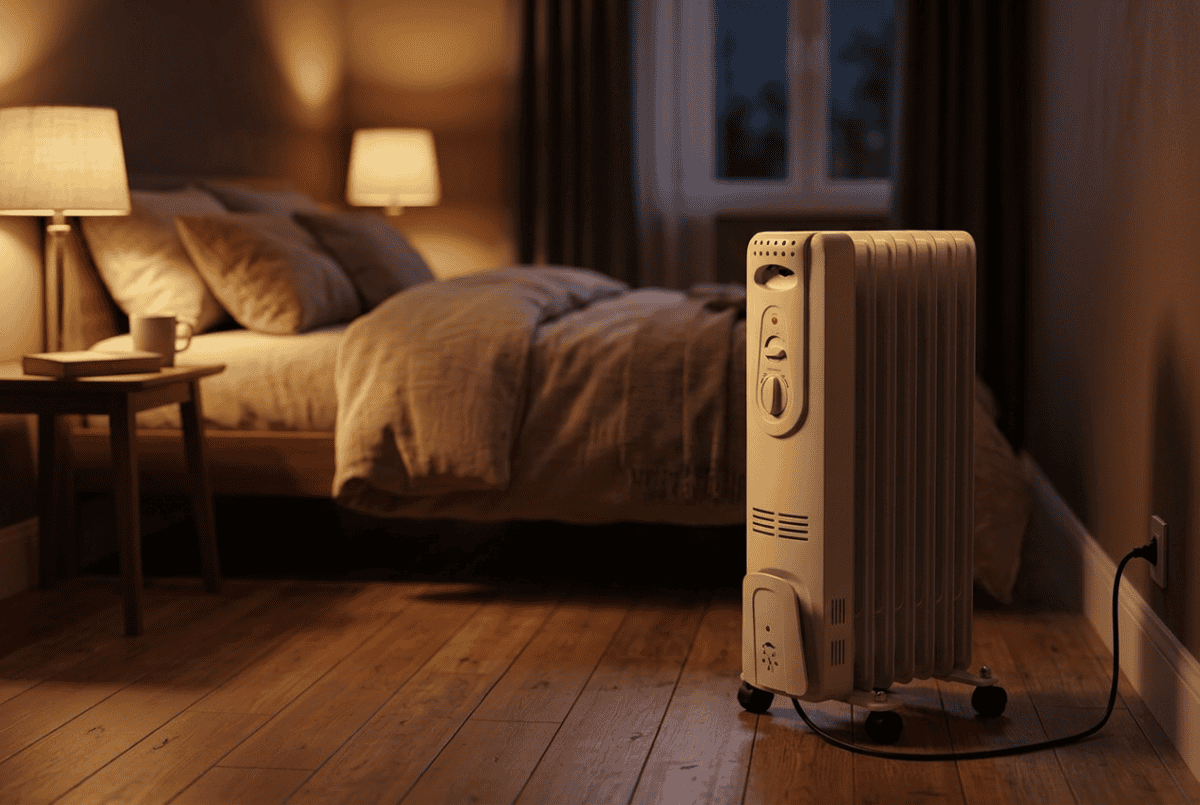
A space heater can be left on overnight only if it is a modern unit with tip-over and overheat auto-shutoff, plugged directly into a wall outlet and kept clear of bedding — but fire agencies still recommend turning it off before sleep. This heatersforlife.com guide lays out exactly when overnight use is reasonably safe, the features a heater must have, and the safer alternatives for all-night warmth.
Last Updated: August 2026 | Will Montgomery has an engineering background and has tested which space-heater safety features actually matter when a unit runs unattended overnight.
Quick Answer
Yes, a space heater can be left on overnight if it has tip-over protection, overheat auto-shutoff, and a thermostat, is plugged straight into a wall outlet, and sits on a hard, flat surface at least three feet from anything that can burn. However, the National Fire Protection Association and most fire departments still advise turning heaters off when leaving a room or going to sleep, because heating equipment is a leading cause of home fires.
Can you leave a space heater on overnight?
It is possible to run a modern, well-placed heater overnight, but the safest answer from fire-safety experts is to turn it off before sleeping. The risk is not that a good heater will spontaneously catch fire — it is that a heater running unattended for hours has more chances to be knocked over, to have a blanket fall onto it, or to overheat a worn cord or overloaded outlet while no one is awake to notice. If overnight running is unavoidable, the goal is to remove every one of those failure points in advance rather than trust a single safety feature.

The safety features a heater needs for overnight use
No heater should run overnight unless it has both tip-over and overheat automatic shutoff, plus a thermostat to prevent it from running at full power all night. Before leaving any heater on while asleep, confirm it has:
- Tip-over switch that cuts power the instant the heater is knocked off vertical.
- Overheat auto-shutoff that shuts the element down if internal temperature climbs too high.
- A thermostat so the heater cycles off once the room is warm instead of running flat out.
- Cool-touch housing so an accidental contact with a hand, pet, or blanket does not cause a burn or ignition.
- A safety certification mark (UL, ETL, or CSA) confirming the unit was independently tested.
How to leave a space heater running safely overnight
Safe overnight use comes down to placement and power, not just the heater’s own features. Follow this checklist every night the heater stays on:
- Plug it directly into a wall outlet — never a power strip or extension cord, which can overheat under a heater’s continuous 12.5-amp draw.
- Set it on a hard, level, non-flammable surface — not carpet, rugs, or bedding.
- Keep a three-foot clearance on all sides from blankets, curtains, furniture, and clothing.
- Use the thermostat and a timer so it shuts off after the room is warm.
- Make sure a working smoke alarm is in the room, and check the cord and plug for warmth or discoloration.
Which heater types are safest overnight
From experience: I ran an oil-filled radiator overnight in a small home office for years — we’d even warm our gloves on it — and it never gave me trouble. I stick with the thermostat versions so it cycles off once the room is warm enough. I’d think twice about a bedroom without planning the placement, but a thermostat-controlled oil-filled unit with clearance has been reliable for me.
Enclosed heaters with no exposed glowing element — oil-filled radiators and micathermic panels — are the safest choice for overnight use. The table compares common types for all-night running.
| Heater type | Overnight safety | Notes |
|---|---|---|
| Oil-filled radiator | Best | No exposed element, no fan, holds heat and cycles on a thermostat |
| Micathermic panel | Very good | Sealed heating surface, low surface temperature |
| Ceramic with thermostat | Good | Cool-touch models with auto-shutoff are fine; keep the intake clear |
| Infrared / quartz | Use with care | Glowing element and hot grille — keep well clear of bedding |
| Open-coil / vintage | Avoid | Exposed hot element and often no modern shutoffs |
For bedrooms specifically, the quietest heaters for sleeping and the safest auxiliary heaters for bedrooms cover the models best suited to running near a bed.

What the fire data says
Heating equipment is the second-leading cause of U.S. home fires, and space heaters account for the large majority of home-heating fire deaths. National Fire Protection Association data consistently shows that most space-heater fires start when the heater is too close to something combustible — bedding, upholstered furniture, or clothing. That is why the three-foot clearance rule matters more than the brand of heater, and why leaving a heater running in an empty or sleeping room raises the stakes: the fire’s most common cause (nearby combustibles) and its most dangerous timing (while occupants are asleep) line up.
Safer alternatives for all-night warmth
For most sleepers, a heated blanket or a thermostat-controlled oil-filled radiator on a timer delivers overnight comfort with far less risk than a fan-forced heater left on high. A heated blanket warms the body directly on about 100–200 watts and shuts off on its own timer. Turning up the home’s central heat by a few degrees, or setting a smart thermostat to raise the temperature before wake-up, avoids a portable heater entirely. If a portable unit is still needed, choosing the cheapest heater to run on a thermostat keeps both the bill and the run time down.
Where to place a space heater for safe overnight use
Placement causes more overnight heater fires than the heater itself, so location matters as much as the model. A heater left running while people sleep should sit on a bare, hard floor — tile, wood, or concrete — never on carpet, a rug, or furniture that can trap heat or catch a tipped unit. Keep it out of walkways so no one trips over it in the dark, and away from the bed so bedding cannot slide onto it. It should never be placed in a child’s or pet’s reach, near curtains, or in a bathroom or damp area unless the heater is specifically rated for wet locations. A good rule is to imagine the heater tipping over in every direction and confirming nothing flammable is within three feet of where it would land.
Overnight heat sources compared
For sleeping specifically, a heated blanket and a thermostat-controlled oil-filled radiator are the two safest and cheapest ways to stay warm all night. The table compares the common options a renter or homeowner weighs at bedtime.
| Overnight heat source | Typical power | Safety while asleep | Best for |
|---|---|---|---|
| Heated blanket / mattress pad | 100–200 W | High — low heat, auto shutoff | One or two sleepers; lowest cost |
| Oil-filled radiator on thermostat | 700–1500 W | High — no exposed element | Warming the whole room steadily |
| Ceramic heater with thermostat | 750–1500 W | Good — needs clearance | Rooms that must warm quickly |
| Central heat set back a few degrees | Varies | Highest — no portable unit | Whole-home comfort where available |
| Fuel (propane/kerosene) indoors | — | Unsafe unvented — CO risk | Not for sleeping areas |
Never use an unvented propane or kerosene heater in a closed bedroom overnight — they consume oxygen and produce carbon monoxide, which is especially dangerous while sleeping. Portable fuel heaters belong in ventilated garages or workshops, not sleeping spaces, and every home with any fuel-burning appliance needs a working carbon-monoxide alarm.
What to do if the heater smells or shuts off overnight
A burning smell, repeated shutoffs, or a hot plug are signals to stop using the heater immediately, not to push through the night. A faint dusty smell the first time a heater runs each season is normal and fades in a few minutes. But a persistent burning-plastic or electrical smell means an overloaded outlet, a failing cord, or an internal fault — unplug it and inspect the source of the burning smell before using it again. A heater that keeps tripping its overheat shutoff is usually telling the truth: its intake is blocked by dust or fabric, or the room is so enclosed that it is overheating. Clearing the vents, moving it off soft surfaces, and confirming it is on its own wall outlet rather than a power strip resolves most cases. When in doubt overnight, the safe move is off.
Frequently Asked Questions
Is it safe to leave a space heater on all night?
It can be reasonably safe with a modern heater that has tip-over and overheat shutoff, plugged into a wall outlet and kept three feet from anything flammable — but fire agencies still recommend turning heaters off before sleep.
Which space heater is safest to leave on overnight?
An oil-filled radiator or micathermic panel with a thermostat, because neither has an exposed glowing element and both hold heat while cycling on and off.
Can a space heater cause a fire while I sleep?
Yes, most often when it is too close to bedding, curtains, or furniture, or when it is run through a power strip or worn cord. Keeping a three-foot clearance and plugging directly into the wall removes the most common causes.
Should I turn my space heater off when I leave the room?
Yes. Fire departments and the NFPA recommend turning space heaters off whenever leaving the room or going to sleep, since an unattended heater has more time to cause a problem before anyone notices.
Is it cheaper to leave a heater on all night or turn it off?
Running a heater only when the room is occupied, on a thermostat, is cheaper and safer than leaving it on high all night. A heated blanket is cheaper still for a single sleeper.