

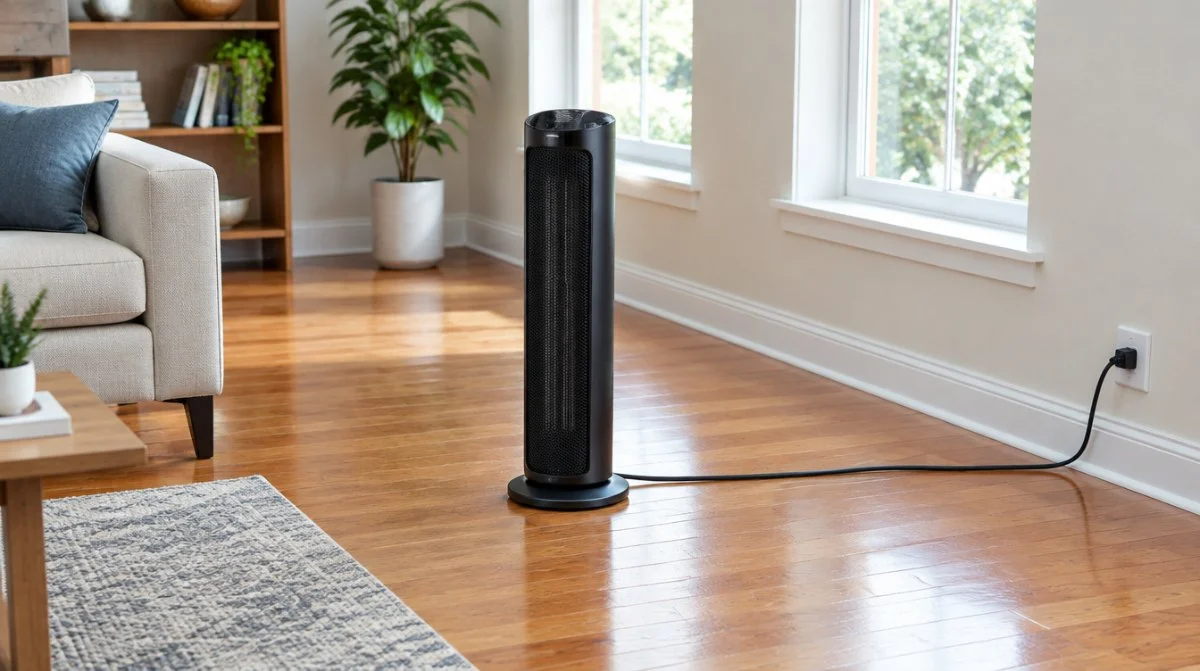
When a ceramic heater blows cold air, the fan is still running but the PTC heating element is not producing heat — usually because the thermostat is satisfied, an overheat sensor has tripped on dust, or the element itself has failed. At heatersforlife.com we lay out the fixes in order, from a five-second reset to the point where a Pelonis or other ceramic unit is simply done.
Quick answer: Cold air from a ceramic heater almost always means the fan works but the element is off. Work through it in order: turn the thermostat well above room temperature, let a tripped overheat sensor cool and reset, clean the dust-clogged intake, and confirm the outlet delivers full power. If the fan runs strong and none of that restores heat, the PTC element or its thermal cutoff has failed and the heater needs replacing.

Last Updated: September 2026 | Will Montgomery has an engineering background and has spent years installing, testing, and troubleshooting electric and propane heaters in homes, apartments, and uninsulated garages.
Why a ceramic heater blows cold air in the first place
A ceramic heater has two separate systems — a fan and a PTC heating element — and cold air means the fan is winning while the element is off. The fan pushes room air across a PTC (positive temperature coefficient) ceramic element; the element heats that air on its way out. When you feel cold air, the fan and its motor are fine, so the fault lies with the element, its power supply, or a safety device that has cut the element off while leaving the fan spinning. That distinction is what makes ceramic heaters quick to diagnose. For a broader view of no-heat faults across heater types, our space heater blowing cold air guide covers the shared causes.
Seven fixes in order
Run these checks from easiest to hardest and stop when the heat returns.

- 1. Raise the thermostat. If the room reached the set temperature, the element shuts off and only the fan runs. Turn the dial well above room temperature to confirm the element re-fires.
- 2. Reset a tripped overheat sensor. Unplug the heater, let it cool for 15–20 minutes, then restart. An overheat trip is the single most common cause and it resets only after cooling.
- 3. Clean the intake and outlet grilles. Dust choking the airflow makes the element overheat and cut out. Vacuum both grilles with the unit unplugged and cool, then follow with a blast of compressed air
 through the intake to clear the element fins.
 - 4. Check the outlet and cord. Plug directly into a known-good wall outlet, never a power strip. A weak or shared circuit can leave the fan running while the element starves for current.
- 5. Verify it is upright and stable. The tip-over switch can cut the element while leaving the fan powered if the unit is not sitting flat.
- 6. Look for an ECO or fan-only mode. Many models have a fan-only setting; make sure a mode or eco setting is not holding the element off.
- 7. Test on high heat after cooldown. If, fully cooled and cleaned, it still blows cold on the highest setting, the PTC element or thermal fuse has failed.
How to tell the PTC element is done
If the fan runs at full strength, the outlet is good, the heater is clean and cool, and the highest setting still delivers only room-temperature air, the PTC element or its thermal cutoff has failed. A PTC element self-regulates and is durable, but it does eventually wear out or its inline thermal fuse opens permanently. Because these elements are not user-serviceable in most consumer models and replacement parts are rarely sold, a confirmed dead element on an inexpensive ceramic heater means replacement rather than repair. A sensible like-for-like replacement is the DREO 1,500 W quiet ceramic tower, which lists tip-over and overheat protection and runs about $60. Popular models like the Pelonis ceramic heaters follow the same logic: when the element is gone, the unit is retired.

Before you write it off, make sure you are not chasing a different symptom. A heater that heats then quits is more likely an overheat or sensor issue — see our guide to a heater that keeps shutting off — and one that trips the breaker points to a circuit problem, covered in our tripping breaker guide.
Keep a healthy ceramic heater blowing hot
Regular dust removal and a dedicated outlet prevent most cold-air failures before they start. Because dust-driven overheating is the leading cause of a ceramic heater cutting its element, a quick vacuum of the grilles every few weeks during heating season does more than any other maintenance. Give the heater a wall outlet of its own, keep three feet of clearance so airflow is not blocked, and let it cool fully before moving it. Those habits keep the PTC element from tripping its safety and extend the life of the heater.
Ceramic vs other heaters when it comes to cold-air faults
Because a ceramic heater’s fan and element are separate, cold air is easier to diagnose than in a fanless heater. In an oil-filled radiator there is no fan, so “no heat” and “cold air” are the same problem; in a ceramic heater the running fan is a useful clue that power and the motor are fine, isolating the fault to the element or a safety cutoff. That is one reason ceramic heaters are popular for quick, targeted warmth — and why our comparison of a ceramic vs fan heater notes the ceramic element as the part that gives ceramic units their heat. Understanding that split is the fastest route to knowing whether you are looking at a five-minute reset or a dead element.
The overheat sensor is doing its job
Will’s note: Mine blew cold because I let dust build up until it was pre-heating the overheat sensor, so the heater kept shutting off early. Blowing the dust out got it working again, but I never kept up with cleaning it and the fan eventually gave out. Clean the grille and the fan lives longer.
A ceramic heater that keeps cutting to cold air is usually protecting itself, not failing — and the trigger is almost always blocked airflow. The overheat sensor exists to shut the element off before the housing gets dangerously hot, and the most common thing that trips it is dust and lint clogging the intake or a blanket, curtain, or piece of furniture sitting too close to the outlet. When the sensor trips repeatedly, treat it as a signal to clear the airflow rather than an annoyance to work around. Give the heater at least three feet of open space, keep it off carpet that can block the base intake, and vacuum the grilles regularly. Fixing the airflow usually ends the cold-air cycling for good, and it keeps the element from the repeated thermal stress that eventually kills it. For the closely related pattern of a heater that fully shuts down, our guide to a heater that keeps shutting off walks through the same sensor behavior.
Frequently asked questions
Why is my ceramic heater blowing cold air?
Because the fan is running but the element is off. The usual reasons are the thermostat being satisfied, a tripped overheat sensor from dust, a weak outlet, or a failed PTC element. Raise the thermostat, let it cool and reset, and clean the grilles first.
How do I reset a ceramic heater?
Unplug it, let it cool for 15 to 20 minutes so the overheat sensor releases, then plug it back in and restart on a higher setting. Cooling is required; the sensor will not reset while the unit is still hot.
Why does my ceramic heater work then blow cold?
That pattern usually means the overheat sensor is tripping, most often because dust is blocking airflow and letting the element run too hot. Clean the intake and outlet grilles and give the heater clearance so air moves freely.
Can you fix a ceramic heating element?
In most consumer ceramic heaters, no. The PTC element and its thermal fuse are not user-serviceable and replacement parts are rarely available. A confirmed dead element on an inexpensive unit means replacing the heater.
Why is my Pelonis ceramic heater not heating?
Same causes as any ceramic heater: check the thermostat setting, let a tripped overheat sensor cool and reset, clean the dust from the grilles, and confirm a strong wall outlet. If it still blows cold on high after cooling, the element has failed.
Will Montgomery is an engineer who has cleaned, reset, and eventually retired more than one ceramic heater, with years of hands-on experience troubleshooting electric heaters in homes and workplaces.