

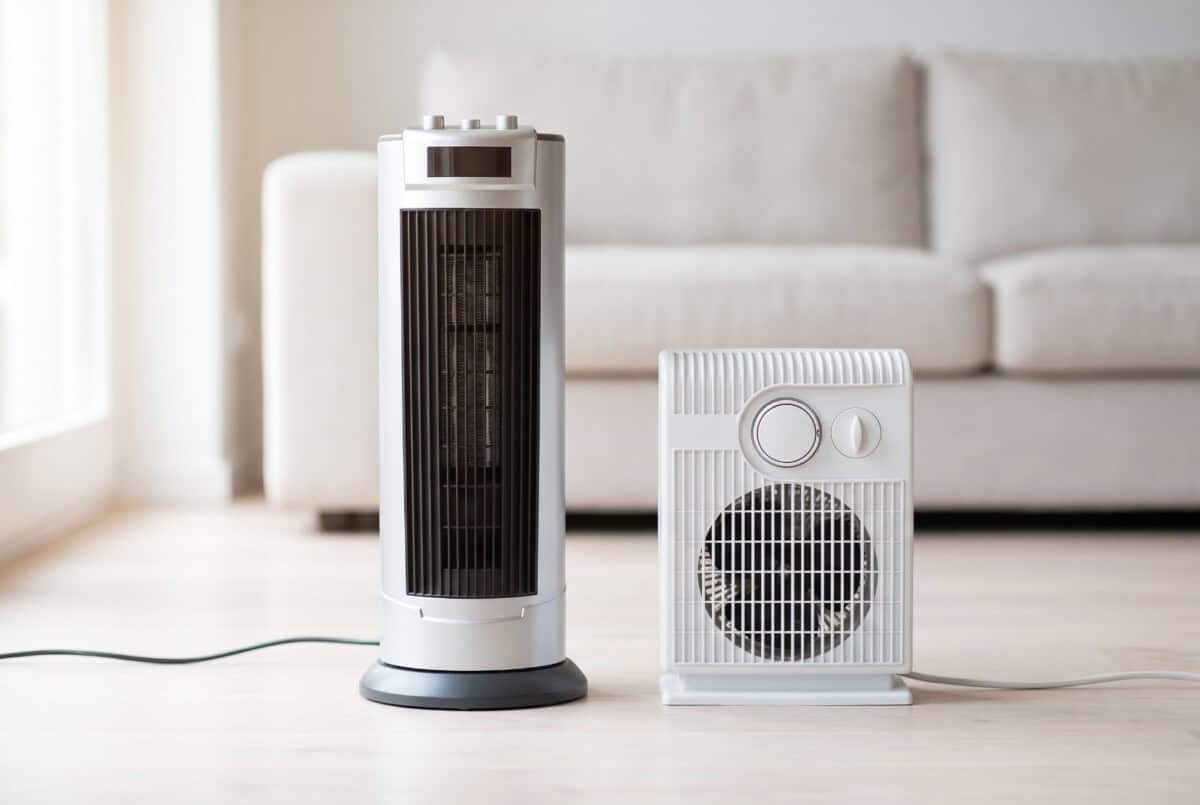
A ceramic heater and a traditional coil fan heater warm a room at about the same speed, but the ceramic heater is safer and more durable, while a coil fan heater is cheaper to buy. HeatersForLife.com recommends a ceramic heater for most homes because its self-regulating element runs cooler and lasts longer, and a basic fan heater only when the lowest purchase price is the priority.
Both heaters are fan-forced, so people often assume they are the same product — but the heating element inside is different, and that changes safety, durability, and comfort. A ceramic heater uses a self-limiting PTC ceramic element, while a classic fan heater uses an exposed metal (nichrome) coil. This guide compares the two on heat speed, running cost, safety, and noise so a shopper knows which fan-forced heater is worth the money.
Last Updated: August 2026 | Will Montgomery has an engineering background and has spent years installing, testing, and troubleshooting electric and propane heaters in homes, apartments, and uninsulated garages.
Quick Answer: Ceramic vs Fan Heater
Choose a ceramic heater for safer, longer-lasting warmth, and a basic coil fan heater only to save a few dollars up front. Both push out warm air within a minute or two and both cost the same to run at equal wattage. The ceramic heater’s element self-regulates its temperature, so it is less likely to scorch dust or overheat, and it tends to last longer. A coil fan heater is the cheapest heater on the shelf, but its exposed hot wire runs hotter and wears out sooner.
Ceramic vs Fan Heater at a Glance
The table below compares a ceramic (PTC) heater with a traditional coil fan heater on the factors that matter to a buyer.
| Factor | Ceramic Heater | Coil Fan Heater |
|---|---|---|
| Heating element | Self-regulating PTC ceramic | Exposed nichrome wire coil |
| Heat-up speed | Fast (1–2 min) | Fast (under 1 min) |
| Element temperature | Lower, self-limiting | Higher, glowing coil |
| Safety | Less scorching risk; often cool-touch casing | Hotter element; higher scorch risk |
| Durability | Longer element life | Coil degrades faster |
| Noise | Fan hum | Fan hum |
| Purchase price | Low | Lowest |
| Best use | Everyday spot heating, offices, bathrooms | Occasional, budget quick heat |
| Running cost at 1500 W | Same as any 1500 W heater | Same as any 1500 W heater |

What Makes a Ceramic Heater Different
A ceramic heater uses a PTC ceramic element that automatically limits its own temperature, so it delivers fast heat while running cooler and safer than an exposed coil. PTC stands for positive temperature coefficient: as the ceramic element heats up, its electrical resistance rises, which naturally caps how hot it can get. A fan blows air across the element and warm air enters the room within a minute or two. Bec A traditional fan heater blows air across a glowing metal coil, delivering heat almost instantly but at a higher element temperature. The exposed nichrome wire heats up the moment power flows and the fan pushes that heat into the room, so a coil fan heater can feel warm even faster than a ceramic model. The trade-offs are safety and longevity: the coil glows hot, which raises the risk of scorching nearby dust or lint and produces the familiar burning-dust smell on first use, and the wire element degrades over repeated heating cycles, so these heaters tend to wear out sooner. Their appeal is price — a basic coil fan heater is usually the least expensive heater available. For a fuller picture of how these compare to radiant and oil-filled options, see the pillar guide, space heater types explained. Both warm a room fast, with a coil fan heater delivering heat in under a minute and a ceramic heater within one to two minutes. The practical difference is negligible in everyday use — both are fan-forced, so both push warm air quickly and both are far faster than a silent radiant or oil-filled heater. A coil fan heater has a slight edge at the very first moment because its wire glows hot instantly, but a ceramic heater catches up within a minute. For anyone who wants near-instant warmth in a room used during the day, either type will do the job; the choice comes down to safety and durability rather than speed. A ceramic heater is safer and lasts longer because its self-limiting element runs cooler than the exposed, glowing coil of a traditional fan heater. The lower element temperature reduces the chance of scorching dust or overheating, and many ceramic models add a cool-touch casing, tip-over switch, and overheat shutoff. The PTC element also holds up better over years of use than a nichrome coil, which slowly degrades each time it glows. For any fan-forced heater, the most important safety rule is to plug it straight into a wall outlet — never a power strip or extension cord — because the roughly 12.5 amps a 1500-watt heater draws can overheat a light cord. Households that want the safest possible bedroom setup can review the safest auxiliary heaters for bedrooms. From my own use: we keep a ceramic heater with a built-in thermostat running in a work bathroom on our business property. It cycles on and off all winter, every winter, which is about as honest a durability test as you can get. A good ceramic unit lasts us five to seven years in that spot — the first one was a Pelonis. I tried to save money once with a cheaper unit and got about eighteen months to two years out of it before it died, and naturally it died mid-winter when we actually needed it. That is roughly a quarter of the service life, and the failure arrives at the worst possible moment. The price on the box is not the number that matters. Both a ceramic heater and a coil fan heater make a similar fan hum, so neither is a good choice for silent overnight use. Because both rely on a fan to move warm air, both produce a low, continuous whir that light sleepers may notice. A shopper who needs quiet heat for sleeping is better served by a silent oil-filled radiator or micathermic panel; the guide to the quietest space heaters for bedrooms covers those options. For a home office, bathroom, or living room used during waking hours, the fan noise of either heater is rarely a problem. At the same wattage, a ceramic heater and a coil fan heater cost exactly the same to run, because both convert electricity to heat at about 100 percent efficiency. A 1500-watt ceramic heater and a 1500-watt fan heater both draw about 12.5 amps and produce the same heat per hour, so neither has a running-cost advantage. The idea that ceramic heaters are cheaper to operate is a myth — real savings come from a thermostat, heating only the room in use, and letting the heater cycle off once the space is warm. The purchase price is the only cost difference, and there a basic fan heater is cheaper. HeatersForLife.com breaks down operating cost in its space heater running cost calculator and its guide to the cheapest space heaters to run. Most shoppers should buy a ceramic heater for its cooler, self-regulating element and longer life, and a basic coil fan heater only when the lowest price is the deciding factor. For everyday heating in an office, bathroom, or living room, the ceramic heater’s safety and durability make it worth the small extra cost. A coil fan heater makes sense as a cheap, occasional-use backup where it will not run for hours at a time. Either way, both are fan-forced, both warm a room fast, and both cost the same to run — so the smart choice usually favors the safer, longer-lasting ceramic model. Shoppers can see recommended compact picks in the guide to the best space heaters for small apartments. A specific example: the Lasko 1500W ceramic tower heater is the pattern described above — PTC ceramic element, adjustable thermostat, oscillation, and a tip-over switch. We link it because it is a ceramic unit rather than a bare coil heater, not because it is the only good one. Any ceramic model with a thermostat and tip-over protection follows the same logic. The heating element is the single biggest difference between a ceramic and a traditional fan heater, and it drives safety, smell, and lifespan. A shopper looking only at price sees two similar-looking boxes that both blow warm air, but the element inside changes the ownership experience over months of use. The exposed nichrome coil in a basic fan heater glows red-hot, and that high surface temperature is what burns settled dust and produces the hot-metal or burning smell many people notice on the first cold day. A ceramic PTC element runs cooler and self-limits its temperature, so it scorches far less and rarely produces that smell after the initial break-in. Over a season of daily use, the cooler-running ceramic element also degrades more slowly than a coil that cycles between cold and glowing hot, which is why ceramic heaters generally outlast cheap coil units. For a household that will run a heater regularly, that durability and cleaner operation usually justify the modest price difference. Element type also affects how safe the heater feels around a busy household. Because a ceramic model runs cooler and often adds a cool-touch casing, it is a more forgiving choice in a home with children or pets who might brush against it. A glowing-coil fan heater demands more vigilance and a wider clearance. Neither should ever be left running unattended in a way that violates the manufacturer’s guidance, and both should sit at least three feet from anything flammable. A basic coil fan heater is a reasonable buy for occasional, short-term use where the lowest price matters and the heater will not run for hours unattended. Not every situation calls for the more durable ceramic model. For a rarely used guest room, a quick warm-up in a workshop corner, or an emergency backup kept in a closet, an inexpensive fan heater does the job at the lowest cost. The key is to use it the way it is best suited: short bursts, in an occupied space, plugged straight into a wall outlet, and switched off when leaving the room. For any heater that will run daily through a cold season, though, the safety and longevity of a ceramic model make it the smarter long-term buy. Shoppers can compare both against silent radiant and oil-filled options in the pillar guide, space heater types explained. Yes, for most people. A ceramic heater uses a self-regulating element that runs cooler, is less likely to scorch dust, and lasts longer than the exposed coil of a traditional fan heater. A basic coil fan heater is only better when the lowest purchase price is the priority. Both are fan-forced and heat a room quickly. A coil fan heater warms up in under a minute because its wire glows instantly, while a ceramic heater takes one to two minutes. The difference is small in everyday use. No. Both are roughly 100 percent efficient resistive heaters, so a 1500-watt ceramic heater and a 1500-watt fan heater use the same electricity and cost the same per hour. Only the purchase price differs, and a basic fan heater is cheaper to buy. Generally yes. A ceramic heater’s element self-limits its temperature, reducing the risk of overheating and scorching, and many models add a cool-touch casing. A traditional coil fan heater runs a hotter, exposed element. Both should have a tip-over switch and overheat shutoff. Not especially. A ceramic heater uses a fan, so it produces a continuous hum similar to a coil fan heater. For silent overnight heat, a shopper should choose an oil-filled radiator or a micathermic panel instead.
What a Traditional Fan Heater Does

Which Warms a Room Faster?

Which Is Safer and Lasts Longer?
Noise and Comfort
Running Cost: Is a Ceramic Heater Cheaper to Run?
Which Should a Shopper Buy?
Why the Element Type Matters More Than It Seems
When a Basic Fan Heater Still Makes Sense
Frequently Asked Questions
Is a ceramic heater better than a fan heater?
Which heats a room faster, a ceramic or a fan heater?
Do ceramic heaters cost less to run than fan heaters?
Are ceramic heaters safer than fan heaters?
Is a ceramic heater quiet enough for sleeping?
Written and reviewed by Will Montgomery, who has installed, tested, and repaired electric and propane heaters for years.