

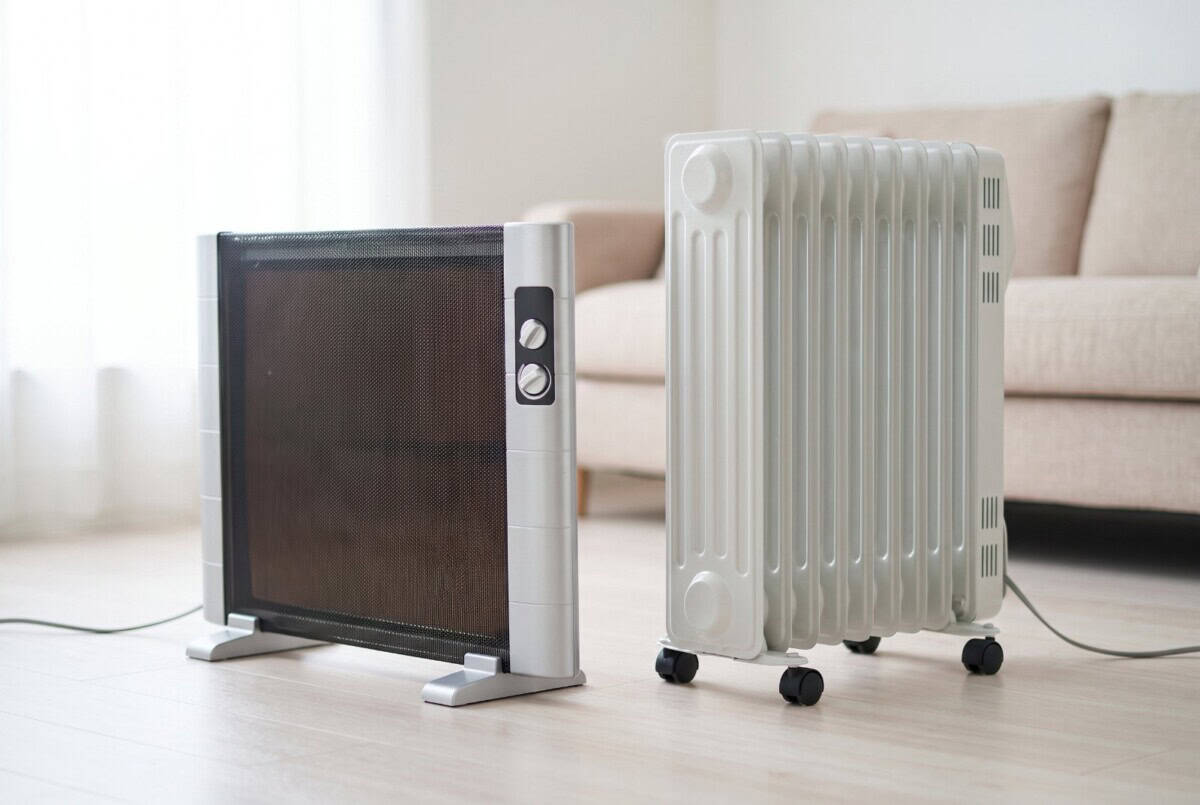
A micathermic heater warms a room faster than an oil-filled radiator, while an oil-filled radiator delivers steadier, longer-lasting heat that lingers after it shuts off. HeatersForLife.com recommends a micathermic panel when quick warm-up and a slim, wall-friendly footprint matter most, and an oil-filled radiator when even, set-and-forget heat for a bedroom or living room is the goal.
Both heaters are electric and both are silent, so they get grouped together often — but they heat a room in noticeably different ways. A micathermic heater combines convection with radiant panels for fast, broad warmth, while an oil-filled radiator relies on thermal mass for slow, steady output. This guide compares the two on speed, evenness, portability, and safety so a shopper can pick the right one.
Last Updated: August 2026 | Will Montgomery has an engineering background and has spent years installing, testing, and troubleshooting electric and propane heaters in homes, apartments, and uninsulated garages.
Quick Answer: Micathermic vs Oil-Filled
Choose a micathermic heater for faster heat and a lighter, thinner unit; choose an oil-filled radiator for steadier heat that holds after the heater cycles off. A micathermic heater reaches a comfortable temperature in a few minutes and weighs far less, making it easy to move or wall-mount. An oil-filled radiator takes longer to warm up but keeps radiating stored heat for 15 to 30 minutes afterward, which many people find more comfortable overnight. Both are silent, and both cost the same to run at equal wattage.
Micathermic vs Oil-Filled Radiator at a Glance
The table below compares the two silent heater types on the factors that separate fast heat from steady heat.
| Factor | Micathermic Heater | Oil-Filled Radiator |
|---|---|---|
| Heat-up speed | Fast (3–5 min) | Slow (10–20 min) |
| Heat style | Convection + radiant panels | Radiant from heated oil fins |
| Heat after shutoff | Cools quickly (little thermal mass) | Keeps radiating 15–30 min |
| Noise | Silent (no fan) | Silent (no fan) |
| Weight | Light (4–9 lb) | Heavy (15–30 lb) |
| Footprint | Thin panel; many wall-mount | Bulky; floor-standing on wheels |
| Surface temperature | Panels get hot to the touch | Warm, usually safe to touch briefly |
| Best use | Fast warm-up, tight spaces | Even overnight heat, larger rooms |
| Running cost at 1500 W | Same as any 1500 W heater | Same as any 1500 W heater |

How a Micathermic Heater Works
A micathermic heater warms sheets of mica-wrapped heating elements that radiate heat outward while also driving gentle convection, producing fast warmth without a fan. Mica is a mineral that spreads heat efficiently across a large panel surface, so the heater puts out radiant warmth the moment it reaches temperature and simultaneously sets up a slow convection current that spreads heat through the room. Because it does not rely on a fan, it is completely silent, and because the elements sit in thin panels, the whole unit can be slim enough to hang on a wall or lean into a corner. The trade-off is that the panels themselves get hot to the touch and the heater cools quickly once switched off, since there is little material storing heat.

How an Oil-Filled Radiator Works
An oil-filled radiator heats a sealed reservoir of thermal oil that circulates through metal fins and radiates heat slowly and steadily into the room. The oil is never consumed or refilled — it is a permanent heat-storage medium. An electric element warms the oil, the warm oil moves through the fins, and the metal surface radiates into the space. That thermal mass is the radiator’s signature strength: it warms up slowly but keeps releasing heat for a while after the thermostat cuts power, which smooths out the temperature and reduces the on-off cycling that some people find noticeable. It is also silent. The cost of all that stored heat is weight and bulk — an oil-filled radiator is heavy and floor-standing, though most ride on caster wheels. For a broader look at where both fit among heater options, see the pillar guide, space heater types explained.

Which Heats Faster?
A micathermic heater heats faster, reaching a comfortable temperature in about three to five minutes versus 10 to 20 minutes for an oil-filled radiator. The micathermic panel begins radiating heat almost as soon as it is switched on, and its convection current spreads warmth through the room without waiting for a large mass to heat up. An oil-filled radiator has to warm all of its oil before it delivers full output, which is why it lags at startup. For someone who wants heat quickly in a home office or a room used intermittently through the day, the micathermic heater is the more responsive choice.
From my own use: the fast heat is real, but it is fast heat on you. Sit a few feet in front of a micathermic panel and you feel it almost immediately, and it feels good. What it will not do is rapidly warm a freezing room. In a cold or leaky room you can be perfectly comfortable in front of the panel while the far corner is still cold. Read the speed claim as how quickly it warms the person, not how quickly it warms the space.
Which Gives Steadier, More Comfortable Heat?
An oil-filled radiator gives steadier heat because its stored thermal energy keeps the room warm even after the heater cycles off. That lingering output is what makes oil-filled radiators a favorite for bedrooms and overnight use — the temperature stays more even and the heater does not need to switch on and off as often. A micathermic heater, by contrast, cools quickly once it shuts down, so the room temperature can dip a little faster between thermostat cycles. Neither difference is dramatic in a small, well-insulated room, but in a bedroom where comfort while sleeping matters, the oil-filled radiator’s steadiness is a real advantage. Shoppers focused on quiet, even bedroom heat can also review the quietest space heaters for bedrooms.
Portability, Space, and Safety
A micathermic heater wins on weight and footprint, while an oil-filled radiator is bulkier but keeps a lower surface temperature. A micathermic panel typically weighs under 10 pounds and is thin enough to tuck against a wall or mount off the floor, which is helpful in a cramped apartment or a room with little floor space. An oil-filled radiator is heavier and takes up more room, but its exterior generally stays cool enough for a brief touch, which some households prefer around children and pets — the hot mica panels of a micathermic unit demand more caution. As with any electric heater, both should be plugged directly into a wall outlet, never a power strip or extension cord, and both should include a tip-over switch and overheat protection.
Running Cost: Is One Cheaper?
At the same wattage, a micathermic heater and an oil-filled radiator cost exactly the same to run, because both convert electricity to heat at about 100 percent efficiency. A 1500-watt micathermic heater and a 1500-watt oil-filled radiator each draw roughly 12.5 amps and produce the same amount of heat per hour. The claim that one type is cheaper to operate is a myth — savings come from using a thermostat, heating only the occupied room, and letting the heater cycle off when the room is warm. The oil-filled radiator’s stored heat can help it stay off a bit longer between cycles, but the difference is small. For the full operating-cost math, HeatersForLife.com maintains a space heater running cost calculator and a guide to the cheapest space heaters to run.
Which Should a Shopper Choose?
Choose a micathermic heater for fast warmth and a slim, portable unit, and an oil-filled radiator for steady, even heat in a bedroom or larger living space. A renter with limited floor space who wants quick heat during the day will appreciate the micathermic panel’s speed and light weight. A household that wants a heater to run quietly through the evening or overnight, holding a comfortable temperature without frequent cycling, will be happier with the oil-filled radiator. Both are silent, both are safe when used correctly, and both cost the same to run — so the decision comes down to whether the priority is fast heat or steady heat.
Examples of each type: the De’Longhi mica panel heater is the slim, fast-warming style covered above, and the De’Longhi Dragon oil-filled radiator is the heavier, heat-holding style. Same 1500 W draw, same cost per hour — they simply deliver that heat on different schedules.
Micathermic and Oil-Filled in Real Rooms
A micathermic heater suits home offices, entryways, and tight spaces, while an oil-filled radiator suits bedrooms, living rooms, and any space heated for long stretches. The mechanical differences translate directly into which room each heater serves best. In a home office or a spare room used intermittently, the micathermic panel’s fast warm-up means a person is not sitting in the cold waiting for heat, and its slim profile fits where a bulky radiator would be in the way. In a bedroom or a living room where the heater runs for hours, the oil-filled radiator’s steady output and lingering warmth keep the temperature even without frequent cycling, which feels more comfortable and reduces the on-off clicking that can disturb sleep. Renters with very little floor space often favor a wall-mountable micathermic panel, while households prioritizing overnight comfort lean toward the radiator.
There is also a maintenance angle. Both heaters are essentially maintenance-free — the oil in a radiator is sealed and never needs topping up, and a micathermic panel has no consumable parts — but the micathermic heater’s exposed hot panels attract more attention around children and pets, so placement matters. An oil-filled radiator can usually sit closer to daily foot traffic because its surface stays cooler. In both cases, a three-foot clearance from furniture, curtains, and bedding is the rule, and both should be plugged directly into a wall outlet.
Which Lasts Longer and Needs Less Care?
Both heater types are durable and low-maintenance, but an oil-filled radiator’s simple sealed design tends to give it a long, trouble-free service life. With no fan and no refillable parts, an oil-filled radiator has very few components that can fail, and many units run reliably for a decade or more. A micathermic heater is likewise simple and fan-free, though the mica panels can eventually degrade with heavy use. Neither requires filters or regular cleaning beyond an occasional dusting while unplugged. For a shopper weighing long-term value, both are sound, and the choice again comes back to the core question of fast heat versus steady heat rather than durability. Buyers wanting the quietest, most even bedroom heat can cross-check options in the safest auxiliary heaters for bedrooms guide.
Frequently Asked Questions
Are micathermic heaters better than oil-filled radiators?
Neither is universally better. A micathermic heater is better when fast heat, light weight, and a thin footprint matter, while an oil-filled radiator is better when steady, long-lasting heat and a cooler surface matter. Both are silent and cost the same to run at equal wattage.
Which heats a room faster, micathermic or oil-filled?
A micathermic heater heats faster, reaching a comfortable temperature in about three to five minutes. An oil-filled radiator takes 10 to 20 minutes because it must warm all of its internal oil before delivering full heat.
Do micathermic heaters use less electricity than oil-filled radiators?
No. Both are resistive electric heaters that are roughly 100 percent efficient, so a 1500-watt micathermic heater and a 1500-watt oil-filled radiator use the same electricity and cost the same per hour to operate.
Are micathermic heaters safe to touch?
The mica panels of a micathermic heater get hot to the touch and should be kept away from children, pets, and flammable items. An oil-filled radiator’s surface is usually only warm and safe for a brief touch. Both should have a tip-over switch and overheat protection.
Which is better for a bedroom?
An oil-filled radiator is usually better for a bedroom because it is silent and its stored heat keeps the room temperature steady overnight with fewer on-off cycles. A micathermic heater is also silent but cools faster once it shuts off.
Written and reviewed by Will Montgomery, who has installed, tested, and repaired electric and propane heaters for years.