

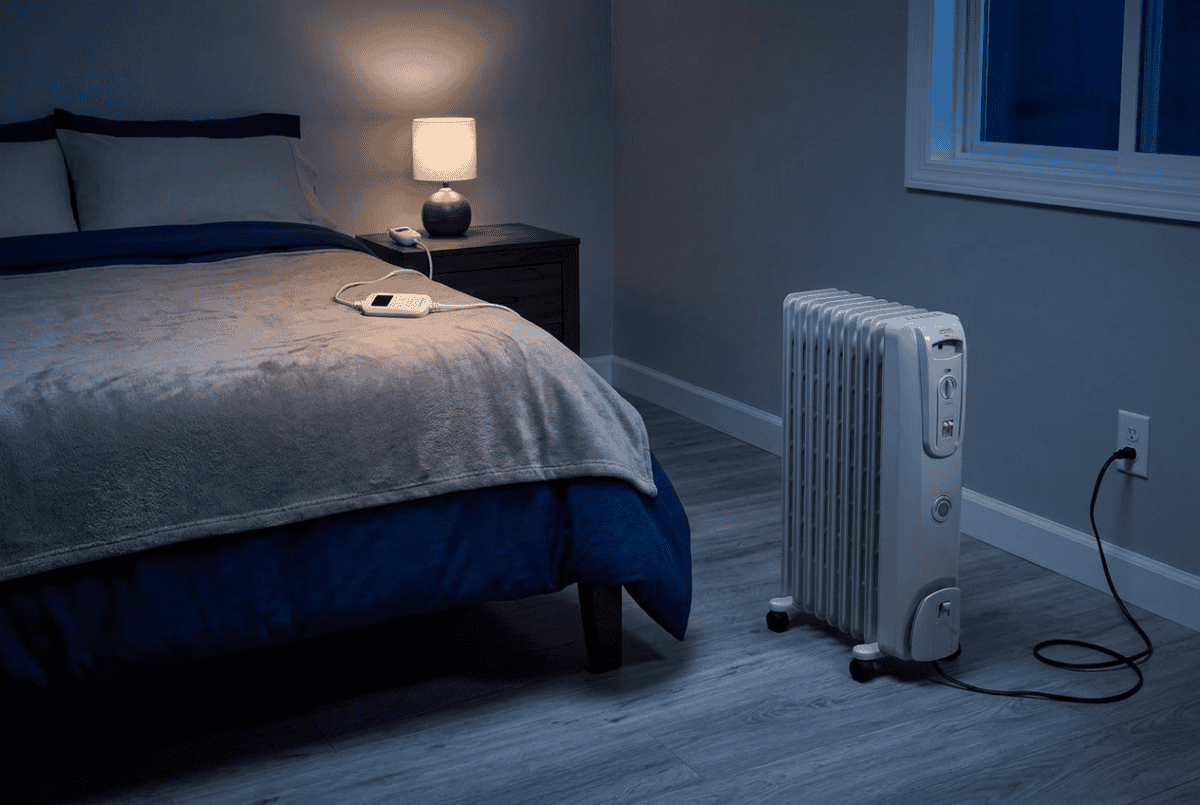
A heated blanket costs a small fraction of what a space heater costs to run because it warms the body directly with 100 to 200 watts, while a space heater warms the whole room with up to 1500 watts. This heatersforlife.com comparison covers the real cost, safety, and warmth differences so a household can pick the right one for a cold bedroom.
Last Updated: September 2026 | Will Montgomery has an engineering background and has spent years installing, testing, and troubleshooting electric and propane heaters.
Quick Answer: Heated Blanket or Space Heater for the Bedroom?
A heated blanket is the cheaper and safer choice for staying warm in bed, while a space heater is the better choice for warming the whole room, including the air a person breathes and the floor they step onto. A heated blanket draws about 100 to 200 watts and heats only the person under it, costing roughly 2 to 3 cents per hour to run. A 1500-watt space heater draws up to ten times as much power and costs about 25 cents per hour, but it raises the temperature of the entire room. The decision comes down to whether the goal is a warm body or a warm room.
The Running-Cost Difference Is Enormous
A heated blanket costs about a tenth of what a space heater costs to run, because wattage — not the type of device — drives the electricity bill. Every electric heating device is close to 100 percent efficient, so the cost is set almost entirely by how many watts it pulls and for how long. A heated blanket at 150 watts uses 0.15 kWh per hour; a 1500-watt space heater uses 1.5 kWh per hour. At 17 cents per kWh, that is about 2.5 cents an hour for the blanket versus about 25 cents an hour for the heater. Over an eight-hour night the blanket costs roughly 20 cents and the heater roughly $2.00.
| Metric | Heated Blanket | 1500W Space Heater |
|---|---|---|
| Typical power draw | 100–200 W | Up to 1500 W |
| Cost per hour @ 17¢/kWh | ~$0.02–$0.03 | ~$0.25 |
| Cost per 8-hour night | ~$0.20 | ~$2.00 |
| Cost per 30 nights | ~$6 | ~$61 |
| What it warms | The body under it | The whole room |
| Warm air & floor | No | Yes |

Example products for this comparison: a queen-size Sunbeam Royal Ultra fleece heated blanket on the blanket side, and a quiet, cool-touch 1500W De’Longhi EW7707CM oil-filled radiator on the space-heater side.
Over a full month of nightly use, that is roughly $6 for the blanket against about $61 for the space heater. A reader who wants to run the numbers for their own electricity rate can use the heatersforlife.com space heater running-cost calculator.
Warmth: The Blanket Wins in Bed, the Heater Wins in the Room
Will’s note: I slept in a cold bedroom as a kid and an electric blanket was the fix. It was great while I was asleep. Getting dressed in that room in the morning was not great. Then again, I was a boy, and it did not take me long.

A heated blanket delivers warmth exactly where the body touches it, while a space heater warms the surrounding air so the whole room feels comfortable. Under the covers, a heated blanket feels warmer faster than a space heater, because it transfers heat directly to the skin rather than waiting for the room air to rise in temperature. But the moment a person gets out of bed, the blanket does nothing for the cold floor, the chilly air, or the rest of the room. A space heater is the opposite: it takes longer to make the bed feel warm, yet it keeps the entire room — and the air a sleeper breathes — at a comfortable temperature all night. Households that want both often use a heated blanket for direct warmth and a low space-heater setting to keep the room air from getting frigid.
Types of Heated Blankets and Their Wattage

Heated bedding ranges from low-wattage throws to full mattress pads, and the wattage determines both how much of the bed is warmed and how little it costs to run. A small heated throw draws roughly 50 to 100 watts and warms a person on a couch or a portion of a bed. A full-size electric blanket that lies on top typically draws 100 to 200 watts and can warm both sides of a queen bed on dual-control models. A heated mattress pad sits under the sheet and warms the bed from below, usually in the same 100-to-200-watt range, and many people find it the most comfortable because the warmth radiates upward before they get in. Even at the top of that range, a heated blanket uses barely more than a tenth of a 1500-watt space heater’s power, so every version is dramatically cheaper to run. Dual-zone models let two sleepers set different temperatures, which avoids one person overheating while the other stays cold — something a single space heater cannot do for a shared room.
Most modern heated blankets include a preheat setting and an auto-shutoff timer, commonly one to ten hours. The preheat warms the bed before bedtime, and the timer lets the blanket switch off after the sleeper is asleep and no longer needs active heat, trimming the already-small running cost even further.
The Cheapest Comfortable Setup for a Cold Bedroom
The lowest-cost way to sleep warm in a cold room is usually a heated blanket for the body plus a low space-heater setting to keep the air breathable, rather than a space heater running full blast all night. Running a 1500-watt space heater at maximum for eight hours costs about $2.00 a night, while a heated blanket plus a heater on a low 500-to-750-watt setting might cost half that and still keep both the sleeper and the room air comfortable. The blanket does the heavy lifting of keeping the body warm, so the heater only has to take the bite out of the room air rather than heat the whole space to a cozy temperature. Households chasing the lowest bill can skip the heater entirely and rely on the blanket, accepting a cold room in exchange for spending pennies a night. The right balance depends on how cold the room gets and whether anyone needs to get up and move around a warm room in the morning.
Safety: Two Very Different Risk Profiles
Both devices carry fire risk if misused, but a heated blanket adds the risk of direct contact burns, while a space heater adds the risk of igniting nearby furniture and drawing heavy current. Heated blankets should be replaced every ten years, never folded or bunched while running, never used with an infant, a pet that chews, or anyone who cannot sense overheating, and never layered under a heavy comforter that traps heat. A space heater should be plugged directly into a wall outlet, kept three feet from bedding and curtains, and placed on a hard, level surface. Because a 1500-watt heater draws about 12.5 amps, it should never share a circuit with other large loads, a point covered in the heatersforlife.com guide to how many amps a space heater uses. Anyone considering leaving either device on while asleep should read the guidance on leaving a space heater on overnight and choose a model with tip-over and overheat protection. A space heater should also never run on a power strip, as explained in the guide to why space heaters and power strips do not mix.
Which One a Household Should Choose

A heated blanket is the right pick for one or two people who only need warmth while in bed, and a space heater is the right pick when the whole bedroom needs to be comfortable. A single sleeper in a well-insulated room who dreads the electric bill will save the most with a heated blanket. A household with a drafty bedroom, a partner who wakes early, or a need to get dressed in a warm room will get more value from a space heater, ideally a quiet model suited to sleeping. The two are not mutually exclusive: the cheapest comfortable setup is often a heated blanket for the body plus a modest space-heater setting to keep the room air tolerable, which costs far less than running a space heater at full power all night. For picking a bedroom-friendly unit, heatersforlife.com maintains a guide to the best space heaters for small apartments and bedrooms.
Frequently Asked Questions
Is a heated blanket cheaper than a space heater?
Yes, by a wide margin. A heated blanket draws 100 to 200 watts versus up to 1500 watts for a space heater, so it costs about a tenth as much to run — roughly 2 to 3 cents per hour compared with about 25 cents per hour.
Is it safe to leave a heated blanket on all night?
Many modern heated blankets have auto-shutoff timers and are designed for overnight use, but they should be replaced every ten years, never bunched or folded while on, and never used by infants, pets, or anyone who cannot sense overheating. When in doubt, use the timer.
Does a heated blanket warm the room?
No. A heated blanket only warms the body in direct contact with it. It does nothing for the room air, the floor, or anyone not under it, which is the main advantage a space heater has.
Can a heated blanket and a space heater be used together?
Yes, and it is often the cheapest comfortable setup. A heated blanket handles direct body warmth while a low space-heater setting keeps the room air from getting frigid, which costs far less than running the space heater at full power all night.
How much does it cost to run a heated blanket per month?
Running a 150-watt heated blanket eight hours a night for 30 nights costs about $6 at 17 cents per kWh. The same schedule on a 1500-watt space heater costs about $61.
Written and reviewed by Will Montgomery, who has installed, tested, and repaired electric and propane heaters for years.