

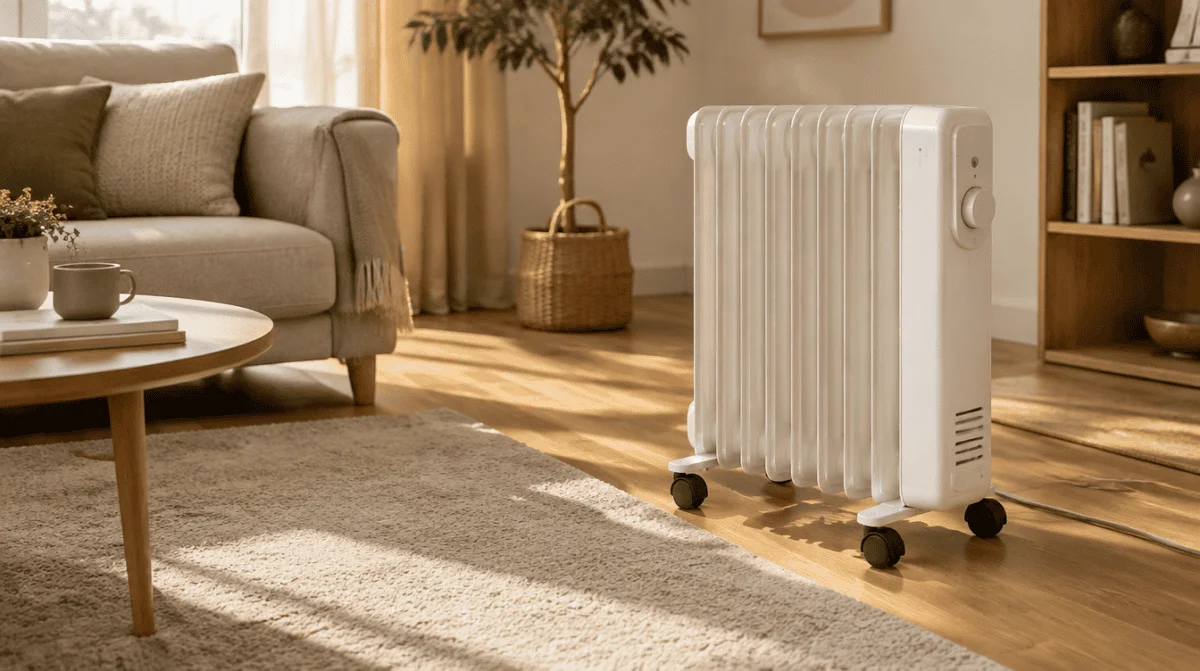
An oil-filled radiator that will not get hot is most often a thermostat turned too low, a tripped tip-over or overheat cutoff, or an internal heating element that has failed. At heatersforlife.com we walk through the checks in the order a technician would, so you can tell a five-second fix from a heater that has reached the end of its life.
Quick answer: Start with the easy causes — confirm the thermostat is turned up, the timer is not off, the unit is upright so the tip-over switch is closed, and it is plugged straight into a wall outlet. If power reaches the radiator but it stays cold, the heating element or thermal cutoff has likely failed. Because the oil in these radiators is sealed and not refillable, a dead element usually means the unit is toast and should be replaced rather than repaired.

Last Updated: September 2026 | Will Montgomery has an engineering background and has spent years installing, testing, and troubleshooting electric and propane heaters in homes, apartments, and uninsulated garages.
Check the simple causes first
Most “no heat” complaints on an oil-filled radiator come down to a control set wrong or a safety switch doing its job. Before you assume the worst, rule out the quick items:
- Thermostat too low: the radiator only heats until the room reaches the dial setting, then it stops. Turn the thermostat to maximum and see if the element kicks on.
- Timer or eco mode: a programmable timer or energy-saving mode may be holding the element off. Reset it to continuous.
- Tip-over switch: these heaters have a switch that cuts power unless the unit sits flat and upright. Set it squarely on a hard floor.
- Outlet and cord: plug directly into a known-good wall outlet, not a power strip or extension cord, and test the outlet with another device or a plug-in outlet tester
 . Our power strip safety guide explains why the cord matters.
Why only half the radiator gets warm
Uneven warmth — hot at the bottom, cool at the top, or warm on one side only — is normal convection behavior, not a fault. An oil-filled radiator heats its sealed oil at the base with an electric element, and that hot oil rises through the fins by convection while cooler oil sinks. The result is that the lower and near fins warm first and most, while the far top corner runs cooler. This is expected physics, and it is why these radiators warm a room gently and steadily rather than blasting hot air.
What is not normal is a radiator that never warms beyond lukewarm anywhere, or that used to heat evenly and now leaves a large cold zone. That pattern points to a weakening element or a control fault rather than ordinary convection. If you are comparing this slow, even style of heat against faster options, our comparison of micathermic vs oil-filled radiators explains the trade-off between quick heat and steady heat.
When power reaches the unit but it stays cold
If the controls are set correctly and the outlet is live but the radiator never heats, the element or a thermal safety cutoff has most likely failed. Inside the sealed housing, an electric resistance element heats the oil; a thermal cutoff protects against overheating. Either can fail open, which stops heat while the rest of the unit looks fine. Signs the internal fault is the culprit include a heater that clicks or hums but never gets warm, one that trips its safety after a few minutes, or a faint burning smell followed by no heat at all.
| Symptom | Likely cause | Fixable at home? |
|---|---|---|
| Only bottom/near fins warm | Normal convection | No fix needed |
| Element hums, no heat | Failed heating element | No — sealed unit, replace heater |
| Heats a few minutes then stops | Tripped overheat cutoff or failing element | Rarely — usually replace |
| Dead, no click or hum | Cord, thermostat, or open thermal fuse | Sometimes — check cord/outlet first |

Why a dead oil-filled radiator is usually not worth repairing
The oil in these radiators is permanently sealed at the factory and is not designed to be opened, topped up, or serviced. That sealed design is exactly why oil-filled radiators are low-maintenance — there is nothing to refill — but it also means that when the internal element or thermal cutoff fails, opening the unit is neither practical nor safe, and replacement parts generally are not sold to consumers. Given that a new oil-filled radiator is inexpensive, a unit with a confirmed dead element is effectively toast. A new De’Longhi 1,500 W oil-filled radiator with a ComfortTemp thermostat runs about $130, which is less than most repair attempts would cost in time alone. Recycle it responsibly rather than attempting to breach the sealed oil chamber. For related electric-heat faults, our space heater troubleshooting hub and our guide to a heater that keeps shutting off cover the overheat-sensor behavior in more depth.
Testing power step by step
Will’s note: I had an oil-filled radiator heating a storage room at one of my business properties go dead and assumed the element was gone. When I checked it, the element was fine; the power switch had failed. I rigged in a replacement toggle switch and that heater ran for years afterward, so test the switch before you write off the element.
A simple, ordered power check tells you whether the problem is outside the heater or sealed inside it. With the unit unplugged to start, work outward to inward:

- Plug a lamp or phone charger into the same outlet to confirm the outlet itself is live.
- Inspect the heater’s cord and plug for damage, melting, or a loose fit, and feel the plug for heat after a short run.
- Set the thermostat to maximum and any timer to continuous, then listen for the faint click of the thermostat closing.
- Make sure the radiator is fully upright on a hard floor so the tip-over switch is closed.
If the outlet is live, the cord is sound, and the controls are set correctly but the radiator still never warms, you have confirmed the fault is internal — the sealed element or thermal cutoff — and no external fix will bring it back.
Why oil-filled radiators fail this way
The same sealed, low-maintenance design that makes oil-filled radiators reliable is what makes them unrepairable when the element finally goes. These heaters have very few parts that can fail: the resistance element, the thermostat, and a thermal cutoff. For years that simplicity means almost nothing goes wrong, which is why they are a favorite for bedrooms and nurseries where quiet, flameless heat matters. But when the element or its safety fuse eventually opens after long service, the sealed steel body cannot be opened safely, the oil cannot be serviced, and consumer replacement parts are not offered. That is simply the trade-off of the sealed design, and it is why a dead oil-filled radiator is recycled rather than fixed. When you replace one, comparing it against faster-heating styles in our oil-filled vs ceramic guide helps you decide whether steady radiant heat is still what the room needs.
Frequently asked questions
Why is my oil-filled radiator not getting hot?
Usually the thermostat is set too low, a timer or eco mode is holding it off, the tip-over switch is open because the unit is not upright, or the outlet is dead. If the controls are correct and power is present but it stays cold, the heating element or thermal cutoff has likely failed.
Why is only half of my radiator warm?
That is normal. The element heats the sealed oil at the base, and hot oil rises by convection while cooler oil sinks, so the lower and nearer fins run hotter than the top far corner. It only signals a problem if the radiator never warms beyond lukewarm or a large area stays cold.
Can you refill the oil in an oil-filled radiator?
No. The oil is permanently sealed at the factory and is not meant to be opened or topped up. These heaters never need refilling in normal use, and a unit that fails internally cannot be safely reopened to service the oil.
Is an oil-filled radiator worth repairing?
Usually not. When the sealed element or thermal cutoff fails, parts are generally unavailable and opening the sealed chamber is impractical. Since a replacement is inexpensive, most failed units are recycled rather than repaired.
How long should an oil-filled radiator take to heat a room?
These heaters warm slowly and steadily, often taking a half hour or more to bring a room to temperature, because they heat by radiating from warm oil rather than blowing hot air. That gradual warmth is by design, so slow is not the same as broken.
Will Montgomery is an engineer who has kept oil-filled radiators running in rental and storage rooms, including tracing a dead unit to a failed switch rather than the element.