

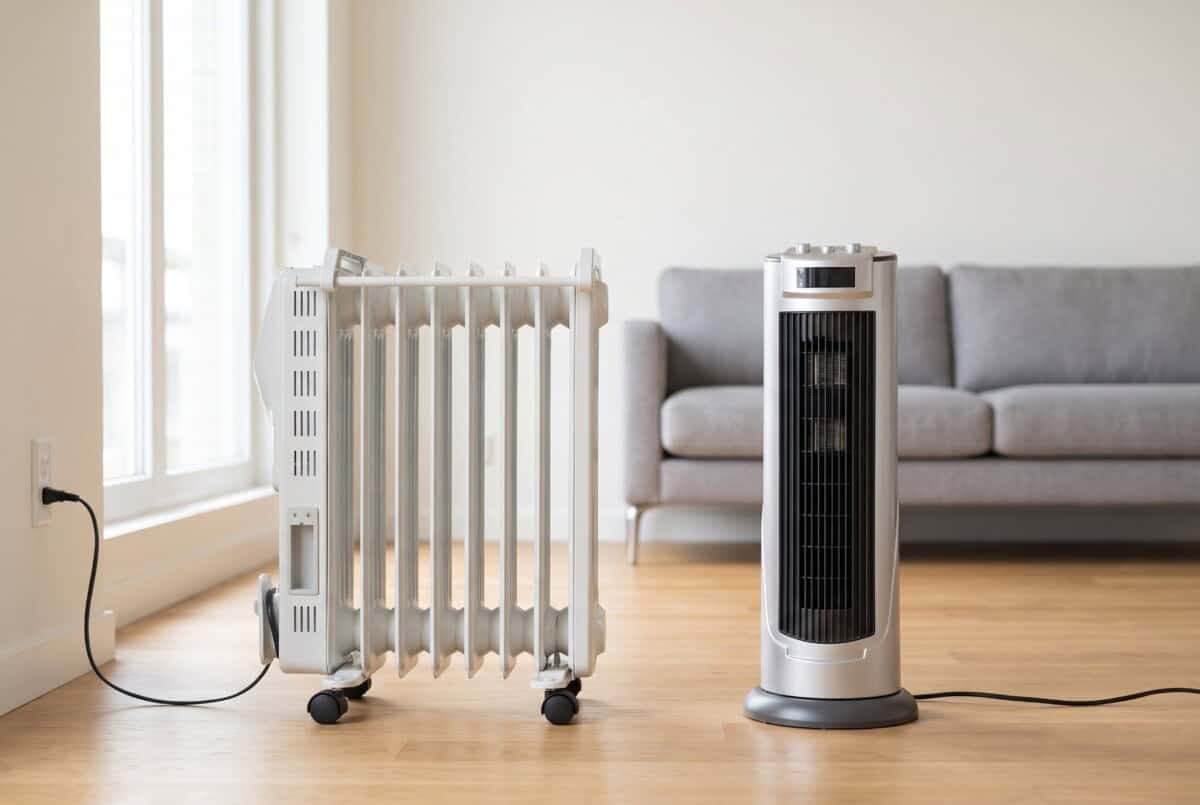
For most apartments, a ceramic heater is the better pick when a renter wants a room warm fast, and an oil-filled radiator is the better pick when a renter wants silent, steady heat that is safe to leave running. HeatersForLife.com recommends matching the heater to the room and the moment: ceramic for quick bursts in a living room or bathroom, oil-filled for quiet overnight warmth in a bedroom.
Both are electric resistance heaters, so they turn nearly all the electricity they draw into heat. That means the real differences a renter feels are not about efficiency at all — they are about how fast the heat arrives, how much noise the heater makes, how hot the surface gets, and how safe it feels to leave on. This guide breaks down oil-filled versus ceramic heaters the way an apartment dweller actually experiences them.
Last Updated: August 2026 | Will Montgomery has an engineering background and has spent years installing, testing, and troubleshooting electric and propane heaters in homes, apartments, and uninsulated garages.
Quick Answer: Oil-Filled vs Ceramic for Apartments
A ceramic heater warms a room faster and is lighter to move, while an oil-filled radiator runs silently and holds heat longer after it shuts off. A renter who values a quiet bedroom and safe-to-touch operation should lean oil-filled; a renter who wants near-instant warmth in a living area or a quick-heating bathroom should lean ceramic. Neither costs meaningfully more to run at the same wattage, because both convert electricity to heat at roughly 100 percent efficiency.
Oil-Filled vs Ceramic Heater at a Glance
The table below compares the two heater types on the factors that matter most inside an apartment: heat speed, noise, surface safety, and best use.
| Factor | Oil-Filled Radiator | Ceramic Heater |
|---|---|---|
| How fast it heats | Slow to warm up (10–20 min), heats the whole room gradually | Fast (1–3 min), pushes warm air quickly |
| Noise level | Silent — no fan | Fan hum (most models) |
| Surface temperature | Warm, generally safe to touch briefly | Outlet air is hot; some models stay cool-touch on the casing |
| Heat after shutoff | Keeps radiating for 15–30 min (thermal mass) | Cools almost immediately |
| Weight and portability | Heavier (15–30 lb), on wheels | Light (3–8 lb), easy to carry |
| Best room | Bedroom, small living room, overnight use | Bathroom, home office, quick living-room warm-ups |
| Typical wattage | Up to 1500 W | Up to 1500 W |
| Running cost at 1500 W | Same as any 1500 W heater | Same as any 1500 W heater |

How Each Heater Actually Makes Heat
An oil-filled radiator heats a sealed reservoir of thermal oil that radiates warmth slowly, while a ceramic heater blows air across a hot ceramic element to deliver warm air almost instantly. Understanding the mechanism explains every practical difference a renter notices.
Oil-Filled Radiators: Slow, Silent, Steady
Inside an oil-filled radiator, an electric element warms a diathermic oil that never needs refilling — it is permanently sealed and simply acts as a heat-storage medium. The warm oil circulates through the fins, and the metal surface radiates heat into the room. Because there is no fan, the heater is completely silent, which is why it is a favorite for bedrooms and nurseries. The trade-off is patience: it can take 10 to 20 minutes to feel a difference, and the room warms from the surfaces outward rather than from a blast of hot air. The upside of that thermal mass is that the radiator keeps giving off heat for 15 to 30 minutes after it cycles off, which smooths out temperature swings overnight.
Ceramic Heaters: Fast, Directed, Fan-Driven
A ceramic heater passes electricity through a PTC (positive temperature coefficient) ceramic element that heats up quickly, then a small fan pushes air across it and out into the room. The result is warm air within a minute or two, aimed wherever the heater points. That makes ceramic heaters ideal for spot heating — warming a desk, a bathroom before a shower, or one end of a living room. The cost is noise: most ceramic models have an audible fan hum that some light sleepers find distracting. Ceramic heaters also stop warming the room almost immediately when they shut off, since there is no stored heat.

Which Is Quieter for Overnight Use?
An oil-filled radiator is the clear winner for silent overnight heat because it has no fan and no moving parts. For a renter who runs a heater in the bedroom while sleeping, the fan hum of a ceramic unit can be the deciding factor. Oil-filled radiators produce essentially no sound once running, aside from an occasional faint tick as the metal expands. That silence, combined with steady radiant warmth and the heat that lingers after shutoff, is why oil-filled models dominate lists of the quietest space heaters for bedrooms. Renters who want a heater specifically for sleeping should also review the safest options in the safest auxiliary heaters for bedrooms buying guide.
From my own use: if an oil-filled radiator cannot hold a bedroom and cycle off and on with its own thermostat, the heater is usually not the problem — the room is. Either the insulation is poor or the room is simply too large for one unit. In a normal 100 to 120 square foot bedroom with some insulation and a window that genuinely shuts out the draft, an oil-filled radiator should keep up comfortably overnight. If yours runs flat out and never cycles off, look at the room before you blame the heater.
Which Heats a Room Faster?
A ceramic heater warms a room faster because its fan delivers hot air within a minute or two, while an oil-filled radiator needs 10 to 20 minutes to build up warmth. When a renter walks into a cold apartment and wants heat now, ceramic wins. The fan-forced design is also better at reaching across a larger or draftier space, since it actively moves air rather than relying on slow radiant spread. For a compact studio or a small bedroom, either type will eventually warm the room, but ceramic gets there first. Renters comparing picks for tight spaces can see recommended models in the guide to the best space heaters for small apartments.

Safety and Renter Considerations
Both heater types are safe for apartments when they include a tip-over switch and overheat protection, but oil-filled radiators generally run cooler at the surface and ceramic units cool down faster after shutoff. Renters share walls, floors, and often carpet, so surface safety matters. An oil-filled radiator’s exterior gets warm but is usually safe for a brief touch, which is reassuring around pets and children. A ceramic heater blows genuinely hot air from its outlet, though many models keep the plastic casing cool to the touch. For any electric heater, the single most important safety rule is to plug it directly into a wall outlet — never a power strip or extension cord — because the high current can overheat a light-gauge cord. Renters who want to keep a heater on while they sleep should read the conditions in the guide on whether it is safe to leave a space heater on overnight.
Running Cost: Do Oil-Filled and Ceramic Heaters Differ?
At the same wattage, an oil-filled radiator and a ceramic heater cost exactly the same to run, because every resistive electric heater converts electricity to heat at about 100 percent efficiency. This is the most misunderstood point in the whole comparison. A 1500-watt ceramic heater and a 1500-watt oil-filled radiator both draw about 12.5 amps and both cost the same per hour to operate. Where a renter actually saves money is by using a thermostat, running the heater only in the occupied room, and choosing a heater whose behavior lets it cycle off sooner — for example, the oil-filled radiator’s stored heat can let it stay off longer between cycles. For the real math on operating cost, HeatersForLife.com maintains a detailed breakdown in the guide to the cheapest space heaters to run and a full space heater running cost calculator.
Which Should a Renter Choose?
A renter should choose an oil-filled radiator for a bedroom or any space where silence and safe surfaces matter, and a ceramic heater for fast warmth in a bathroom, office, or living room. Many apartment dwellers end up owning both: an oil-filled radiator for the bedroom and a light ceramic unit to carry between rooms. If only one heater fits the budget and the priority is sleeping comfortably, the silent oil-filled radiator is usually the better all-rounder. If the priority is instant heat in a room used during the day, the ceramic heater delivers. Renters can see how both fit into the broader lineup of options in the pillar guide, space heater types explained, and compare ceramic against a different radiant option in infrared vs ceramic heaters.
Examples of each type: for the silent, overnight side, the De’Longhi Dragon oil-filled radiator has the fin mass and programmable thermostat described above. For the fast, targeted side, the Lasko ceramic tower heater warms a room in a minute or two. Both draw the same 1500 W, so the choice is about noise and timing, not running cost.
Which Heater Fits Each Apartment Room?
The best heater type depends on the room: oil-filled for bedrooms, ceramic for bathrooms and offices, and either for a small living room. Matching the heater to the space is what makes an apartment comfortable without overspending or creating a safety hazard. In a bedroom, silence and steady overnight warmth make the oil-filled radiator the natural fit — there is no fan to disturb sleep, and the stored heat keeps the room even through the night. In a bathroom, where a person wants warmth for a few minutes before and after a shower, the ceramic heater’s fast, directed heat is ideal, though it should be kept well away from water and plugged into a properly protected outlet. In a home office, the quick warm-up of a ceramic unit heats the workspace fast, and its lighter weight makes it easy to slide under a desk. For a small living room, either type works, though a renter who wants to leave the heater running for hours will appreciate the oil-filled radiator’s even output.
Renters who move frequently face an added consideration: portability. A light ceramic heater is far easier to pack and carry between apartments than a heavy oil-filled radiator, so someone who relocates often may prefer ceramic for that reason alone. Whichever type a renter picks, the same safety rules apply in every room — a tip-over switch, an overheat cutoff, a wall-outlet-only connection, and a three-foot clearance from bedding, curtains, and furniture. These habits matter more than the heater type when it comes to preventing a fire or a blown breaker.
Common Mistakes Renters Make
The most common mistakes are plugging a heater into a power strip, running it on a shared or overloaded circuit, and expecting one heater type to be cheaper to run than another. A space heater draws about 12.5 amps at 1500 watts, which is close to the limit of a standard 15-amp circuit, so plugging it into a power strip or extension cord, or running it on the same circuit as other high-draw devices, is a real fire and breaker-tripping risk. Another frequent error is buying an oil-filled radiator for a room that needs fast heat, then being frustrated by the slow warm-up — or buying a ceramic heater for a bedroom and losing sleep to the fan hum. Choosing the heater to match the room, as described above, avoids both problems. Finally, no renter should expect to save on electricity by switching heater types; the savings come from a thermostat and smart use, which HeatersForLife.com details in its running-cost guides.
Frequently Asked Questions
Is an oil-filled heater better than a ceramic heater for an apartment?
It depends on the room. An oil-filled radiator is better for a bedroom because it is silent and holds heat, while a ceramic heater is better for a bathroom, office, or living room because it warms the space in a minute or two. Neither is more efficient than the other at the same wattage.
Which heater is safer to leave on overnight?
An oil-filled radiator is generally the safer choice for overnight use because it has no fan, runs silently, and keeps its surface temperature moderate. Any heater left on overnight should have a tip-over switch and overheat shutoff, and it must be plugged directly into a wall outlet rather than a power strip.
Do oil-filled radiators use more electricity than ceramic heaters?
No. Both are resistive electric heaters that convert electricity to heat at roughly 100 percent efficiency, so a 1500-watt oil-filled radiator and a 1500-watt ceramic heater use the same amount of electricity and cost the same per hour to run.
Why does a ceramic heater feel warmer faster?
A ceramic heater uses a fan to blow air across a hot element, delivering warm air within a minute or two. An oil-filled radiator has no fan and warms the room slowly by radiating heat from its oil-filled fins, which takes 10 to 20 minutes to feel.
Which heater is quieter?
The oil-filled radiator is quieter. It produces essentially no sound because it has no fan, making it the preferred choice for light sleepers. Most ceramic heaters have an audible fan hum while running.
Written and reviewed by Will Montgomery, who has installed, tested, and repaired electric and propane heaters for years.