

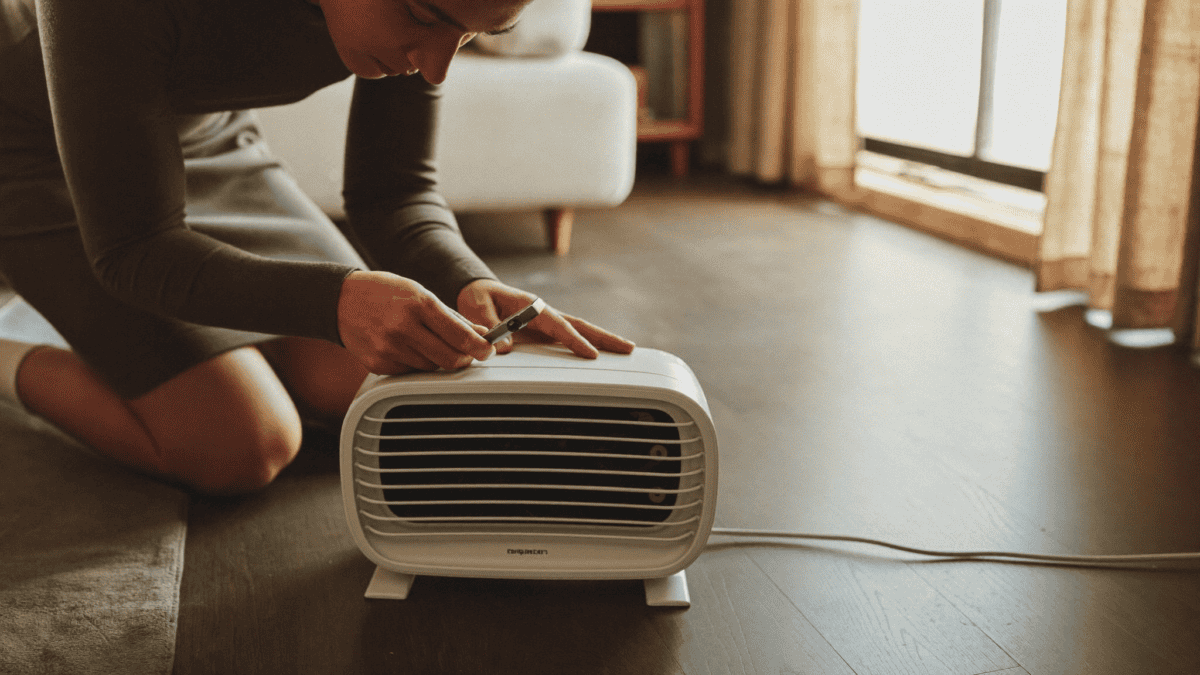
When a space heater is not working, the problem is almost always one of five things: no power reaching the unit, a tripped safety switch (tip-over or overheat), a dirty or blocked heating element, a thermostat set too low, or an overloaded circuit. This troubleshooting hub from heatersforlife.com walks through every common space heater symptom, tells you the most likely cause of each, and links to a step-by-step fix so you can get warm again without guessing or replacing a heater that only needed a reset.
Last Updated: August 2026 | Will Montgomery has an engineering background and has spent years installing, testing, and troubleshooting electric and propane heaters in homes, apartments, and uninsulated garages.
Quick Answer: How to Diagnose a Space Heater That Won’t Work
Start at the outlet and work inward — confirm the heater has power, then check its safety switches, then its controls, and finally the heating element itself. Roughly 8 out of 10 “dead” space heaters are not broken at all; they have tripped a tip-over or overheat safety cutoff, lost power at the outlet, or had their thermostat turned below room temperature. Work through the symptom table below, jump to the matching guide, and only consider replacing the unit once power, safety switches, thermostat, and airflow have all been ruled out.
Space Heater Symptom-to-Cause Table
Match what your heater is actually doing to the most likely cause, then follow the linked fix. The table below is the fastest way to route yourself to the right repair instead of reading every section.
| Symptom | Most likely cause | First thing to check |
|---|---|---|
| Fan runs but blows cold or lukewarm air | Tripped thermal cutoff, dirty element, or thermostat set low | Turn the thermostat to max; let the unit cool 30 minutes and retry |
| Heater runs a few minutes then shuts off | Overheat sensor tripping from dust or blocked airflow | Clear vents, vacuum the grilles, move it off carpet |
| Heater trips the breaker or GFCI | Circuit overloaded (1500W ≈ 12.5A) or ground fault | Move the heater to its own dedicated wall circuit |
| Nothing happens — no fan, no light | Dead outlet, tripped tip-over switch, or blown thermal fuse | Test the outlet, set the heater fully upright on a hard floor |
| Burning or hot-plastic smell | Dust burn-off (normal) or overheating wiring (not normal) | Unplug immediately if the smell is plastic or electrical |
| Clicking, buzzing, or popping noises | Metal expansion (normal) or a loose fan/part (not normal) | Identify whether the noise is steady or grinding |
Step 1: Confirm the Heater Actually Has Power
Before blaming the heater, prove that the outlet is live and the plug is fully seated. A space heater draws more current than almost anything else you plug into a wall, so a marginal outlet, a tripped breaker, or a worn plug connection will stop it cold. Plug a lamp or phone charger into the same outlet — if that dies too, the problem is the circuit, not the heater.
Never run a space heater through a power strip or extension cord. Those connections can’t safely carry the 12.5 amps a 1500-watt heater pulls, and a loose or undersized cord will overheat, drop voltage, and make the heater behave as if it’s failing. Plug directly into a wall outlet every time — heatersforlife.com covers exactly why in why you should never plug a space heater into a power strip.
If the heater keeps killing power to the whole circuit, that’s its own diagnosis — see space heater keeps tripping the breaker or GFCI.
Step 2: Check the Safety Switches (Tip-Over and Overheat)
Every modern space heater has two automatic shutoffs — a tip-over switch and an overheat sensor — and either one will make a working heater act dead. The tip-over switch is a spring-loaded button on the base that must be fully compressed by the heater’s own weight; if the unit is on carpet, on an uneven floor, or leaning, the switch stays open and the heater won’t run.

The overheat sensor (a thermal cutoff) shuts the element down when internal temperature climbs too high, usually because dust or a blocked vent is trapping heat. After an overheat trip, many heaters need to cool for 20–30 minutes before they’ll restart. Set the heater fully upright on a hard, level surface, give it time to cool, and try again before assuming it’s broken. If it powers up but won’t stay on, follow why your space heater keeps shutting off.
Step 3: Rule Out the Thermostat and Settings
A thermostat set below the current room temperature will keep the heater’s element off even though the unit has power. Most heaters cycle the element on only when the room is colder than the dial setting, so on a mild afternoon the fan may run while the element never fires. Turn the thermostat to maximum and switch to the highest heat setting to confirm the element will light at all.
Also check for an ECO or “auto” mode, a timer, or a child lock — any of these can hold the heater in standby. If the fan blows but the air never gets warm even at full thermostat, move on to the element check and see space heater blowing cold air: reasons and fixes.
Step 4: Inspect Airflow and the Heating Element
A space heater buried in dust or starved of airflow will overheat, cut out, or blow cool — cleaning the grilles fixes a surprising share of “dead” units. Dust is an insulator: it coats the element and clogs the intake, so heat builds up behind the sensor and trips it early. With the heater unplugged and cool, vacuum both the intake and outlet grilles and clear at least three feet of open space around the unit.
If the fan spins freely and airflow is clear but there’s still no heat, the resistive element or its PTC ceramic stone may have failed. Because all resistive electric heaters convert essentially 100% of the electricity they draw into heat, a working element of a given wattage always produces the same heat output — so “no heat with a running fan” points to a broken element or a tripped internal cutoff, not a weak heater.
Step 5: Read the Warning Signs — Smells and Noises
A faint dusty smell on first use is normal burn-off; a sharp plastic, rubber, or electrical smell means unplug the heater now. New heaters and ones stored all summer often release an oily or dusty odor for the first 10–20 minutes as manufacturing residue and settled dust burn off the element. That fades. What should never be ignored is a melting-plastic or acrid electrical smell, which signals overheating wiring or a failing plug — see space heater smells like burning: when it’s normal vs. when to unplug it.

Noises follow the same logic: quiet ticking or faint expansion clicks as metal heats and cools are harmless, while grinding, loud buzzing, or rattling usually means a loose fan blade or a failing motor bearing. Steady equals fine; irregular or worsening equals investigate.
Step 6: Decide Whether to Fix It or Replace It
Repair a space heater when the fix is a reset, a cleaning, or a cheap cord; replace it when the element is dead, the plug is scorched, or the unit is on a safety recall. Most portable heaters are inexpensive, so paying for parts and labor rarely makes sense once the heating element itself has failed. But a heater that only needed its tip-over switch seated, its vents cleaned, or its thermostat turned up is not worth throwing away.

Use this rule of thumb: if the heater is under a few years old, has no burn damage, and simply tripped a safety switch, keep it. If you smell melted plastic, see discoloration at the plug, or the element won’t heat after every other check, retire it and choose a model with a tip-over switch, overheat protection, and a cool-touch housing.
From experience: my instinct is to build a spreadsheet about it, but honestly the deciding factor is time. I can usually fix one cheaply — cheaply just tends to mean slowly. So I will often buy the replacement and repair the old one only if it has resale value. And if the house is cold right now, that settles it: buy the heater and do the thinking once you are warm.
Common Space Heater Problems, Mapped to Their Fixes
Each symptom below has a dedicated step-by-step guide on heatersforlife.com. Use this section as the index for the whole troubleshooting cluster:
- Blows cold air: tripped thermal cutoff, dirty element, or low thermostat — space heater blowing cold air.
- Keeps shutting off: overheat sensor tripping on dust or blocked airflow — space heater keeps shutting off.
- Trips the breaker or GFCI: circuit overload or ground fault — space heater tripping the breaker.
- Burning smell: dust burn-off vs. overheating wiring — space heater smells like burning.
- Running-cost questions: what it costs per hour and month — space heater running cost.
- How much current it draws: amps by wattage and circuit limits — how many amps does a space heater use.
Troubleshoot by Heater Type
Different heater types fail in different ways, so knowing what you own narrows the diagnosis quickly. A ceramic heater and an oil-filled radiator can show the same “no heat” symptom for completely different reasons. Use the type-specific notes below alongside the general steps above.

| Heater type | Common failure | What to check first |
|---|---|---|
| Ceramic / PTC | Fan runs, no heat; dust-clogged PTC element | Clean grilles; confirm heat setting, not fan-only |
| Fan-forced (coil) | Element glows but fan dead, or fan runs cold | Fan motor and thermal cutoff |
| Oil-filled radiator | Only partly warm, or cold; sealed oil can’t be refilled | Thermostat, timer, and whether it simply needs more warm-up time |
| Infrared / quartz | One bulb or element out; uneven heat | Element/bulb continuity; replace the element |
| Micathermic panel | Panel cool; overheat trip from being covered | Clearance and thermostat setting |
An oil-filled radiator is the most misdiagnosed type because it heats slowly and silently. There’s no fan and no visible glow, so people assume it’s dead when it’s simply warming the sealed oil, which can take 15–20 minutes to radiate noticeable heat. Give it time, confirm the thermostat is above room temperature, and feel the fins — if only part of the radiator warms, the thermostat is cycling normally rather than failing. The oil is permanently sealed and never needs topping up; a truly cold radiator with a good outlet and maxed thermostat has an internal fault and should be replaced.
Infrared and quartz heaters warm objects rather than the air, so “it doesn’t feel warm” can be normal. Infrared heat is directional — you feel it when it hits you, not across the whole room. If a quartz element stays dark while the fan runs, that individual element or bulb has burned out and can often be replaced. Ceramic and fan-forced heaters, by contrast, warm the air and rely on their fan, so a dead fan on those types means no usable heat at all.
Tools You Need and Safety First
Most space heater troubleshooting needs nothing more than a vacuum, a soft brush, and a working outlet to test against — no disassembly required. Before you touch the heater, unplug it and let it cool completely. Never open a heater’s housing while it’s plugged in, never bypass a safety switch to “make it work,” and never run a heater you’ve found with a scorched plug, melted housing, or bare wire. These safety devices exist to prevent fires, and defeating them turns a minor fault into a serious hazard.
Keep the work simple: test the outlet with another device, seat the plug fully, clean the grilles, clear the space around the unit, and reset by cooling. If those don’t restore heat, the fault is internal. Given how inexpensive portable heaters are, an internal element or fuse failure is a signal to replace rather than repair. Call a licensed electrician only if the outlet or breaker itself is the problem — warm outlets, scorched receptacles, or a circuit that trips with nothing else plugged in.
None of this needs a specialist kit. A vacuum with a brush attachment plus a two-pack of canned compressed air (around $7) covers every bit of the cleaning above. And where the steps say to test the outlet against another device, a Klein RT210 outlet tester does it properly for about $14 — it reads both standard and GFCI receptacles and flags a reversed or ungrounded outlet a lamp would never reveal. Neither is a tool you will reach for often, but both turn a guess into an answer.
How to Prevent Most Space Heater Failures
Most space heater problems come from dust, bad power connections, and poor placement — all preventable. Vacuum the grilles a few times each heating season, always plug directly into a wall outlet, keep three feet of clearance on every side, and set the unit on a hard, level floor so the tip-over switch stays engaged. Store it in a sealed bag over summer so dust doesn’t cake the element.
Choosing the right heater for the space also prevents nuisance shutoffs: an undersized heater runs flat-out and overheats, while a heater on an overloaded circuit trips breakers. If you’re not sure which type fits your room, start with space heater types explained and match the heater to how you actually use the room.
When Nothing Happens at All: The No-Power Checklist
If the heater is completely dead — no fan, no light, no sound — the fault is upstream of the heating element, so check power delivery and the tip-over switch before anything else. A dead heater is usually a dead outlet, a tripped tip-over switch, or a blown internal thermal fuse. Run this checklist in order: test the outlet with a lamp; if the outlet is dead, reset the breaker or GFCI that feeds it. If the outlet is live, set the heater fully upright on a hard, level surface so the tip-over switch’s plunger is compressed by the unit’s weight — on carpet or an uneven floor it stays open and blocks all power.

Next, inspect the cord and plug end for damage, and press the plug firmly into the outlet, since a loose connection on a high-draw device often reads as “dead.” Some heaters include a reset button on the plug or near the controls; press it. If the outlet is confirmed live, the heater is upright, the plug is seated, and any reset button has been pressed but the unit is still completely dead, the internal thermal fuse has most likely blown — a permanent, one-time safety cutoff — and the heater should be replaced rather than repaired.
How Long Should a Space Heater Last?
A well-maintained portable space heater typically lasts several heating seasons, and most that “die” early were simply never cleaned. Dust is the slow killer: each season of buildup makes the element run hotter and trip its overheat sensor sooner, until the unit seems to fail. Vacuuming the grilles, storing the heater sealed against dust, and always plugging directly into a wall outlet extend its life dramatically. When a heater does reach the end of its life — a dead element, a blown thermal fuse, or a scorched plug — the low replacement cost of a new unit almost always beats paying for parts and labor. If you’re replacing one, choose a model with a tip-over switch, overheat protection, and a cool-touch exterior, and match its type to your room using the guides linked throughout this hub.

Frequently Asked Questions
Why is my space heater running but not putting out heat?
The fan can run while the heating element stays off. The usual causes are a thermostat set below room temperature, a tripped internal thermal cutoff that needs the unit to cool and reset, or a dust-clogged element. Turn the thermostat to maximum, let the heater cool for 30 minutes, clean the grilles, and retry before assuming the element has failed.
How do I reset a space heater?
Unplug it, set it fully upright on a hard, level surface so the tip-over switch engages, and let it cool for 20–30 minutes so the overheat sensor resets. Some models have a labeled reset button near the controls or on the cord’s plug. Plug it back into a wall outlet, turn the thermostat to high, and it should restart.
Is it dangerous when a space heater shuts itself off?
An automatic shutoff is a safety feature working correctly, not a hazard — the overheat sensor or tip-over switch is doing its job. It becomes a concern only if it happens repeatedly, which points to trapped heat from dust, a blocked vent, or poor placement. Clean the unit and give it clearance; if it still cuts out, retire it.
Why does my space heater keep tripping the breaker?
A 1500-watt heater pulls about 12.5 amps, which is close to the limit of a standard 15-amp household circuit. Add anything else on that circuit and the breaker trips. Put the heater on its own dedicated wall circuit, and if it trips a GFCI specifically, the unit may have a ground fault and should be replaced.
When should I just replace a space heater instead of fixing it?
Replace it if the heating element is dead after every other check passes, if you see scorching or melted plastic at the plug, or if the model is under a safety recall. Because portable heaters are inexpensive, repairs rarely pay off once the element fails — but a unit that only needed a reset or cleaning is worth keeping.