

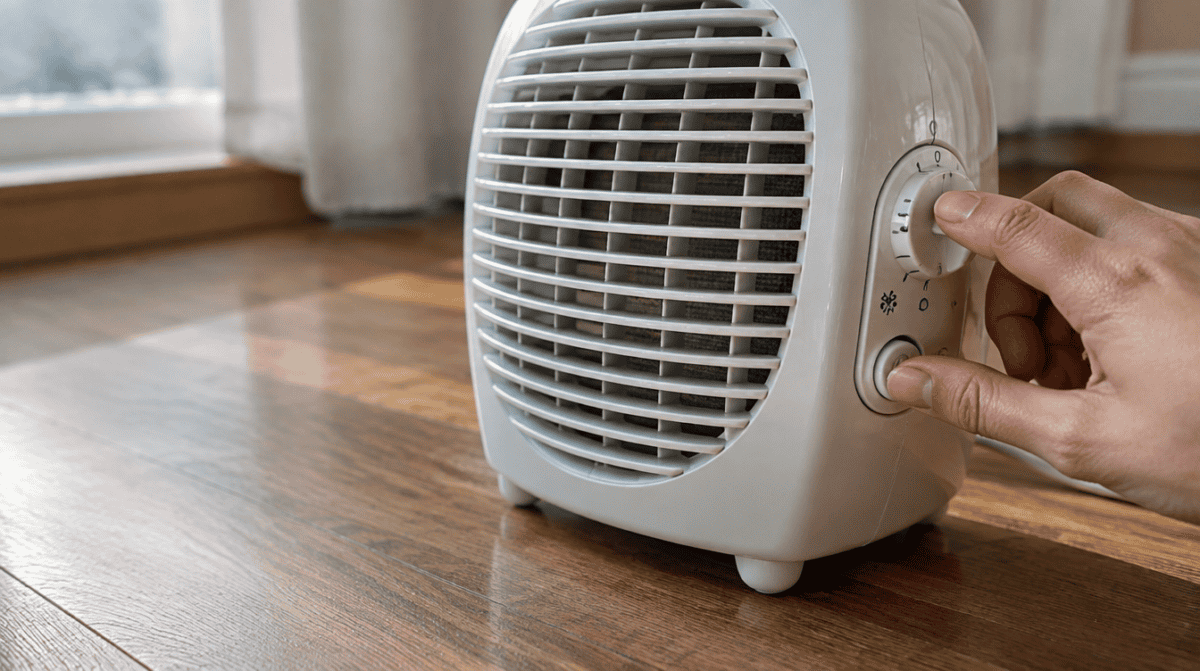
Quick answer: A space heater that won’t turn on is most often caused by a tripped tip-over switch, a dead outlet or breaker, or an activated overheat cutoff, and the fix is usually to set the heater upright on a hard flat surface, plug it directly into a working wall outlet, and let it cool down before restarting. HeatersForLife.com walks through the checks in order below, from the fastest fixes to the point where a heater should be replaced.
Before assuming a heater is dead, it helps to work through the causes from most to least common. Most no-power problems are safety features doing their job, not a broken heater, and they clear in a minute or two once the underlying issue is fixed.
Last Updated: September 2026 | Will Montgomery has an engineering background and has spent years installing, testing, and troubleshooting electric and propane heaters in homes, apartments, and uninsulated garages.
Why a space heater won’t turn on
A space heater usually won’t turn on because a built-in safety device has cut power on purpose, not because the heater is broken. Modern electric heaters contain a tip-over switch, an overheat thermal cutoff, and often a resettable thermal fuse. Any one of these will kill power until the condition that tripped it is corrected. The remaining causes are external: a dead outlet, a tripped breaker or GFCI, or a damaged cord. Working through them in order almost always finds the problem within a few minutes.
Step 1: Check the outlet and power source
Confirm the heater is getting power by plugging it directly into a known-good wall outlet and checking the breaker or GFCI before touching anything on the heater itself. Plug a lamp or phone charger into the same outlet to confirm it is live. If it is dead, check the breaker panel for a tripped breaker and press the reset button on any nearby GFCI outlet.
A plug-in receptacle tester such as the Klein Tools RT250 GFCI outlet tester (about $17, reads voltage and flags open grounds or reversed wiring) tells you in seconds whether the outlet itself is the problem.

A space heater should always be plugged straight into the wall. Extension cords and power strips are a leading cause of nuisance shutoffs and fires, because a 1,500-watt heater draws close to the full capacity of a standard 120-volt, 15-amp circuit. If the heater keeps knocking out the breaker, HeatersForLife.com covers that specifically in why a space heater trips the breaker and how many amps a space heater actually uses.
Step 2: Reset the tip-over switch
Will’s note: The one that fooled us was a Pelonis-style ceramic heater in a bathroom at work. It was dead on a known-good outlet, and the culprit turned out to be the cord: it had slipped under one corner of the base and propped the heater up just enough to release the tip-over switch. Set flat on the floor, it ran fine.
Set the heater fully upright on a hard, level surface, because a tilted heater or one sitting on carpet keeps the tip-over switch open and blocks power. The tip-over switch is a spring-loaded button or lever on the base that must be fully depressed for the heater to run. Carpet, a rug, or an uneven floor can hold it partly open even when the heater looks level.
Place the heater on a bare, flat floor and press down gently to seat the switch. If it still won’t start, tip the heater back to inspect the base and make sure nothing is jammed under the switch.

Step 3: Let the overheat cutoff and thermal fuse reset
If the heater ran and then quit, an overheat cutoff has likely tripped, and it will not restore power until the unit has fully cooled and its air vents are clear of dust and obstructions. The overheat thermal cutoff shuts the heater down when internal temperature climbs too high, which usually means the intake or exhaust vents are blocked or clogged with dust. Unplug the heater, let it cool for 10 to 15 minutes, and vacuum the vents.

Some heaters also have a one-time thermal fuse that permanently opens after a serious overheat. If the unit is completely dead even on a good outlet and the vents are clear, a blown thermal fuse is likely, and that generally means the heater has reached the end of its life. A persistent burning odor is a related warning sign covered in why a space heater smells like burning.
Step 4: Inspect the cord, plug, and controls
Examine the cord and plug for damage and make sure the thermostat and power dial are turned up, since a low thermostat setting can leave a working heater idle. Look for cracked insulation, melted spots, or a loose plug, and feel whether the plug is unusually warm, which points to a failing connection. A damaged cord is a safety hazard and a reason to retire the heater.
Finally, turn the thermostat to its highest setting and select a heat mode rather than fan-only. Digital models sometimes sit in standby or a timer or eco mode that suppresses heat until the room drops below a set temperature.

Quick troubleshooting table
| Symptom | Most likely cause | Fix |
|---|---|---|
| No lights, no fan, nothing | Dead outlet, tripped breaker or GFCI, or blown thermal fuse | Test the outlet, reset the breaker/GFCI; if still dead, replace the heater |
| Lights on but no heat | Thermostat set too low, or fan/eco mode | Turn thermostat up, select a heat mode |
| Ran, then shut off | Overheat cutoff from blocked vents | Unplug, cool 15 min, vacuum vents |
| Won’t stay on unless held | Tip-over switch not seated | Place on hard, level floor |
| Warm or melted plug | Failing cord or overloaded circuit | Stop use; plug direct, replace if damaged |
When to stop troubleshooting and replace it
Replace the heater rather than repair it if the cord or plug is damaged, the plug melts or scorches, or the unit is completely dead after the outlet and vents check out. Portable heaters are inexpensive (a current 1,500 W unit with tip-over and overheat protection, such as the Vornado MVH, runs about $75) and their internal safety parts are not meant to be serviced by the user. Any sign of melting, scorching, or a burning smell means the heater should be unplugged and retired immediately. Shoppers replacing an older unit can compare current safe options in the HeatersForLife.com guides to the best space heaters for apartments and pet-safe, tip-over-proof heaters.
Frequently asked questions
Why won’t my space heater turn on at all?
The most common reasons are a dead outlet or tripped breaker, a tip-over switch that is not fully seated on a level surface, or a tripped overheat cutoff. Work through those three before assuming the heater is broken.
How do I reset a space heater?
Unplug it, set it upright on a hard flat floor, let it cool for 10 to 15 minutes, clear any dust from the vents, then plug it directly into a working wall outlet and turn the thermostat up.
Many heaters do not have a labeled reset button; the reset happens automatically once the unit cools. Some models have a small reset button near the cord or on the base beside the tip-over switch.
Why does my heater turn on then shut off?
That is the overheat cutoff protecting the unit, almost always because the intake or exhaust vents are blocked or clogged with dust. Cool it down and vacuum the vents.
Is it worth repairing a space heater that won’t turn on?
Usually no. If the outlet is good and the vents are clear but the heater is still dead, a blown thermal fuse or failed internal part means it is safer and cheaper to replace it.
Written and reviewed by Will Montgomery, who has installed, tested, and repaired electric and propane heaters for years.