

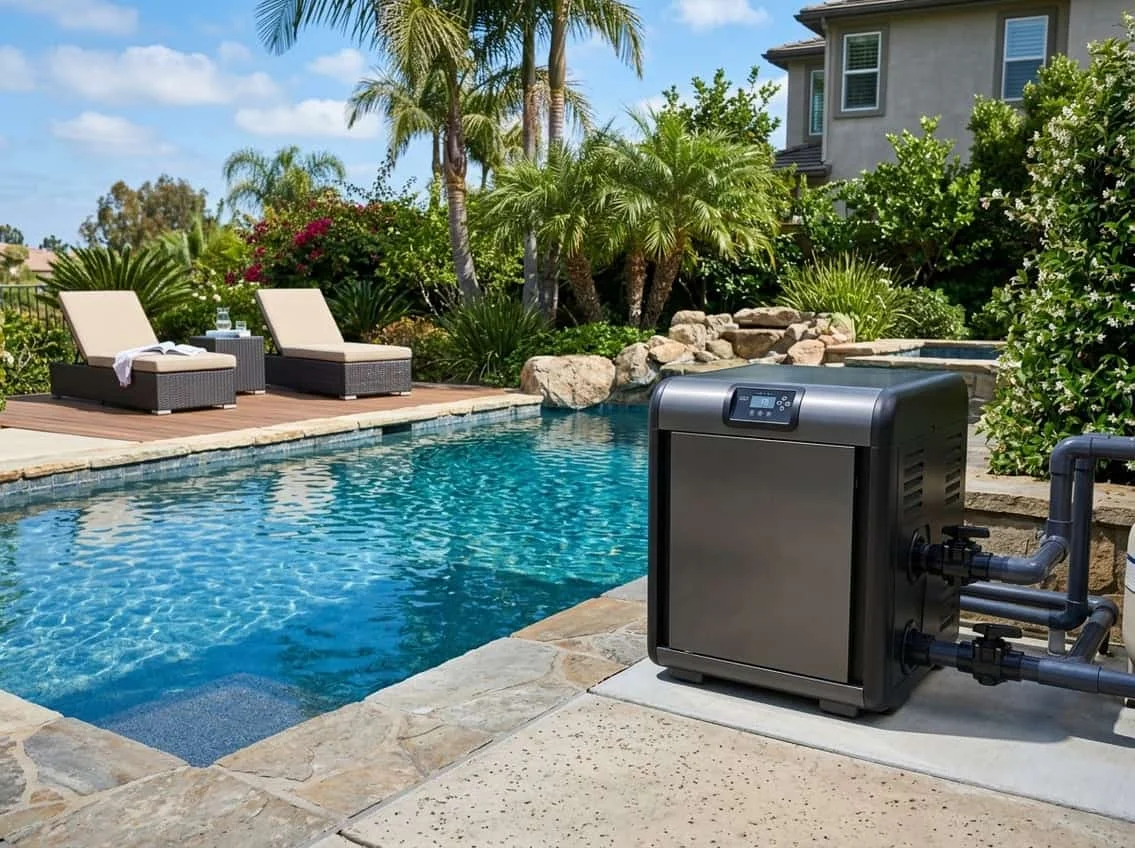
A pool heater extends your swimming season by warming the water when outdoor temperatures drop. Without one, most pool owners can only swim comfortably for a few months each year. The best pool heater depends on your pool size, climate, and available fuel sources, with gas heaters offering fast heating for any climate, heat pumps providing energy efficiency in warm areas, and electric heaters working well for spas and small pools.
Choosing the right pool heater involves understanding different types of heating systems and matching them to specific needs. Gas heaters deliver 100,000 to 400,000+ BTU of heating power and work in any weather. Heat pumps extract warmth from the air and cost less to run but need temperatures above 50°F. Electric heaters are compact and affordable but only practical for smaller water volumes.
The right heater transforms a pool from a seasonal luxury into a year-round investment. Proper sizing, fuel selection, and understanding of each heater type helps pool owners make informed decisions that fit their budget and swimming goals.
Key Takeaways
- Gas heaters heat pools quickly in any climate while heat pumps offer better efficiency in warm regions
- Proper heater sizing based on pool volume and desired temperature rise prevents inadequate heating and equipment strain
- Cupro-nickel heat exchangers and regular maintenance extend heater lifespan especially in saltwater pools
Last Updated: May 2026 | Will Montgomery has an engineering background and has researched pool heating across gas, electric heat pump, and solar technologies. He focuses on BTU efficiency, installation requirements, and total operating cost when evaluating pool heaters.
From experience: For an above-ground pool, a solar heater covers most of the season once summer gets going — water picks up heat faster than you would expect and a solar loop keeps it there. For inground pools, the recommendation depends almost entirely on what is already at the install site. When gas and electrical are both right there, a heat pump pool heater is the preferred choice: lower operating costs over the long run and solid performance. The caveat is that install conditions have to be right — retrofitting a heat pump onto a site not designed for it gets expensive quickly.
Key Considerations Before Buying a Pool Heater

Selecting the right pool heater requires evaluating several important factors that affect both performance and long-term costs. Pool size, local climate, budget constraints, and installation needs all play crucial roles in determining which heater will work best.
Pool Size and Type
Pool size directly impacts the heating capacity needed to maintain comfortable water temperatures. Larger pools require heaters with higher BTU ratings to effectively warm the water within a reasonable timeframe.
A small pool of 10,000 gallons typically needs a heater rated between 100,000 to 150,000 BTUs. Pools ranging from 15,000 to 20,000 gallons perform best with heaters in the 200,000 to 250,000 BTU range. Larger pools exceeding 25,000 gallons may require 300,000 BTUs or more.
The pool type also matters. In-ground pools often retain heat better than above-ground models due to ground insulation. Above-ground pools lose heat faster through their exposed sides, requiring more powerful heating systems or extended run times to maintain desired temperatures.
Climate and Location Factors
Climate compatibility affects heater performance significantly across different regions. Heat pumps work efficiently in moderate climates where temperatures stay above 50°F but struggle in colder areas. Gas heaters perform reliably in any climate and heat water quickly regardless of outside temperatures.
Solar heaters deliver the best results in sunny climates with consistent sunlight throughout the year. Northern regions with limited sun exposure may find solar heating insufficient as a primary heat source.
Wind exposure and humidity levels in a location also impact heating efficiency. Pools in windy areas lose heat faster through evaporation, requiring more powerful heaters or pool covers to maintain temperatures. Coastal regions with high humidity may see reduced efficiency from certain heater types.
Budget and Operating Costs
Initial purchase prices vary widely among heater types. Gas heaters typically cost $1,500 to $4,000, while electric heat pumps range from $2,000 to $5,000. Solar heaters require larger upfront investments between $3,000 and $7,000 but offer minimal ongoing costs.
Operating expenses differ substantially based on fuel type and local utility rates. Gas heaters cost roughly $300 to $500 monthly during peak use. Electric heat pumps average $50 to $150 monthly due to their higher efficiency. Solar systems have virtually no operating costs after installation.
Energy efficiency ratings help predict long-term expenses. Heat pumps with coefficient of performance ratings above 5.0 provide excellent efficiency. Gas heaters with thermal efficiency above 82% offer better value than lower-rated models.
Installation Requirements
Gas heaters need proper gas connections and professional installation to ensure safety and compliance with local codes. They require adequate ventilation to prevent dangerous gas buildup and must be positioned away from flammable materials.
Electric heaters typically need dedicated electrical circuits rated for their power requirements. A 240-volt circuit is standard for most electric pool heaters. Homeowners should verify their electrical panel can handle the additional load.
Solar systems require sufficient roof space or ground area with unobstructed sun exposure. The collector panels typically need 50% to 100% of the pool’s surface area for effective heating. Local building codes may restrict panel placement or require permits before installation.
Types of Pool Heaters Explained

Pool heaters fall into several main categories that use different energy sources and technologies to warm water. Gas heaters burn fuel for rapid heating, electric options include both resistance heaters and efficient heat pumps, solar systems harness free energy from the sun, and newer hybrid models combine multiple technologies for better performance.
Gas Pool Heaters: Natural Gas vs. Propane
Gas heaters deliver the fastest heating speeds among all pool heating options. These units can raise water temperature by 1-3 degrees Fahrenheit per hour regardless of weather conditions.
Natural gas heaters connect directly to a home’s existing gas line. They work well for properties that already have natural gas service. The fuel costs typically run lower than propane in most areas.
Propane heaters use tanks that require periodic refilling and monitoring. They offer flexibility for properties without natural gas access. The tanks can be installed anywhere with proper clearance.
Both fuel types operate at 80-95% efficiency and last approximately 8-10 years. Operating costs range from $200-$400 monthly during heavy use periods. Installation costs typically fall between $1,500-$5,000 depending on the model and complexity.
Gas heaters work reliably in any climate and maintain performance even during cold weather. They produce higher carbon emissions compared to other heating methods.
Electric Pool Heaters and Heat Pumps
Electric resistance heaters generate heat by passing electricity through metal coils. These units work in all weather conditions, including when temperatures drop below freezing. They’re compact, quiet, and last 15+ years with proper maintenance.
The operational costs run 2-3 times higher than gas heating. These heaters raise water temperature slowly at about 1-2 degrees daily. Installation costs range from $2,000-$4,000.
Heat pumps operate differently by extracting warmth from surrounding air and transferring it to pool water. They use significantly less electricity than resistance heaters—up to 80% less for the same heating output. Heat pumps achieve efficiency ratings of 500-600% because they move heat rather than create it.
These units perform best when air temperatures stay above 50 degrees Fahrenheit. Performance drops noticeably in colder weather. Installation costs run $2,500-$7,000, and units typically last 10-15 years.
Solar Pool Heaters
Solar heaters capture the sun’s energy through panels installed on roofs or ground areas. Pool water circulates through these collectors, warming naturally before returning to the pool. The system works with existing pool pumps without requiring additional energy sources.
Operating costs remain minimal after installation since sunlight provides free energy. Solar systems typically last 15-20 years, longer than most alternatives. They produce zero emissions and operate silently.
Installation costs range from $3,000-$9,000 depending on system size and complexity. The panels require adequate roof or yard space with consistent sun exposure. Heating happens gradually, often taking 2-3 days to reach desired temperatures.
Performance depends heavily on climate and weather conditions. Cloudy regions or shaded properties see reduced effectiveness. The systems can also cool pools during extreme heat by running at night.
Hybrid and Inverter Technology
Hybrid pool heaters combine multiple heating methods into one system. These units typically pair heat pump technology with electric resistance heating or gas backup. The system automatically switches between heating methods based on efficiency and outdoor conditions.
Inverter-driven heat pumps adjust compressor speed to match heating demands precisely. Traditional heat pumps run at full capacity or shut off completely. Inverter models operate at variable speeds between 25-100% capacity.
This variable-speed operation reduces energy consumption by 20-30% compared to standard heat pumps. The units maintain more consistent water temperatures with fewer temperature swings. They also run quieter and experience less wear from constant on-off cycling.
Hybrid systems cost more upfront but provide flexibility across different weather conditions. When temperatures drop too low for efficient heat pump operation, the backup heating kicks in automatically. This ensures reliable performance year-round without manual intervention.
Comparing Heating Performance and Energy Efficiency

Pool heaters vary widely in how quickly they warm water and how much energy they consume during operation. Understanding BTU ratings, operating costs, and environmental effects helps buyers choose the right heater for their needs.
Heating Speed and BTU Ratings
BTU (British Thermal Unit) ratings measure a heater’s power output. One BTU represents the energy needed to raise one pound of water by one degree Fahrenheit. Higher BTU ratings mean faster heating times.
Gas and propane heaters typically offer BTU ratings between 100,000 and 400,000. These units can raise pool temperature by 1-3 degrees per hour depending on pool size. Electric heat pumps operate at lower BTU outputs, usually 50,000 to 140,000 BTUs, but they extract heat from ambient air rather than generating it directly.
Pool size directly affects heating speed requirements. A 20,000-gallon pool needs approximately 300,000 BTUs to raise the temperature by 20 degrees in 8-10 hours. Smaller above-ground pools with 10,000 gallons require proportionally less power.
Heating performance rankings place gas heaters first for speed, followed by heat pumps and solar options. Climate also matters since heat pumps lose efficiency when air temperatures drop below 50°F.
Energy Consumption and Cost
Operating costs differ dramatically between heater types. Natural gas heaters cost $4 to $9 per hour to run, while propane units range from $5 to $11 per hour. Electric heat pumps cost $1 to $3 per hour despite slower heating speeds.
Annual heating expenses depend on usage frequency and local utility rates. A gas heater running 6 hours daily for 5 months costs roughly $1,800 to $2,700 per season. Heat pumps running the same schedule cost $450 to $900 annually.
Energy-efficient pool heaters reduce long-term expenses through improved technology. Heat pumps achieve efficiency ratings of 500-600%, meaning they transfer 5-6 units of heat for every unit of electricity consumed. Gas heaters operate at 80-95% efficiency, losing some energy through exhaust.
Environmental Impact
Gas and propane heaters produce direct carbon emissions during combustion. A typical 400,000 BTU gas heater releases approximately 2-3 pounds of CO2 per therm of natural gas burned. Seasonal use generates 1-2 tons of carbon dioxide emissions.
Electric heat pumps produce fewer emissions when powered by renewable energy sources. Their environmental impact depends on local electricity generation methods. Heat pumps in areas with coal-heavy grids still create emissions, though indirectly.
Solar heaters produce zero operational emissions after installation. They require only pump energy to circulate water through collector panels. Pool heating systems that combine solar with backup heat pumps offer both sustainability and reliability during cloudy periods.
Top Pool Heater Brands and Models for 2026

Leading manufacturers offer specialized heaters for different pool types and heating needs, with models ranging from traditional gas units to advanced WiFi-enabled systems. The market includes specific options for saltwater pools, above-ground installations, and specialty applications.
Best Overall Pool Heaters by Category
The Hayward W3HP21404T HeatPro Titanium stands out as the best electric heater with 140,000 BTU capacity. This heat pump offers excellent value and scores a 5 out of 5 for durability and energy efficiency.
For gas-powered heating, the The Raypak Natural Gas Pool Heater leads the category. It provides rapid heating for larger inground pools, though it scores lower on energy efficiency with a 3 out of 5 rating.
The Pentair MasterTemp earns recognition as the quietest and most efficient option. It scores 5 out of 5 for energy usage and 4 out of 5 for both durability and installation ease.
Small pool owners benefit from the Happybuy 3KW 220V Electric Pool Heater. This compact unit keeps costs down but rates only 2 out of 5 for durability.
Solar heating finds its champion in the XtremepowerUS Swimming Pool Solar Panel Heating System. It achieves a perfect 5 out of 5 energy efficiency score while maintaining a 4 out of 5 durability rating.
Smart and WiFi-Enabled Pool Heaters
WiFi-enabled pool heaters allow owners to control temperature settings remotely through smartphone apps. These systems let users adjust heating schedules, monitor energy usage, and receive maintenance alerts from anywhere.
Modern smart heaters integrate with home automation systems. They can coordinate with pool pumps and filtration systems to optimize energy consumption throughout the day.
Temperature sensors in advanced models provide real-time water temperature data. The heaters automatically adjust output to maintain desired temperatures while minimizing energy waste.
Some manufacturers offer diagnostic features that alert owners to potential issues before they become serious problems. These early warning systems help prevent costly repairs and extend equipment lifespan.
Above-Ground vs. In-Ground Pool Heater Picks
Above-ground pools require different heating solutions than inground installations. The FibroPool FH 220 Swimming Pool Heater Heat Pump works well for both applications due to its lightweight design and simple installation process.
Weight matters significantly for above-ground pools. Lighter heaters ranging from 20 to 100 pounds suit these installations better than heavy units exceeding 200 pounds.
The Hayward Universal H-Series provides reliable performance for inground pools. This model handles the higher water volumes and heating demands of permanent installations.
Inground pools benefit from more powerful heating capacity. Units with BTU ratings between 100,000 and 400,000 effectively warm larger water volumes found in these pools.
Portable heaters offer flexibility for seasonal above-ground pools. Owners can disconnect plug-in models and store them indoors during winter months to prevent weather damage.
Saltwater and Specialty Pool Heaters
Saltwater pools demand heaters with corrosion-resistant components. Titanium heat exchangers withstand the corrosive effects of salt better than copper or stainless steel alternatives.
The Hayward HeatPro Titanium specifically addresses saltwater pool needs. Its titanium construction prevents degradation from salt exposure while maintaining heating efficiency.
Indoor pools require different considerations than outdoor installations. These heaters need proper ventilation systems to handle moisture and chemical off-gassing in enclosed spaces.
Spa and hot tub heating differs from pool heating due to smaller water volumes and higher target temperatures. Dedicated spa heaters typically range from 50,000 to 150,000 BTU capacity.
Combination pool and spa systems need heaters that can handle varying temperature requirements. Some models offer dual-zone heating to maintain different temperatures for each water feature simultaneously.
Installation and Maintenance Essentials

Gas heaters require professional installation due to fuel lines and venting requirements, while electric models may allow DIY work depending on electrical expertise. Regular maintenance like filter cleaning and water chemistry monitoring keeps heaters running efficiently for years.
Professional vs. DIY Installation
Gas and propane heaters always need professional installation. These units connect to fuel lines, require proper venting to prevent carbon monoxide buildup, and must meet local building codes. Some manufacturers like Pentair reduce warranty coverage from one year to just 60 days if homeowners attempt self-installation.
Electric tankless heaters offer more flexibility for DIY installation. However, most require a dedicated 240V circuit with 60-amp service. Homeowners comfortable with electrical work can handle the installation, but hiring a professional remains recommended for safety and code compliance.
Heat pump and solar heater installation difficulty varies by model. Solar panels may allow DIY setup, while heat pumps typically need professional help due to refrigerant lines and electrical requirements.
Routine Maintenance Tips
Pool heater maintenance starts with cleaning or replacing the filter regularly. Dirty filters restrict water flow and force the heater to work harder.
Water chemistry directly affects heater lifespan. Maintaining proper pH levels between 7.2 and 7.6 prevents corrosion of heat exchangers. Salt system owners should check cupro-nickel heat exchangers, which resist corrosion better than standard copper.
Inspect the heater exterior for debris, leaves, or blockages around air intakes. Gas heaters need clear venting pathways. Check water levels to ensure proper flow through the system.
Following manufacturer maintenance schedules prevents most problems. Annual professional inspections catch issues before they become expensive repairs.
Troubleshooting Common Issues
Heater won’t turn on: Check the circuit breaker and reset if needed. Verify the thermostat settings and ensure water flow reaches minimum requirements. Low water flow triggers safety shutoffs.
Heater runs but doesn’t heat: Inspect the pilot light on gas models. Clean dirty burners or heating elements. Check for closed valves restricting water flow.
Inconsistent heating: Air pockets in the lines cause temperature fluctuations. Bleed air from the system. Verify the heater size matches pool volume, as undersized units struggle to maintain temperature.
Strange noises: Rumbling or popping sounds indicate mineral buildup on heat exchangers. Scale formation reduces efficiency and requires professional descaling.
Maximizing Efficiency and Lifespan

Pool heaters work best and last longest when owners take steps to reduce energy waste and protect equipment from damage. Simple additions like covers and proper placement can cut heating costs significantly while extending the unit’s working life.
Using Pool Covers and Timers
Pool covers are one of the most effective tools for improving heater efficiency. A quality cover can reduce heat loss by up to 70% while also decreasing water evaporation by 30-40%.
Solar blankets offer dual benefits by capturing passive solar heat during the day while preventing heat escape at night. These covers can raise water temperature by 10-15°F without running the heater. Thermal covers with foam cores provide even better insulation for colder climates.
Timers help minimize unnecessary runtime by syncing heating cycles with actual pool usage. Programming the heater to warm water 2-3 hours before swimming—rather than maintaining constant temperature—can reduce energy consumption by 25-40%. Smart controllers take this further by adjusting schedules based on weather forecasts and usage patterns.
Running heaters during off-peak electricity hours (typically 8 PM to 10 AM) cuts utility costs by up to 25%. The system should also heat during the warmest part of the day (10 AM to 4 PM) when ambient temperatures help the heater work less to reach target temperatures.
Optimal Placement and Weatherproofing
Heater placement directly impacts efficiency and durability. Units should sit in well-ventilated areas with at least 2-3 feet of clearance on all sides for proper airflow. Gas heaters need additional space to vent combustion gases safely.
Positioning heaters away from prevailing winds prevents heat loss and reduces strain on the system. Installing windbreaks or enclosures around the unit can improve efficiency by 10-15% in windy locations. However, enclosures must maintain adequate ventilation to prevent overheating and ensure safe operation.
Direct sunlight exposure can damage control panels and electrical components over time. A simple shade cover or awning protects sensitive parts while allowing proper airflow. The heater should also sit on a stable, level concrete pad that prevents settling and keeps the unit above potential water accumulation.
Weatherproofing connections and pipes prevents efficiency losses from the heating system. Insulating exposed pipes with foam sleeves stops up to 40% of heat transfer loss between the heater and pool.
Off-Season Storage and Winterization
Proper winterization protects pool heaters from freeze damage and corrosion during months of non-use. This process becomes essential in regions where temperatures drop below freezing.
The first step involves draining all water from the heater and connected pipes. Trapped water expands when frozen and can crack heat exchangers or burst pipes. Opening drain plugs and using an air compressor to blow out remaining moisture ensures complete water removal.
Cleaning components before storage prevents buildup from hardening over winter. Remove debris from burners, check for corrosion on metal parts, and clean filters thoroughly. This maintenance also makes spring startup easier and more reliable.
Covering the unit with a weatherproof tarp or manufacturer-designed cover shields it from snow, ice, and debris accumulation. The cover should allow some airflow to prevent moisture buildup while blocking direct exposure to harsh weather. Properly winterized heaters experience less wear and can last 15-20 years with consistent care.
Smart Controls and Remote Monitoring Features
Modern pool heaters offer digital interfaces and wireless connectivity that let owners adjust temperature and monitor performance from anywhere. These systems integrate with smartphone apps and support automated schedules to optimize energy use.
Digital Control Panels and Displays
Digital control panels provide clear temperature readings and system status at a glance. Most units feature LCD or LED screens that display current water temperature, target temperature, and operational mode.
The panels typically include physical buttons or touchscreen interfaces for quick adjustments poolside. Users can switch between heating modes, adjust temperature setpoints, and view diagnostic codes without pulling out a phone.
High-quality displays remain readable in bright sunlight and show energy consumption data. Some models include multi-color indicators that signal when the heater is actively warming water versus maintaining temperature. These visual cues help owners understand when the system draws the most power.
WiFi and App Integration
WiFi pool heater controllers connect to home networks and enable smartphone control from any location. Owners download dedicated iOS or Android apps to adjust settings remotely.
The apps display real-time temperature data and let users turn heaters on or off before arriving home. Many systems send push notifications when the pool reaches target temperature or if the heater encounters an error.
iPhone users should review their iOS privacy settings before installing pool control apps. The App Privacy Report iPhone feature shows what data these apps access. Owners can disable precise location iPhone tracking if the app requests it unnecessarily. They should also manage camera microphone access iPhone permissions and review iPhone app permissions to ensure pool apps only access required functions.
Some controllers work with voice assistants like Alexa or Google Home for hands-free operation. This integration allows users to include pool heating in broader smart home routines.
Scheduling and Automation Options
Programmable schedules let heaters warm water during off-peak electricity hours when rates are lower. Users create multiple heating windows throughout the week to match their swimming patterns.
Advanced systems adjust heating based on weather forecasts and outdoor temperature. If a cold front approaches, the heater can start earlier to maintain comfortable water temperature.
Automation features can reduce heating costs by preventing unnecessary operation when nobody uses the pool. Owners set vacation modes that maintain minimum temperatures to protect equipment without wasting energy on full heating cycles.
Some controllers learn usage patterns over time and suggest optimized schedules. They calculate how long the heater needs to reach target temperature based on current conditions and historical performance data.
Frequently Asked Questions
Choosing a pool heater involves balancing climate needs, pool size, fuel costs, and long-term durability. These questions address the most common decisions buyers face when selecting and budgeting for the right heating system.
What type of pool heater is most cost-effective for my climate and swim season?
Gas heaters work best in cooler climates where fast heating matters more than fuel efficiency. They can raise water temperature quickly regardless of air temperature, making them ideal for occasional weekend use or short swim seasons.
Heat pumps offer the lowest operating costs in warm climates where air temperatures stay above 50°F consistently. They extract heat from the air and work efficiently when maintaining temperature rather than raising it rapidly.
Solar heaters cost nothing to run but depend entirely on sunny weather. They work well as supplemental heating in warm, sunny regions but rarely deliver enough warmth on their own in cooler areas.
Electric resistance heaters suit spas and very small pools in any climate. Their high electricity costs make them impractical for heating larger pools, but they need no gas lines or outdoor air temperature to function.
How do I choose the right heater size (BTU or kW) for my pool volume and desired temperature rise?
Pool volume determines the minimum BTU output needed. A 15,000-gallon pool typically requires at least 150,000 to 200,000 BTU for reasonable heat-up times, while larger pools above 20,000 gallons benefit from 250,000 to 400,000 BTU models.
Desired temperature rise also matters. Raising water from 60°F to 80°F demands more power than maintaining 78°F in already warm water.
Undersized heaters run constantly without reaching target temperatures. Oversized heaters cost more upfront but heat faster and cycle less frequently, which can extend equipment life.
Wind exposure, pool surface area, and whether the pool has a cover all affect heat loss. Uncovered pools or pools in windy locations lose heat faster and need higher BTU ratings than the basic calculation suggests.
Which heating option is better for my setup: gas, electric heat pump, or electric resistance heating?
Gas heaters suit properties with natural gas service or propane tank access. Natural gas typically costs less per BTU than propane, but both deliver fast heating at any outdoor temperature.
Electric heat pumps need no gas lines and operate efficiently in warm climates. They cost less to run than gas but heat slowly and struggle when air temperatures drop below 50°F.
Electric resistance heaters work anywhere with 240V electrical service available. They heat faster than heat pumps but cost significantly more to operate, making them practical only for spas and pools under 5,000 gallons.
Properties without natural gas service face higher fuel costs with propane or higher electric bills with heat pumps. The choice depends on available utilities and climate conditions.
What should I look for when selecting a heater for an inground pool versus an above-ground pool?
Inground pools typically hold more water and need higher BTU ratings. A standard inground pool ranging from 15,000 to 25,000 gallons usually requires 200,000 to 400,000 BTU for effective heating.
Above-ground pools hold less water and lose heat faster due to exposed walls. They often need 100,000 to 150,000 BTU heaters, though larger models may need more power.
Both pool types benefit from cupro-nickel heat exchangers if using salt systems. Saltwater accelerates corrosion in standard copper exchangers, shortening heater life.
Above-ground pool owners sometimes choose solar or electric options because the smaller water volume makes these methods more practical. Inground pools usually need gas or heat pump systems for adequate heating speed.
How much will it cost to run a pool heater per hour or per month, and what factors change that estimate?
Natural gas heaters typically cost $4 to $9 per hour to run at full output, depending on local gas rates and BTU size. Propane costs more, often $7 to $15 per hour for the same heating power.
Heat pumps cost $1 to $3 per hour in electricity but only work efficiently in warm weather. Electric resistance heaters cost $5 to $12 per hour, making them expensive for anything larger than a spa.
Monthly costs vary widely based on usage patterns. Heating a pool every day costs far more than warming it only on weekends.
Pool covers reduce heat loss by 50% to 70%, cutting fuel consumption dramatically. Uncovered pools lose heat overnight and require constant reheating.
Wind exposure, desired water temperature, and ambient air temperature all affect runtime. Trying to maintain 85°F water when outdoor temperatures average 60°F costs significantly more than maintaining 78°F in 70°F weather.
What reliability, warranty, and maintenance considerations matter most when comparing major pool heater brands?
Hayward, Pentair, and Raypak represent the most established brands with proven track records. They offer longer warranties and better parts availability than lesser-known manufacturers.
Heat exchanger material determines longevity. Cupro-nickel exchangers resist corrosion better than standard copper, especially in saltwater pools or when water chemistry drifts.
Warranty length varies by brand and installation method. Some manufacturers reduce warranty coverage from one year to 60 days if professional installation is not documented.
Professional installation matters for gas heaters both for safety and warranty protection. DIY installation on gas equipment risks carbon monoxide hazards and voids most manufacturer warranties.
Maintenance needs stay minimal for most heaters. Cleaning the filter regularly prevents flow restrictions, and annual inspections catch problems before major failures occur.
Fake reviews plague online pool equipment markets. Sticking with known brands or using review verification tools helps avoid products with inflated ratings and poor long-term support.