

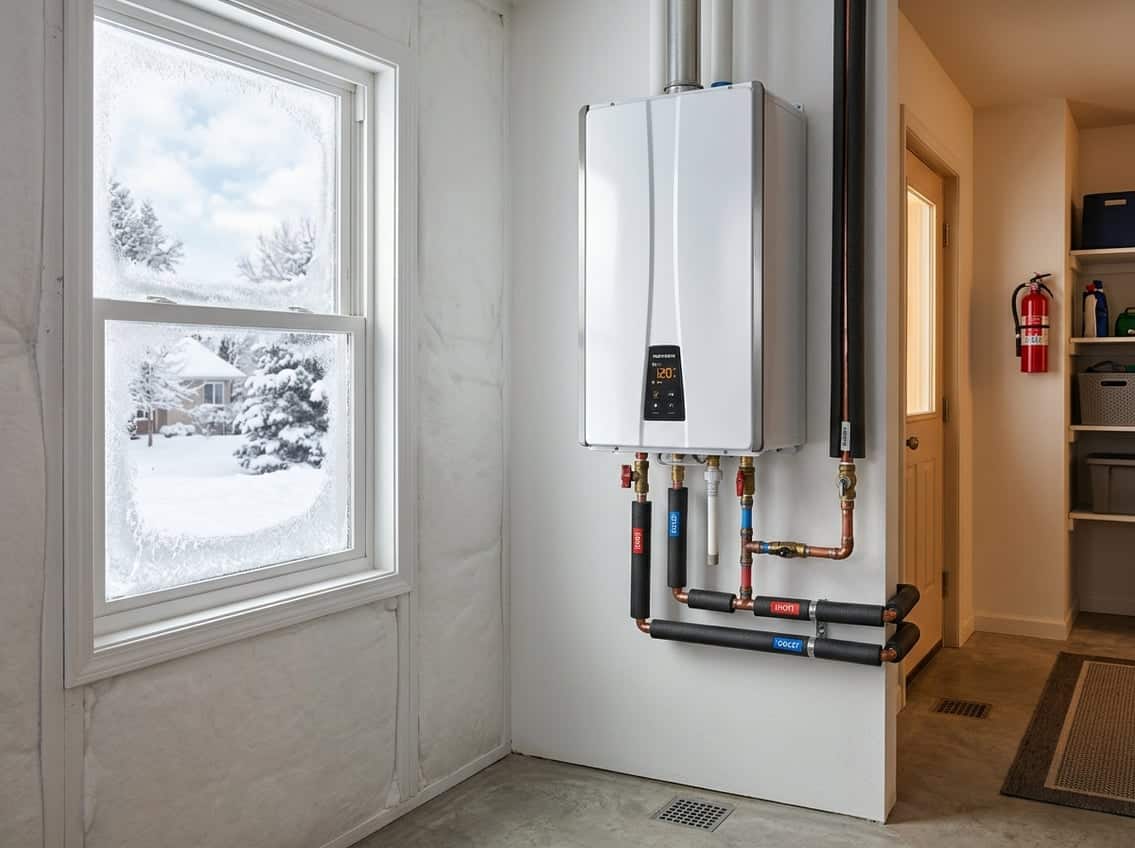
Tankless water heaters can absolutely work in cold climates, but they require careful selection and proper installation to perform reliably when temperatures drop. Many homeowners in northern states worry these units won’t deliver enough hot water when inlet temperatures fall into the 30s during winter months. The concern is valid because cold incoming water significantly reduces flow rates compared to warmer regions.
Last Updated: June 2026 | Will Montgomery has spent years evaluating tankless water heater performance across different climates. His engineering background gives him a practical edge when assessing cold-weather performance specs and sizing requirements.
Gas tankless water heaters work better than electric models in cold climates because they heat water more quickly and efficiently, with higher BTU ratings that can handle the greater temperature rise needed in freezing conditions. The key is understanding how inlet water temperature affects performance and choosing a unit sized for actual winter conditions rather than manufacturer ratings based on moderate climates.
This guide covers everything needed to successfully install and operate a tankless water heater in cold weather regions. From calculating the correct size based on groundwater temperatures to protecting the unit from freeze damage, homeowners will learn how to get reliable hot water year-round. The article explains performance differences between cold and moderate climates, installation requirements for freezing temperatures, and maintenance practices that prevent costly repairs.
Quick Answer: A tankless water heater can work reliably in cold climates, but sizing is everything. In northern states where groundwater hits 35–45°F in winter, you need a unit rated for at least 8–11 GPM to maintain adequate flow. Condensing gas models from Rinnai and Navien are the top picks for cold-weather performance.
Quick Answer: Tankless water heaters work reliably in cold climates when properly sized. In northern states where groundwater can reach 35–45°F in winter, you need a unit rated for at least 8–11 GPM output. Condensing gas models from Rinnai and Navien are the top performers for cold-weather installations.
How Cold Climates Impact Tankless Water Heater Performance
From experience: In practice, winter showers take noticeably longer to reach temperature for two compounding reasons — you’re colder and want the water hotter, and the incoming groundwater is colder and takes more energy to bring up to temp. Both factors hit at once, which is exactly why proper cold-climate sizing matters.
Cold weather reduces the incoming water temperature, which forces tankless units to work harder to achieve the desired hot water output. This directly affects flow rate capacity and can lead to performance issues if the system isn’t properly sized for the climate.
Understanding Temperature Rise and Groundwater Inlet Temperature
Temperature rise refers to the difference between incoming cold water and the desired output temperature. In cold climates, groundwater temperatures can drop to 37-45°F in winter, compared to 50-70°F in warmer regions.
A tankless unit must heat water from its inlet temperature to around 120°F for household use. When inlet water enters at 40°F instead of 60°F, the heater needs to produce an additional 20°F of heating. This extra demand reduces the flow rate the unit can maintain.
For example, a tankless heater rated at 6 gallons per minute (GPM) at a 50°F rise might only deliver 4 GPM at a 70°F rise. Homeowners in regions with cold inlet temperatures face reduced flow capacity during winter months.
Gas models handle this challenge better than electric versions because they generate more BTUs. They heat water faster and maintain higher flow rates even when dealing with frigid groundwater temperatures.
Common Cold Climate Challenges for Tankless Systems
Freezing temperatures pose the biggest risk to tankless water heaters in cold climates. Units can freeze when temperatures drop below 32°F, potentially causing serious damage to internal components.
Most modern tankless heaters include freeze protection features. These systems activate heating elements or drain water from pipes when temperatures approach freezing. However, proper installation location matters significantly for cold weather performance.
Common cold weather problems include:
- Reduced hot water flow during peak demand
- Longer wait times for hot water delivery
- Inconsistent water temperatures
- Increased energy consumption
- Risk of freeze damage to exterior units
Units installed outdoors or in unheated spaces face greater challenges. Indoor installation in heated areas provides better protection against freezing and maintains more consistent performance throughout winter months.
Selecting the Best Tankless Water Heater for Cold Climates
The best tankless water heater for cold climates needs high BTU output or kilowatt capacity to handle incoming water temperatures that drop into the 30s during winter months. Models must also include freeze protection systems that operate reliably when ambient temperatures fall below zero.
Top Gas and Electric Models for Freezing Conditions
Gas-powered units dominate cold climate performance because they deliver higher heating capacity. The Rinnai RU180iN delivers 9.0 GPM at 35°F inlet temperatures with 180,000 BTU output and freeze protection down to -22°F. The Navien NPE-240A2 offers even better flow rates at 10.1 GPM in cold conditions with 199,000 BTU capacity.
For households without gas lines, electric models require significantly higher power. Electric tankless water heaters can work effectively in cold climates when properly sized. Units need 27-36 kilowatts to match gas performance, which means 240-volt service and multiple circuit breakers.
The Rheem RTGH-95DVLN provides exceptional freeze tolerance to -30°F, making it suitable for extreme northern climates. These models cost between $1,499 and $1,899 before installation.
Key Features for Cold Weather Operation
Freeze protection systems are non-negotiable for any cold climate tankless water heater. Units must include automatic water circulation when internal temperatures drop below 41°F and electric heating elements to protect components.
BTU or kilowatt ratings determine real-world performance. A 180,000 BTU gas unit or 27-kilowatt electric model handles typical household demand when inlet water reaches 35-40°F. Undersized units struggle to raise water temperature adequately during winter.
Essential cold weather features include:
- Freeze protection to at least -22°F
- Minimum 180,000 BTU (gas) or 27 kW (electric)
- Condensing technology for efficiency
- Direct vent systems to minimize cold air infiltration
- Automatic freeze prevention modes
Gas models heat water more quickly and efficiently than electric versions in freezing conditions. Indoor installation protects components from extreme weather and keeps inlet water 5-10°F warmer than outdoor supplies.
Sizing and Capacity Considerations in Northern Regions
Cold climates demand larger tankless water heaters than manufacturers’ standard ratings suggest. A unit’s actual output drops significantly when groundwater temperatures fall below 40°F, which happens across most northern states during winter months.
Calculating Gallons Per Minute (GPM) and Temperature Rise
The temperature rise equation determines how much hot water a tankless unit can deliver: GPM = (BTU × Efficiency) ÷ (Temperature Rise × 500). In northern regions where inlet water enters at 35-40°F, homeowners need to calculate based on these cold temperatures rather than the 50-60°F used in moderate climates.
A household requiring 6 GPM of hot water needs to account for actual winter conditions. With 37°F inlet water and a target output of 120°F, the temperature rise equals 83°F. This same demand would only require a 70°F rise in warmer regions with 50°F inlet water.
Common fixture flow rates:
- Standard shower: 2.0-2.5 GPM
- Kitchen faucet: 1.5-2.0 GPM
- Bathroom sink: 0.5-1.0 GPM
- Dishwasher: 1.0-2.0 GPM
Add up simultaneous uses during peak demand times to determine total GPM requirements. Most families experience peak demand during morning routines when multiple showers run at once.
Matching BTU or kW Output to Your Needs
A cold climate tankless water heater requires 20-30% more BTU capacity than the same household would need in warmer zones. For example, delivering 6.5 GPM with an 83°F temperature rise requires approximately 285,000 BTU at 95% efficiency.
Most residential gas tankless units max out at 180,000-199,000 BTU. Homeowners with high demand either install two units in parallel or reduce simultaneous water use. Electric models face even steeper challenges since they typically offer 36,000-100,000 BTU equivalent output.
Gas units rated at 199,000 BTU deliver roughly 10 GPM at 35°F inlet temperature. The same unit would produce 11-12 GPM in moderate climates. This performance gap makes oversizing critical in northern installations where winter groundwater temperatures routinely drop into the 30s.
Installation Best Practices for Freezing Temperatures
Proper installation location and utility connections determine whether a tankless water heater survives harsh winter conditions. Indoor units typically need less protection than outdoor models, while fuel type affects both freeze protection capabilities and power requirements during cold weather.
Indoor vs. Outdoor Placement
Indoor installation offers the best protection for tankless water heaters in cold climates. Units mounted inside heated spaces rarely face freezing risks because room temperature keeps internal components warm. Most indoor tankless water heaters have built-in freeze protection that activates when temperatures drop into the low 30s Fahrenheit.
Outdoor units face greater challenges in freezing conditions. These heaters must be specifically rated for cold climate use and require additional protective measures. Manufacturers design outdoor models with enhanced insulation and stronger freeze protection systems.
The pipes connecting to outdoor units need insulation wraps or heat tape. Water supply lines leading to the heater are especially vulnerable to freezing. Even with built-in protection, outdoor tankless water heaters remain at risk during power outages when their active freeze prevention systems cannot operate.
Gas, Propane, and Electrical Requirements
Gas and propane tankless water heaters work better than electric models in cold climates. These fuel-burning units generate their own heat during operation, which helps prevent freezing. They continue functioning during power outages as long as they use standing pilot lights or battery-powered ignition systems.
Electric tankless water heaters require consistent power to maintain freeze protection against freezing temperatures. A power outage immediately disables their heating elements and protection features. Homeowners using electric models should install backup power sources or manual drain systems.
All tankless heaters need proper electrical connections even when using gas or propane. Their control boards, ignition systems, and freeze protection features require electricity. Installing a battery backup or uninterruptible power supply ensures these safety features remain active during winter storms that cause outages.
Protecting Your Tankless Water Heater in Cold Weather
Tankless water heaters need specific protection when temperatures drop below freezing. Built-in freeze prevention systems and proper insulation work together to keep units running safely during winter months.
Integrated Freeze Protection Features
Most modern tankless water heaters include built-in freeze protection that activates automatically when internal temperatures approach 32°F. These systems run a small amount of water through the heat exchanger or ignite the burner briefly to prevent ice formation. The protection features consume electricity to operate, which means they become vulnerable during power outages.
Tankless water heater freeze protection requires a constant power supply to function correctly. When the electricity goes out, the unit loses its ability to protect itself from freezing conditions. Homeowners should consider installing a backup battery system or generator for areas prone to winter power failures.
Indoor units typically have better freeze protection than outdoor models because they benefit from ambient building heat. However, even indoor tankless water heaters in cold climates need their protection features enabled and tested before winter arrives. Most units will display an error code or beep if the freeze protection activates repeatedly, signaling that additional protective measures may be necessary.
Insulating Water Lines and Preventing Heat Loss
The water supply and discharge pipes connected to tankless heaters are more vulnerable to freezing than the unit itself. Exposed pipes should be wrapped with foam pipe insulation rated for outdoor use, with a minimum R-value of 3.0 for cold climate applications.
Heat tape or heating cables provide active protection for pipes in extremely cold areas. These electric heating elements wrap around pipes and maintain temperatures above freezing. They work best when combined with insulation wrapped over the cables to retain generated heat.
For outdoor installations, maintaining tankless water heaters in freezing temperatures requires protecting both the unit and all connected plumbing. Installing the heater in a weatherproof enclosure with ventilation helps shield it from wind and precipitation. The enclosure should include small vents to prevent carbon monoxide buildup while still protecting against harsh weather conditions.
Recirculation lines need extra attention because water sits in these pipes when not in use. Installing a drain-down system or keeping recirculation pumps running during cold snaps prevents ice formation in these vulnerable lines.
Winterizing and Maintenance for Reliable Performance

Proper preparation protects tankless water heaters from freeze damage and ensures they continue working efficiently through winter. Regular upkeep extends the unit’s lifespan and prevents costly repairs.
How to Winterize a Tankless Water Heater
Winterizing a tankless water heater involves draining all water from the system to prevent freezing damage. This process is essential for units in unheated spaces or vacation homes that won’t be used during cold months.
The first step requires turning off the power supply and shutting off both the hot and cold water valves. Next, homeowners should open the hot water taps throughout the house to relieve pressure in the lines.
Most tankless units have drain valves or purge ports at the bottom. Attaching a garden hose to these valves allows water to drain completely from the heat exchanger. Some models require removing inlet and outlet connections to ensure all water exits the system.
For outdoor units that remain in use, protecting pipes from freezing becomes the priority. Pipe insulation wraps around exposed water lines to prevent heat loss. Heat tape provides additional protection in areas where temperatures drop well below freezing.
Routine Maintenance for Long-Term Efficiency
Descaling the heat exchanger every six to twelve months keeps the unit running at peak performance. Hard water minerals build up inside the exchanger and reduce heating efficiency over time.
The descaling process uses a vinegar solution or commercial descaling agent pumped through the system. A submersible pump circulates the cleaning solution through the heat exchanger for 45 to 60 minutes. This removes mineral deposits that restrict water flow.
Air intake and exhaust vents need regular inspection and cleaning. Blocked vents cause the unit to shut down or operate inefficiently. Checking these vents before winter prevents performance issues in cold weather.
The manufacturer’s maintenance schedule outlines additional tasks specific to each model. Following these recommendations helps maintain warranty coverage and extends the unit’s operational life.
Comfort and Efficiency Upgrades for Cold Weather Homes

Adding specific upgrades to a tankless water heater system helps address the unique challenges of cold climates. Recirculation pumps eliminate wait times for hot water, while anti-scale systems protect the unit from mineral buildup that occurs more rapidly when heaters work harder in freezing conditions.
Recirculation Systems and Anti-Scale Solutions
A recirculation pump keeps hot water constantly moving through pipes, so it arrives instantly at faucets and showers. This upgrade cuts water waste significantly in cold weather homes where pipes are longer and water cools quickly between uses.
The pump connects to the tankless unit and runs on a timer or activates with a button. Most systems add $200 to $500 to installation costs but pay for themselves through reduced water bills.
Water softeners protect tankless water heater cold weather performance by removing calcium and magnesium before they enter the unit. Hard water creates scale buildup on heating elements, which forces the heater to work harder and reduces efficiency by up to 30%.
Cold climate tankless water heater systems need descaling once or twice yearly without a softener. With proper water treatment, maintenance drops to every two or three years. Scale buildup happens faster in cold climates because the unit must heat water more intensely to reach target temperatures.
Low-Flow Fixtures and Mixing Valves
Low-flow showerheads and faucets reduce hot water demand, allowing a tankless unit to serve more fixtures simultaneously. A 1.5 GPM showerhead uses 40% less hot water than a standard 2.5 GPM model, which matters when cold incoming water limits the heater’s flow rate.
These fixtures maintain good water pressure while cutting consumption. Most cost between $20 and $100 per fixture.
Thermostatic mixing valves blend hot water from the tankless unit with cold water to deliver a consistent temperature. They prevent scalding and let homeowners set the tankless heater to a higher output temperature. This setup reduces the temperature rise needed and improves flow rates in cold weather.
The valve installs at the heater’s output and maintains precise temperature control even when multiple fixtures run at once. Installation typically adds $150 to $300 to total system costs.
Frequently Asked Questions
Can tankless water heaters work in very cold climates?
Yes — but proper sizing is critical. Cold groundwater (35–45°F) significantly reduces flow rate output. Look for units with 199,000+ BTU for gas or 36+ kW for electric in northern climates.
What is the best tankless water heater for cold climates?
Condensing gas models like the Rinnai RX199iN and Navien NPE-240A2 lead the field for cold climates, thanks to their high BTU output and ability to maintain flow rates even with very cold inlet water. For all-electric homes, look for 36–40+ kW units with multiple heating elements.
How do I prevent a tankless water heater from freezing?
Most modern units include built-in freeze protection to around -22°F for the unit itself. The supply lines, venting, and condensate drain lines are the real vulnerability — insulate them thoroughly and use heat tape in extreme climates.
Does cold inlet water temperature affect performance?
Yes. A unit rated for 8 GPM at a 35°F temperature rise may only deliver 5–6 GPM when inlet water is 40°F and you want 115°F output. Always size based on your region’s winter groundwater temperature, not the nameplate rating.
Frequently Asked Questions
Can tankless water heaters work in very cold climates?
Yes, with proper sizing. Cold groundwater (35–45°F) significantly reduces flow rate output, so plan for a larger unit than you would in a warm climate. Gas condensing models handle cold inlets best.
What is the best tankless water heater for cold climates?
Condensing gas models like the Rinnai RX199iN and Navien NPE-240A2 are top cold-climate performers due to their high BTU output and ability to maintain flow rates at low inlet temperatures. For all-electric homes, look for 36–40+ kW units.
How do I prevent a tankless water heater from freezing?
Most modern units include built-in freeze protection down to around -22°F for the unit itself. The bigger risk is your supply lines, venting, and condensate drain—insulate them and use heat tape in extreme climates.
Does cold inlet water temperature reduce flow rate?
Yes. A unit rated at 8 GPM for a 35°F rise may only deliver 5–6 GPM when inlet water is 40°F and output target is 115°F. Always size based on your local winter groundwater temperature, not the nameplate rating alone.