

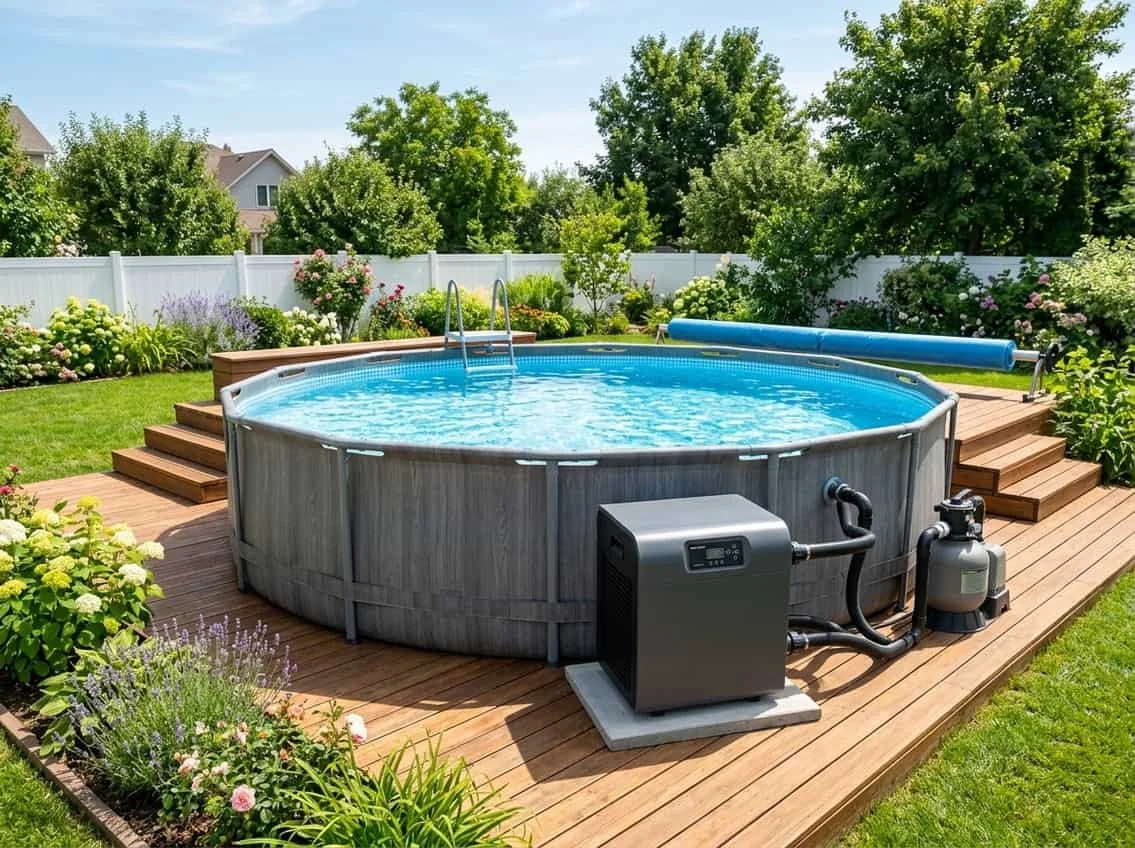
An above ground pool heater can extend your swimming season by several months and make your pool comfortable even when outdoor temperatures drop. The best above ground pool heaters include gas heaters for fast heating, electric heat pumps for energy efficiency, and solar heaters for the lowest operating costs. Each type works differently and suits different pool sizes, budgets, and climate conditions.
Last Updated: June 2026 | Will Montgomery is a mechanical engineer with hands-on experience evaluating pool heating systems. His recommendations are based on real-world installation and performance data across multiple pool types.
Selecting the right heater involves understanding how these systems work and what features matter most for your specific situation. Pool owners need to consider their pool volume, local climate, available fuel sources, and how often they plan to use their pool. The initial purchase price is just one factor, as ongoing operating costs can vary significantly between heater types.
This guide covers everything from basic heater mechanics to specific model recommendations and installation considerations for above ground pools. It also breaks down the true costs of ownership and provides practical tips for getting the most efficient performance from your heating system throughout the swimming season.
How Pool Heaters Work for Above Ground Pools

Pool heaters transfer energy to water as it circulates through your filtration system, raising the temperature before returning it to the pool. The heating method varies by type, with each system designed to handle the specific volume and circulation patterns of above ground pools.
Basic Heating Mechanisms
Gas heaters burn natural gas or propane in a combustion chamber. Water flows through a heat exchanger where it absorbs heat from the burning fuel. These heaters can raise water temperature by up to 30 degrees and work in any weather condition.
Electric heat pumps extract warmth from outside air rather than generating heat directly. A compressor and refrigerant system transfers this ambient heat to pool water passing through the unit. This process uses less electricity than direct heating but requires air temperatures above 50 degrees to work effectively.
Solar heaters use black tubing or panels to absorb sunlight. Water pumps through these heated coils before returning to the pool. The dark material converts solar radiation into thermal energy without any fuel or electricity costs. However, heating occurs slowly and depends entirely on sunny weather.
Above Ground vs. Inground Pool Needs
Above ground pools typically hold 8,000 to 15,000 gallons compared to 20,000 gallons or more for inground pools. This smaller volume means above ground pool heaters need lower BTU ratings to achieve the same temperature increase.
The raised position of above ground pools also affects heat retention. These pools lose heat faster through their exposed walls and surface area. Metal and resin frames conduct heat away from the water more readily than buried concrete walls.
Most above ground pool owners select heaters rated between 50,000 and 200,000 BTUs. Inground pools often require 250,000 to 400,000 BTUs. The installation process differs too, with above ground heaters designed for simpler connections to portable filtration systems.
Types of Pool Heaters and Their Pros and Cons

Pool owners can choose from three main heating options: gas, electric, and solar. Each type works differently and comes with distinct advantages and drawbacks that affect cost, heating speed, and energy use.
Gas Pool Heater
A gas pool heater burns either natural gas or propane to heat pool water quickly. Water flows through the heater while a combustion chamber burns fuel, then returns the heated water to the pool.
Gas heaters excel at rapid heating and work well in any climate. They can raise water temperature by up to 30 degrees, making them ideal for pools that need quick heating or are located in colder areas.
The main drawback is operating cost. Gas heaters consume more fuel than other options, leading to higher monthly bills. Installation also requires access to a natural gas line or propane tank, which adds to upfront expenses.
Pros:
- Heats water very quickly
- Works in cold weather
- Effective for large pools
Cons:
- High fuel costs
- Expensive installation
- Requires gas line access
Electric Pool Heater
Electric pool heaters include heat pumps and direct flow heaters. Heat pumps pull warmth from outside air to heat pool water, working like a reverse air conditioner. Direct flow heaters warm water on demand as it passes through the unit.
Heat pumps are the most energy-efficient electric option. The Hayward HeatPro heat pump works well for pools up to 13,000 gallons and uses less electricity than direct flow models.
These heaters need warm outside air to function properly. They struggle in temperatures below 50 degrees, limiting their use in colder climates. Installation costs range from a few hundred to several thousand dollars depending on the model.
Pros:
- Lower energy bills than gas
- Quiet operation
- Environmentally friendly
Cons:
- Doesn’t work well in cold weather
- Slower heating than gas
- Higher upfront cost than solar
Solar Pool Heater
Solar pool heaters use the sun’s energy to warm water at no operating cost. Water flows through black tubing or solar panels that absorb heat, then returns to the pool.
Solar heaters are the most affordable and energy-efficient option, costing just a few hundred dollars. They require no electricity or fuel to operate.
The main limitation is heating speed. An 8,000-gallon pool may only warm up by 5 degrees over four days. Large pools need multiple units connected together. Solar heaters also depend entirely on sunny weather to function.
Pros:
- No operating costs
- Easy to install
- Zero emissions
Cons:
- Very slow heating
- Requires direct sunlight
- Large pools need multiple units
Choosing the Right Pool Heater for Your Pool Size and Climate

Pool size and local weather conditions directly determine which heater will work best. A small pool in Florida needs a different solution than a large pool in Montana.
Small and Medium Pools
Pools under 5,000 gallons work well with heaters in the 16,000 to 30,000 BTU range. The Varpoolfaye 16000 BTU heat pump can heat a medium pool from 55 to 90 degrees in three hours. These compact units typically run on standard 120V outlets, which means no special electrical work.
Solar heaters offer another option for smaller pools. They cost nothing to operate but depend entirely on sunny weather. A quality solar mat can raise water temperature by 5 to 7 degrees on clear days.
Heat pumps are the best pool heater choice for most small to medium setups. They balance upfront cost with energy efficiency. Look for models with a COP rating of 4.0 or higher, which means they move four times more heat than the electricity they consume.
Large and High-Demand Scenarios
Pools over 8,000 gallons need heaters with 30,000 BTU or more. A 9,000-gallon pool can increase by 5 degrees in just a few hours with a 55,000 BTU inverter heat pump. Very large pools up to 21,000 gallons require 75,000 BTU units or higher.
Inverter technology makes a big difference in large pool heating. These systems adjust power consumption based on demand, which cuts energy costs significantly. They also maintain more consistent temperatures than standard on-off heaters.
Large above ground pool heaters usually need 220V electrical connections. This requires professional installation but provides the power needed for rapid heating. Most units include titanium heat exchangers that resist corrosion from saltwater and chemicals.
Performance in Different Climates
Warm climates with mild winters allow heat pumps to operate efficiently year-round. They work best when air temperatures stay above 50 degrees. In these conditions, a heat pump can extend the swimming season by several months with minimal energy costs.
Cold climates present challenges for standard heat pumps. Models with auto-defrost systems prevent ice buildup during cool evenings. Calculating the right BTU requirements becomes more critical in northern regions where ambient temperatures fluctuate.
Solar heaters only make sense in sunny climates. They fail to heat effectively on cloudy days or during early morning and evening hours. Pool owners in areas with inconsistent sunshine should consider heat pumps as their primary heating method and use solar as a supplement.
Top Features to Look for in an Above Ground Pool Heater

The right above ground pool heater balances power output with running costs while fitting your installation skills and maintenance capacity. BTU ratings determine heating speed, efficiency affects long-term expenses, and setup complexity varies widely between heater types.
Energy Efficiency and BTU Ratings
BTU ratings measure how much heat a pool heater produces per hour. A higher BTU output heats water faster, but the ideal rating depends on pool size and climate. Most above ground pools between 10,000 and 15,000 gallons need heaters with 50,000 to 100,000 BTUs.
Energy efficiency directly impacts operating costs. Heat pumps stand out as the most efficient heating option, delivering up to 5 kW of heat for every 1 kW of electricity used. This efficiency ratio, called COP (Coefficient of Performance), means significantly lower monthly bills compared to gas or electric resistance heaters.
Electric heaters use more power but work well for smaller pools or quick heating sessions. Gas heaters heat rapidly regardless of air temperature but cost more to operate. Solar heaters have zero operating costs once installed but depend on sunny weather and take longer to warm water.
Ease of Installation
Installation complexity varies by heater type and existing pool setup. Plug-and-play electric heaters simply connect to a standard outlet and pool pump, making them ideal for temporary or portable pools. These units require no professional installation or special wiring.
Heat pumps need proper electrical connections and adequate clearance for airflow. Most models require a dedicated circuit and professional installation. The upfront installation cost pays off through lower operating expenses over time.
Gas heaters demand the most complex installation. They require natural gas or propane lines, proper venting, and professional setup to meet safety codes. This adds several hundred dollars to the initial investment but provides rapid heating in any weather.
Maintenance Needs
Regular maintenance keeps pool heaters running efficiently and extends their lifespan. Heat pumps require the least upkeep, needing only periodic filter cleaning and annual professional inspections. The lack of combustion means fewer parts wear out.
Electric heaters need occasional element checks and descaling in areas with hard water. Mineral buildup reduces efficiency and can damage heating elements over time. A water softener or regular vinegar flushes prevent most issues.
Gas heaters demand more attention. Burners need cleaning, pilot lights require monitoring, and exhaust systems must stay clear. Professional service every year ensures safe operation and catches problems before they become expensive repairs. Solar systems need minimal care beyond keeping panels clean and checking for leaks in connections.
Best Pool Heater Models and Recommendations

The best above ground pool heater depends on pool size, climate, and budget, with gas heaters offering the fastest heating, electric heat pumps providing energy efficiency, and solar options delivering the lowest operating costs.
Editor’s Top Picks
The Raypak Natural Gas Pool Heater stands out as a top choice for its power and reliability. This gas pool heater features an electronic ignition system and LCD display for easy temperature control. It’s available in models ranging from 206,000 BTUs to 399,000 BTUs to match different pool sizes.
The Hayward HeatPro Heat Pump ranks as the best electric pool heater for above ground pools. It works efficiently for pools up to 13,000 gallons and includes a titanium heat exchanger. The unit runs quietly and features a defrost system that allows operation in cooler temperatures.
For solar heating, the GAME 72000-BB SolarPRO offers an affordable solution. Its curved design maximizes heat collection while preventing grass damage. The adjustable legs and threaded ports make it compatible with popular brands like Intex and Bestway pools.
Best for Budget
Solar heaters provide the most affordable entry point for pool heating. The SolarPRO solar heater costs only a few hundred dollars compared to several thousand for gas or electric models. It increases water temperature by about five degrees over four days in an 8,000-gallon pool.
Budget-conscious buyers should note that solar heaters have minimal operating costs since they use free energy from the sun. However, they work slowly and may require multiple units for larger pools. Bypass kits are needed to connect additional panels.
The upfront savings come with tradeoffs in heating speed and power. Solar options work best in sunny climates where consistent heating isn’t urgent.
High-Efficiency Choices
Electric heat pumps deliver the best energy efficiency among powered pool heaters. The Hayward HeatPro uses ambient air temperature to warm pool water, which significantly reduces electricity consumption compared to direct heating elements. It qualifies as a Low NOx heater, minimizing nitrogen oxide emissions.
Heat pumps work well in mild climates where air temperatures stay moderate. They pull heat from the surrounding air rather than generating it directly, making them cheaper to operate than gas heaters. The energy savings offset the higher initial cost over time.
These units heat water more slowly than gas models but maintain consistent temperatures efficiently. They’re ideal for pool owners who prioritize long-term operating costs over rapid heating.
Best for Cold Climates
Gas pool heaters excel in cold climates where rapid, powerful heating is essential. The Raypak models can raise water temperature by up to 30 degrees, making them the fastest heating option available. They work effectively regardless of outside air temperature.
Natural gas and propane heaters operate independently of weather conditions. Unlike heat pumps that struggle in cold air or solar heaters that need sunshine, gas units perform consistently. The combustion chamber generates direct heat as water flows through the system.
The Pentair MasterTemp 125 offers a more compact gas option for smaller pools up to 17,500 gallons. At 80 pounds, it fits in tight spaces where larger heaters won’t work. Its rotating digital display shows current water temperature at a glance. Both propane and natural gas versions are available.
Installation and Safety Considerations

Installing an above ground pool heater requires careful planning and attention to safety requirements. Gas and electric heaters have different installation needs, and choosing between professional help and DIY depends on your skills and local regulations.
Professional vs. DIY Installation
Electric pool heaters often require 240-volt electrical connections and proper grounding. Most areas require a licensed electrician to run new circuits and install disconnect switches. Gas pool heaters need natural gas or propane lines, which must meet strict building codes.
DIY installation is possible for some solar systems and smaller electric units with plug-in designs. However, gas and electrical hookups should be handled by licensed professionals to avoid safety hazards. Improper installation can void warranties and create fire or carbon monoxide risks.
Homeowners should check local permit requirements before starting any installation. Many jurisdictions require inspections for gas and high-voltage electrical work.
Location and Setup Tips
Pool heaters need adequate clearance for airflow and maintenance access. Heat pumps require at least 2-3 feet of space on all sides to pull in air efficiently. Gas pool heaters need proper venting and should sit at least 5 feet from windows or doors.
Place the heater on a level concrete pad or stable platform. The unit should connect to the pool’s filtration system after the filter but before any chlorination equipment. Plumbing connections must be tight and leak-free to maintain proper water flow.
Protect the heater from direct rain exposure when possible. Keep the area around the unit clear of leaves, debris, and combustible materials.
Safety Guidelines
Install carbon monoxide detectors near gas pool heaters, especially if the equipment sits close to enclosed spaces. All electrical connections need ground fault circuit interrupter (GFCI) protection to prevent shock hazards.
Never operate a gas heater without proper ventilation. Check gas connections regularly for leaks using soapy water. Turn off the heater and call a technician if you smell gas.
Keep children away from hot equipment surfaces and install lockable switches when possible. Read the manufacturer’s manual completely before operating any above ground pool heater for the first time.
Cost Analysis: Upfront and Ongoing Expenses
Above ground pool heaters vary widely in both purchase price and operating costs. Electric heat pumps require a larger investment upfront but cost less to run monthly, while gas heaters heat water faster but come with higher fuel bills throughout the season.
Purchase Price by Type
Solar heaters typically cost between $1,500 and $7,000 for the unit alone. Installation adds another $500 to $2,500, bringing the total solar heater installation cost to as much as $9,500.
Electric heat pumps range from $2,000 to $6,500 for equipment. Professional installation runs $500 to $1,000 extra. The combined cost reaches $2,500 to $7,500 for most pool owners.
Electric resistance heaters offer lower starting prices at $1,000 to $5,000 for the unit. Labor costs add $500 to $1,000. Total installation typically falls between $1,500 and $6,000.
Gas and propane heaters cost $1,500 to $6,000 for equipment. Installation labor adds $500 to $1,500. The complete gas heater installation ranges from $2,000 to $7,500.
Most pool owners should expect to pay between $1,600 and $4,000 total. The average installation cost sits around $2,800.
Energy Consumption
Solar heaters operate for free after installation since they use sunlight. Pool owners only pay for occasional maintenance and pump operation.
Electric heat pumps cost less to run than gas heaters. They work best in warmer climates where temperatures stay above 50 degrees. Their efficiency drops significantly in cold weather.
Gas heaters consume more fuel but heat water quickly. They work well for pool owners who swim occasionally and want fast temperature control. Operating costs vary by local fuel prices and usage patterns.
Electric resistance heaters use the most energy among electric options. They drain household electricity significantly but work well in any temperature.
Maintenance and Repairs
Solar heaters require minimal maintenance. The panels need occasional cleaning to remove debris. Most systems last 25 to 30 years with basic care.
Electric heat pumps need regular filter cleaning and annual professional inspections. The components typically last 10 to 15 years with proper maintenance.
Gas heaters require more frequent service. Pool owners should schedule annual inspections to check burners, vents, and gas lines. Parts may need replacement every 5 to 10 years.
All heaters benefit from winterization in cold climates. Draining water from the system prevents freeze damage and extends equipment life.
Extending Pool Season and Maximizing Heater Efficiency
From experience: A solar heater does help warm an above-ground pool earlier in the season, but if your pool typically goes in during late spring, the water may already be comfortable by the time you’re ready to swim — which makes the solar panel feel less essential than expected. It’s most valuable if you open early or close late.
A pool heater works best when paired with other heat-retention methods and smart temperature settings. These strategies reduce energy costs while keeping water warm for weeks or months longer.
Combining Heaters with Covers and Solar Options
Pool covers prevent heat loss through evaporation, which accounts for 70% of energy waste in heated pools. A cover traps warmth overnight and can reduce heating costs by 50-70%.
Solar blankets work well with any above ground pool heater type. The bubbles on these covers capture solar energy during the day while preventing heat escape at night. For gas and electric heaters, this combination means the system runs less frequently.
Pool owners can also add passive solar heaters alongside their primary heating system. Black coil solar panels cost a few hundred dollars and provide supplemental warming on sunny days. This reduces the load on electric heat pumps or gas units.
Using multiple heating options together extends swim season more effectively than relying on one method alone. The cover alone can add 2-3 weeks to the season, while a heater plus cover combination can extend swimming by several months.
Temperature Control Strategies
Setting the thermostat to 78-82°F balances comfort with efficiency. Each degree above 80°F increases energy use by 10-30% depending on the heater type.
Running the heater during off-peak electricity hours saves money with electric heat pumps. Most utility companies charge less between 9 PM and 6 AM. Programming the system to heat overnight maintains temperature without premium rates.
For gas heaters, heating the pool 24-48 hours before use is more efficient than constant operation. These units heat water quickly, so continuous running wastes fuel. Heat pumps work differently and perform better with steady operation in temperatures above 50°F.
Checking water chemistry weekly protects the heater from scale buildup and corrosion. Balanced pH and alkalinity levels prevent damage to heat exchangers, which extends equipment life and maintains heating efficiency.