

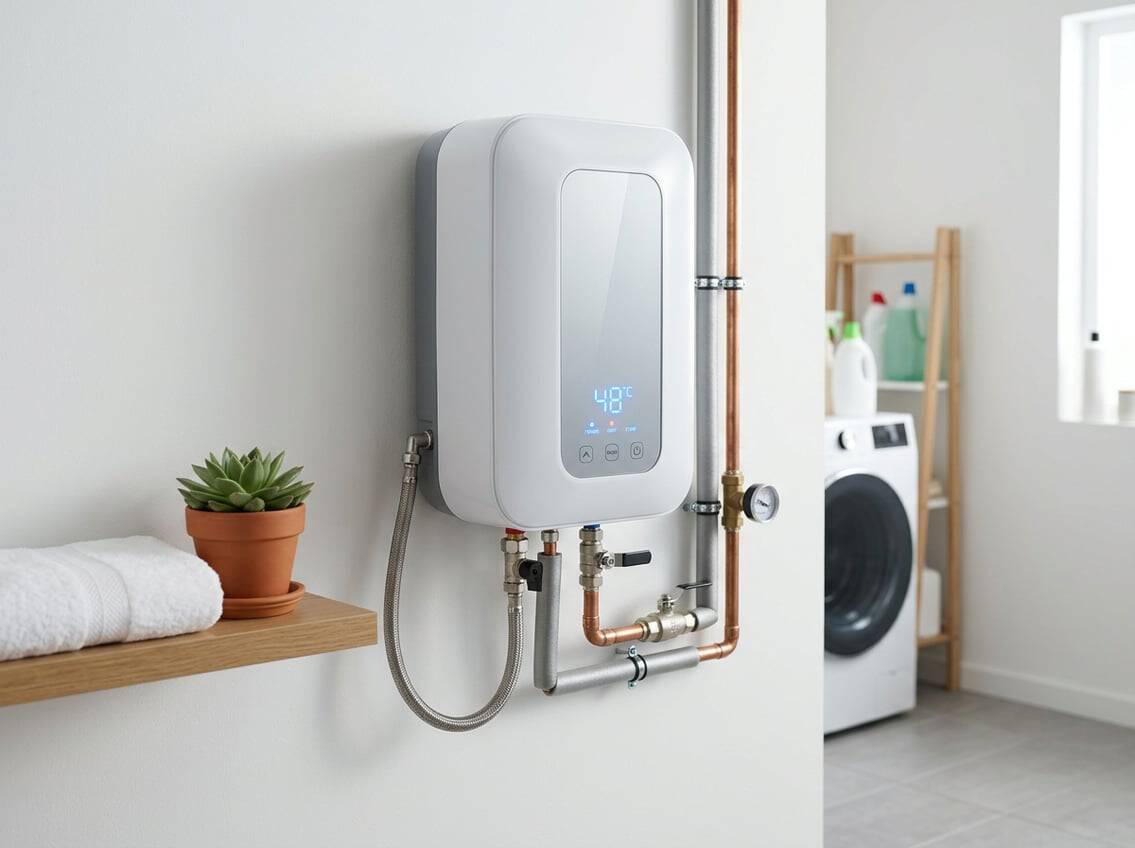
Electric tankless water heaters can save homeowners hundreds of dollars per year compared to traditional tank models, but not all units deliver the same level of efficiency. The difference between a mediocre unit and a highly efficient one can mean the gap between modest savings and cutting your water heating costs by up to 50%.
An electric tankless water heater heats water on demand using resistance heating elements that activate only when hot water is requested — eliminating the standby energy losses that account for 15–20% of a typical home’s water heating costs.
Last Updated: June 2026 | Will Montgomery has tested and reviewed electric tankless water heaters extensively, applying his engineering background to cut through marketing claims and identify which units actually deliver on efficiency ratings.
The most efficient electric tankless water heaters combine high energy factor ratings above 0.98, precise temperature controls, and self-modulating technology that adjusts power usage based on demand. Models like the EcoSmart ECO36 and Stiebel Eltron Tempra series stand out for their ability to heat water only when needed while maintaining consistent output temperatures.
Understanding what makes these units efficient goes beyond just looking at energy ratings. Flow rates, power requirements, installation location, and climate all play roles in determining how much energy a tankless water heater actually uses in real-world conditions.
Quick Answer: The most efficient electric tankless water heaters achieve up to 99% energy efficiency because they only heat water on demand with no standby losses. Top performers include the EcoSmart ECO 36, Stiebel Eltron Tempra series, and Rheem RTEX line — all offering Energy Factor ratings above 0.95.
How Electric Tankless Water Heaters Achieve High Efficiency
Electric tankless water heaters deliver superior efficiency through two main mechanisms: heating water only when needed and adjusting power output to match demand. These systems eliminate the constant energy drain of keeping a large tank hot 24/7.
On-Demand Heating Technology
Electric tankless units activate only when someone opens a hot water tap. Cold water flows through the unit and triggers a sensor that powers up the heating elements. The water passes through a heat exchanger where electric resistance coils rapidly raise the temperature to the desired level.
This on-demand approach eliminates standby heat loss completely. Traditional tank water heaters constantly reheat stored water as it cools, wasting energy even when no one uses hot water. Tankless water heater energy savings range from 24-34% compared to conventional tank models for typical households.
The heating elements turn off immediately when the tap closes. No energy goes toward maintaining water temperature between uses.
Self-Modulation and Digital Controls
Modern electric tankless systems adjust their power consumption based on flow rate and incoming water temperature. Digital thermostats monitor the water temperature in real time and increase or decrease electrical output accordingly.
Self-modulation means the unit uses only the exact amount of energy needed for current demand. Running one faucet requires less power than operating multiple fixtures simultaneously. The system responds instantly to changes in water flow.
Premium models achieve electric tankless water heater efficiency ratings up to 99.8% by fine-tuning power delivery. These digital controls prevent energy waste from overheating water beyond the set temperature. The precision helps reduce electricity costs while maintaining consistent hot water output.
Understanding Efficiency Ratings and Energy Factor

Electric tankless water heaters use two main efficiency metrics that help buyers compare models and estimate operating costs. The Uniform Energy Factor (UEF) measures how efficiently a water heater converts energy into hot water by combining heat transfer efficiency, recovery rate, and standby losses into one number.
Interpreting Energy Factor and UEF
The energy factor tankless water heater rating expresses the ratio of useful energy delivered as hot water to the total energy consumed over a 24-hour test cycle. Higher numbers indicate better performance and lower energy bills.
UEF replaced the older Energy Factor (EF) system as the Department of Energy’s standardized metric. Water heaters are assigned a UEF based on their bin category, which groups units by daily hot water usage in gallons.
Electric tankless models typically fall into these bins:
- Very Small: Less than 1.7 GPM
- Low: 1.7 to 2.8 GPM
- Medium: 2.8 to 4 GPM
- High: 4 GPM or more
A UEF can only be compared within the same bin. A medium-bin heater with a 0.93 UEF performs better than another medium-bin unit rated at 0.87 UEF.
Comparing Efficiency Across Brands
Electric tankless water heater efficiency varies significantly between manufacturers. Most quality electric tankless models achieve UEF ratings between 0.90 and 0.99, with some premium units reaching 0.98 or higher.
Brand comparisons should focus on units within the same bin category and similar flow rates. A 3.5 GPM unit from one manufacturer might show different efficiency than a 3.5 GPM model from another brand due to heating element design and internal components.
Look for the yellow Energy Guide label when comparing models. This label shows the UEF rating and estimated annual operating costs based on national average electricity rates. The label allows direct comparison between brands for units in the same category.
Temperature rise capability also affects real-world efficiency. A unit rated for 0.96 UEF might perform differently in cold climates where incoming water temperatures drop significantly below test conditions.
Top Picks for the Best Electric Tankless Water Heaters

Several models stand out in 2026 for their performance and energy savings. The EcoSmart ECO36 leads as the most efficient whole-house option, while other units excel in specific categories like flow control and budget value.
Best Overall Models for 2026
The EcoSmart ECO36 ranks as the top choice for whole-house applications. This 36kW unit features temperature rise control that detects changes of less than one degree Fahrenheit. It runs on four 40-amp breakers and takes up 90% less space than traditional tank systems.
The Stiebel Eltron Tempra 24 Plus excels in flow control technology. It reduces flow rates automatically to maintain consistent temperatures and can save up to 20% on water heating costs. The unit handles about 5 gallons per minute, making it suitable for smaller homes or apartments with one bathroom.
For those seeking premium performance, the Bosch Tronic WH27 delivers reliable hot water at higher efficiency levels. It weighs just 20 pounds and can cut monthly hot water bills by up to two-thirds. The self-modulating technology adjusts power consumption based on demand.
Most Efficient Options for Small and Large Homes
Small homes benefit from the Rheem RTEX-13, which achieves 99.8% energy efficiency. It provides up to 3.17 gallons per minute with a simple external temperature control. Installation takes about one hour due to its compact design.
The Stiebel Eltron Tempra Plus 29kW serves larger households effectively. Its advanced flow control maintains stable temperatures between 86 and 125 degrees Fahrenheit. The system automatically adjusts water flow to prevent temperature fluctuations during peak usage times.
Point-of-use applications work well with the Sio Green IR260 POU. This infrared model ranges from 3.4kW to 18kW and uses no-coil, no-metal design to prevent corrosion. The unit measures less than 20 inches in length and requires minimal maintenance.
Standout Features and Innovations
Modern electric tankless water heater efficiency depends on smart technology integration. The EcoSmart ECO 27 automatically adjusts energy consumption based on water volume and incoming temperature. It can run one sink and three showers simultaneously while maintaining water pressure.
Digital controls appear on newer models like the Rinnai RUC98iN Ultra. The front panel allows temperature locking to prevent unauthorized adjustments. This gas-powered alternative comes with a 12-year warranty.
LED indicators have become standard on units like the Rheem RTEX-13. These bright displays show temperature settings and system status at a glance. The heating chambers adjust inlet temperatures with one-degree precision for consistent performance.
Energy Savings and Environmental Benefits

Electric tankless water heaters deliver measurable cost reductions on monthly utility bills while decreasing household carbon emissions through improved efficiency ratings and reduced energy waste.
Reduction in Utility Bills
Electric tankless water heaters can cut water heating costs by 24% to 50% compared to traditional tank models. These units eliminate standby heat loss since they only heat water when someone turns on a faucet or shower. A household using 41 gallons or less of hot water daily can achieve energy efficiency gains of 24-34%.
The self-modulating technology in modern units adjusts power consumption based on water flow and temperature needs. This feature prevents energy waste by using only the electricity required for the actual hot water demand. Some homeowners report their electric tankless water heater efficiency reaches 99.8%, meaning almost all electricity consumed goes directly into heating water.
Monthly savings vary based on household size and usage patterns. A family that previously spent $50 per month on water heating might reduce that cost to $25-38 with a tankless system.
Impact on Carbon Footprint
Electric tankless water heaters reduce carbon emissions by consuming less electricity throughout their operational life. Units with Energy Star certification meet strict standards set by the Environmental Protection Agency for maximum energy savings and environmental benefits.
The environmental advantages extend beyond daily operation. These systems last approximately 20 years compared to 10-15 years for tank heaters, which means fewer units end up in landfills. Manufacturing one water heater instead of two over the same period reduces resource extraction and production emissions.
Lower energy consumption directly translates to reduced power plant output requirements. A household switching from a standard tank to an efficient tankless model prevents approximately 1,500-2,000 pounds of CO2 emissions annually.
Comparing Electric vs Gas Tankless Water Heaters

Electric models achieve efficiency ratings of 98% or higher, while gas units typically reach 80-85%. Electric units cost less upfront and require simpler installation, though gas models may offer lower monthly operating costs in some regions.
Efficiency Differences
Electric tankless water heaters are more efficient than their gas counterparts by a significant margin. Electric models convert nearly all incoming energy into hot water, achieving efficiency ratings above 98%. Gas tankless units lose heat through exhaust venting and combustion processes, limiting their efficiency to the 80-85% range.
The energy factor of a tankless water heater measures how effectively it converts fuel into hot water. Electric units maintain their high efficiency across all operating conditions. Gas models experience greater efficiency losses during startup and shorter usage periods.
This efficiency gap means electric systems waste less energy during operation. For every 100 units of electricity consumed, an electric tankless heater delivers 98 units as hot water. A gas unit delivers only 80-85 units from the same energy input, with the rest lost as exhaust.
Installation and Operating Costs
Electric tankless water heaters cost between $500 and $700 for the unit itself, while gas tankless water heaters can cost $1,000 or more. Installation expenses differ substantially between the two types. Electric models don’t require venting systems or gas line connections, reducing installation complexity and cost.
Gas units need proper venting and combustion air supply systems, which increase installation expenses. These systems ensure safe operation by removing exhaust gases from the home. Electric models can be installed in closets, under sinks, or in small spaces without ventilation requirements.
Operating costs depend on local utility rates. Natural gas typically costs less per unit of energy than electricity, giving gas heaters lower monthly expenses in many areas. However, electricity prices remain more stable over time, while gas prices are expected to rise significantly in coming years. Electric units also require minimal maintenance compared to gas models, which need annual servicing for safe operation.
Key Factors to Consider for Maximum Efficiency
From experience: For most homes, a whole-house tankless does the job fine once it reaches operating temperature — the frustration is just that initial wait. A point-of-use electric tankless at the bathroom solves exactly that: it delivers hot water immediately at the fixture without replacing what’s already working well for the rest of the house.

Getting the most out of an electric tankless water heater depends on proper sizing for your household needs and understanding how your local climate affects performance. These two factors directly impact how much energy the unit consumes and whether it can deliver hot water consistently.
Sizing and Flow Rate Requirements
The flow rate determines how many gallons per minute a unit can heat while maintaining the desired temperature. A typical shower uses 2.5 GPM, while a bathroom sink needs about 0.5 GPM.
Households running multiple fixtures simultaneously need higher flow rates. Running two showers at once requires at least 5 GPM capacity. A unit that’s too small will struggle to maintain temperature when demand increases.
The relationship between kilowatt rating and flow rate affects electric tankless water heater efficiency. Higher kW units like 27-36 kW models handle whole-house demands better than 13 kW units designed for single applications.
Electric demand also matters for installation. Whole house electric tankless water heaters often require 150-200 amp electrical service with multiple dedicated breakers. Undersized electrical systems force units to work harder and waste energy.
Impact of Water Temperature and Climate
Groundwater temperature varies significantly by region and season. Northern climates have incoming water temperatures around 40°F in winter, while southern areas see 70°F or higher.
This temperature difference dramatically affects efficiency. A unit must work much harder to raise 40°F water to 120°F compared to heating 70°F water to the same temperature. The 80-degree rise requires nearly twice the energy of a 50-degree rise.
Cold climate residents need higher kW ratings to maintain adequate flow rates. A 24 kW unit providing 3 GPM in warm climates might only deliver 1.5 GPM in freezing conditions.
Energy efficiency ratings reflect optimal conditions, but real-world performance depends on incoming water temperature. Units with self-modulating technology adjust power consumption based on actual demand and inlet temperature, preventing energy waste during warmer months or lower demand periods.
Maintenance Tips and Longevity for Efficient Performance
Electric tankless water heaters need regular care to maintain peak efficiency and avoid performance drops. Simple tasks like flushing the system and cleaning filters can prevent mineral buildup that reduces heating capacity and increases energy use.
Protecting Your Investment
Installing a water softener provides one of the best defenses against scale buildup in areas with hard water. Mineral deposits from calcium and magnesium accumulate inside the heat exchanger and reduce electric tankless water heater efficiency by forcing the unit to work harder to heat water.
Cleaning inlet water filters every few months prevents debris from entering the system and restricting water flow. Clogged filters reduce pressure and can cause the heater to cycle on and off frequently, wasting electricity.
Checking electrical connections annually helps identify loose wires or corrosion before they cause system failures. Users should also inspect the unit for error codes that indicate operational issues requiring attention.
Routine Servicing Strategies
Annual flushing and descaling removes mineral deposits that interfere with heat transfer and efficiency. Homes with hard water may need more frequent flushing every six months to prevent excessive buildup.
Professional technicians can perform thorough inspections that include testing heating elements, verifying proper voltage, and ensuring all safety features work correctly. They can also measure the unit’s actual energy consumption to confirm it still operates at rated efficiency levels.
Keeping the area around the heater clean and well-ventilated helps prevent overheating and allows proper airflow for cooling. Users should maintain at least a few inches of clearance on all sides of the unit for optimal performance.
Frequently Asked Questions
What is the most energy-efficient electric tankless water heater?
Electric tankless heaters are inherently high-efficiency, with most models achieving 98–99% energy factor ratings. The Stiebel Eltron Tempra series and EcoSmart ECO line consistently top efficiency charts, with the added benefit of self-modulating power — only drawing the wattage actually needed.
How much electricity does an electric tankless water heater use?
A whole-house electric tankless unit like the EcoSmart ECO 36 draws up to 36kW (150 amps at 240V) at peak demand. However, self-modulating models only use that maximum when truly needed — average daily consumption for a household of four typically runs 10–15 kWh.
Can an electric tankless water heater handle a whole house?
Yes, in most climates. A 27–36kW unit can supply 2–3 simultaneous uses in warm regions. In colder climates where groundwater is below 50°F, you may need a 36–40kW unit or a point-of-use heater for additional bathrooms.
Is electric or gas more efficient for tankless water heating?
Electric wins on efficiency — 98–99% vs 80–95% for gas. But operating cost depends on your local utility rates. In areas with expensive electricity, a high-efficiency gas model may cost less to run despite the lower efficiency rating.