

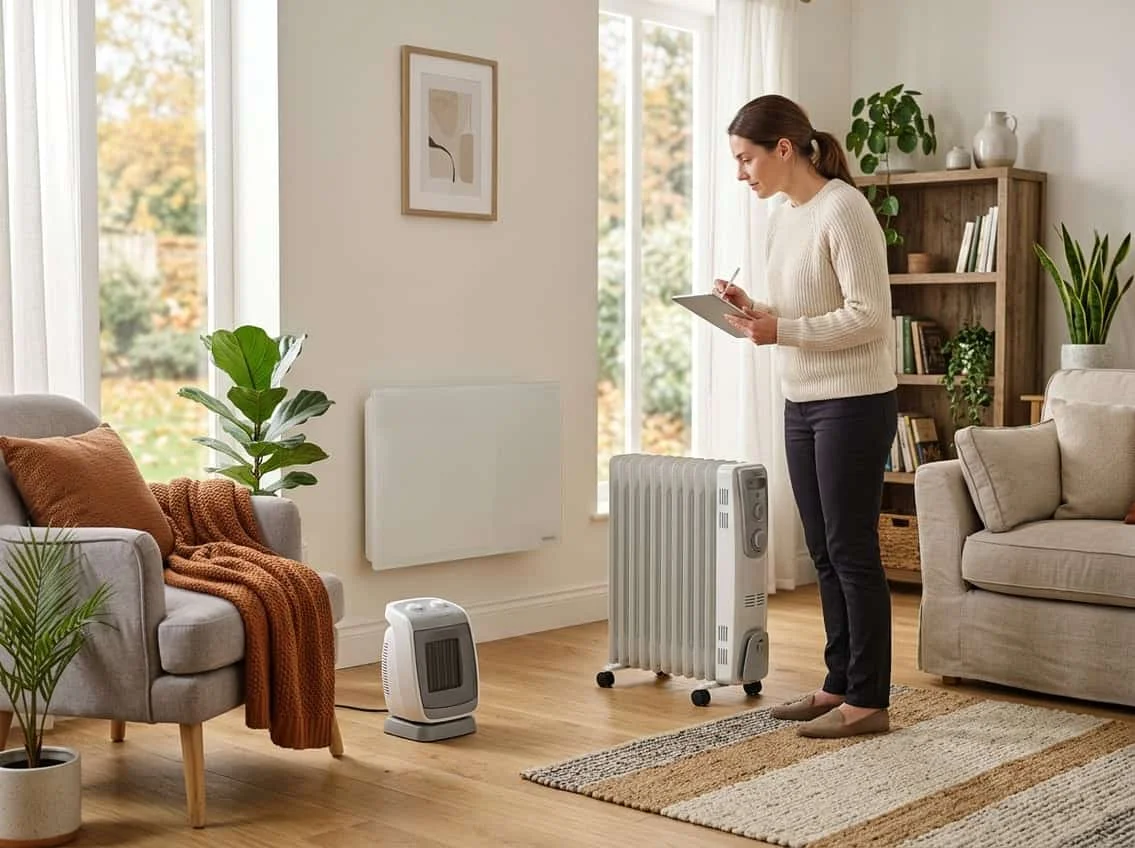
Choosing the right heater depends on understanding your space size, heating needs, and budget. Many people struggle with picking between different heater types and worry about wasting money on a unit that won’t keep them warm enough or uses too much energy.
To find the right heater, calculate your room’s square footage and multiply by 10 watts per square foot, then select a heater type that matches your specific heating situation and lifestyle needs. For example, a 150-square-foot room needs about 1,500 watts of heating power to stay comfortable during cold weather.
This guide breaks down everything from calculating the correct heater size to comparing different heater types so anyone can make a smart purchase decision. Whether someone needs a portable space heater for a bedroom or a powerful unit for a garage, understanding the basics helps avoid costly mistakes and ensures a warm home all winter long.
Key Takeaways
- Calculate heater size using 10 watts per square foot of room space for proper heating capacity
- Different heater types like radiant, convection, and infrared work better for specific rooms and situations
- Look for energy-saving features like programmable thermostats and safety features like overheat protection when buying a heater
Last Updated: May 2026 | Will Montgomery has an engineering background and has evaluated heaters across all major types — electric, propane, natural gas, and infrared. He draws on hands-on experience to help homeowners match heater output, fuel source, and safety features to their specific space.
Fundamentals of Heater Sizing

Getting the heater size right depends on calculating your room’s square footage, understanding power requirements in watts or BTUs, and adjusting for factors like insulation quality and local climate conditions.
From experience: The decision always starts with safety — is this heater appropriate for the space? From there, the key question is how often it will actually run. For a weekend project or a one-time outdoor event, fuel cost is almost irrelevant. For a heater running daily through a six-month winter, ongoing energy cost is everything. One factor that often gets overlooked: if the heat is needed as emergency backup during power outages, electric is completely off the table — a propane or natural gas unit is the only option that works when the grid goes down. That single constraint narrows the field fast.
Room Measurements and Wattage Calculations
The first step in determining what size heater you need is measuring the room. Calculate square footage by multiplying the room’s length by its width. A room that measures 12 feet by 15 feet equals 180 square feet.
The standard rule for calculating heater wattage is 10 watts per square foot. A 180-square-foot room would need 1,800 watts of heating power. This calculation provides a baseline for average conditions.
Most portable heaters max out at 1,500 watts due to standard electrical outlet limitations. This wattage level effectively heats spaces up to 150 square feet under typical conditions.
BTU Ratings and Conversion
BTU stands for British Thermal Unit, which measures the energy needed to heat one pound of water by one degree Fahrenheit. Many heaters list their output in BTUs rather than watts.
The conversion is straightforward: one watt equals 3.41 BTUs. A 1,500-watt heater produces approximately 5,115 BTUs. To convert BTUs to watts, divide the BTU rating by 3.41.
The general guideline suggests 34 BTUs per square foot for adequate heating. A 150-square-foot room would require about 5,100 BTUs based on this calculation.
Adjusting for Insulation, Ceilings, and Climate
Standard calculations assume average insulation and eight-foot ceilings. Homes with poor insulation, older windows, or air leaks need more heating power per square foot.
Geographic location significantly impacts heating requirements. Homes in colder climates need higher wattage than the basic 10-watt rule suggests. A house in Minnesota requires more heating capacity than one in Georgia for the same square footage.
Rooms with ceilings higher than eight feet need additional power. Multiply the standard wattage by 1.25 for 10-foot ceilings and by 1.5 for 12-foot ceilings. Well-insulated newer homes with energy-efficient windows may function properly with slightly less power than the standard formula indicates.
Types of Heaters and How They Work

Heaters come in many forms, each designed to deliver warmth through different methods and fuel sources. The main differences lie in whether they’re portable or fixed, and whether they run on electricity or gas.
Overview of Common Heater Types
Different types of heaters work in distinct ways to warm a space. Radiant heaters deliver direct heat to objects and people in their path, making them ideal for quick, targeted warmth. They work well in rooms where instant heating is needed.
Convection heaters warm the air itself, which then circulates throughout the room. These units create consistent, even temperatures and work best in enclosed spaces. Oil-filled radiators fall into this category and stay warm even after being turned off.
Infrared heaters use electromagnetic radiation to heat objects directly without warming the air first. They’re energy efficient because they don’t waste heat on empty space. Fan-forced heaters push warm air through a room using a built-in fan, making them effective for larger areas but noisier than other options.
Wood-burning stoves provide high heat output with a traditional feel, while pellet stoves burn compressed wood pellets for cleaner, more efficient heating.
Portable vs Fixed Heating Solutions
Portable heaters can be moved from room to room as needed. Most models plug into standard outlets and start working immediately. Tower heaters, ceramic heaters, and small radiant units fall into this category. They heat spaces quickly but work best for single rooms or small areas.
Fixed heating solutions stay in one location permanently. Baseboard heaters mount along walls to circulate warm air throughout a room. Wall-mounted heaters save floor space while delivering consistent warmth. These units often provide better long-term efficiency than portable options because they’re sized specifically for their space.
Fixed heaters require professional installation but offer more permanent heating solutions. They integrate into a home’s design and can heat larger areas more effectively. Portable heaters offer flexibility and lower upfront costs, making them practical for temporary heating needs or supplemental warmth.
Electric vs Gas Heater Comparison
Electric heaters convert 100 percent of their energy into heat. They’re safe for indoor use, require no venting, and start warming a space instantly. Electric models work well in bedrooms, living rooms, and offices where safety and convenience matter most.
Gas heaters burn natural gas or propane to produce heat. They generate higher BTU outputs than electric models, making them powerful enough for large, poorly insulated spaces. However, gas-powered heaters need proper ventilation to prevent carbon monoxide buildup and cannot be used safely in enclosed indoor spaces without appropriate venting systems.
Electric heaters cost less upfront and need minimal maintenance. Gas heaters may offer lower operating costs in areas where natural gas is cheap, but they require professional installation and regular inspections. The choice depends on available utilities, space size, and whether indoor or outdoor heating is needed.
Comparing Fuel and Power Sources

Different fuel and power sources offer distinct advantages depending on your heating needs and location. Understanding how propane compares to electricity and how indoor heaters differ from outdoor models helps you select the right option for your situation.
Propane vs Electric Heater Pros and Cons
Propane heaters cost about $35.58 per million BTUs and achieve 96% efficiency, making them highly effective for heating. They work well in off-grid locations where electricity isn’t available. Propane provides portability and continues operating during power outages.
Electric heaters cost around $52.75 per million BTUs but reach 98% efficiency. They require no fuel storage and produce no direct emissions at the point of use. Installation is simpler since most homes already have electrical outlets.
Propane advantages: Works without electricity, heats spaces faster, and costs less to operate in most regions. Propane units generate more heat output per unit.
Propane disadvantages: Requires tank storage and refills, involves handling combustible fuel, and needs proper ventilation for safe indoor use.
Electric advantages: No fuel delivery needed, safer for enclosed spaces, and requires minimal maintenance.
Electric disadvantages: Higher costs in cold climates and complete dependency on power availability make electric heaters less practical during outages.
Indoor vs Outdoor Heater Applications
Indoor heaters must meet strict safety standards for enclosed spaces. Electric models work best indoors since they produce no combustion byproducts or carbon monoxide. Propane heaters designed for indoor use include oxygen depletion sensors and automatic shut-off features.
Outdoor heaters handle exposure to weather and operate in open-air environments. Propane patio heaters are popular for outdoor spaces because they provide intense heat that isn’t affected by wind. They don’t require electrical outlets, allowing placement anywhere.
Indoor heaters prioritize even heat distribution and quiet operation. They often include thermostats for temperature control and safety features like tip-over protection.
Outdoor models focus on directional heat output to warm people rather than air. They typically have higher BTU ratings to compensate for heat loss in open areas. Most outdoor heaters use propane or natural gas rather than electricity due to power requirements and cord limitations.
Room-Specific Heater Recommendations

Different rooms require different heating approaches based on their size, insulation, and usage patterns. Safety requirements and heater types also vary depending on whether the space is indoors, outdoors, or has special conditions like moisture or ventilation needs.
Space Heater for Bedroom or Small Room
Electric ceramic heaters work best for bedrooms and small rooms up to 200 square feet. These units typically range from 750 to 1,500 watts and provide safe, quiet operation during sleep hours.
Safety features are critical in bedroom heaters. Look for models with tip-over shutoff switches and overheat protection. The unit should have a cool-touch exterior to prevent burns if someone accidentally contacts it during the night.
Noise level matters significantly in bedrooms. Oil-filled radiator heaters operate silently and provide steady warmth without fans. They take longer to heat up but maintain consistent temperatures throughout the night.
Personal heaters under 900 watts can work for very small bedrooms or dorm rooms. However, these lower-wattage units often underperform in rooms larger than 100 square feet.
Heater for Garage
Garage heaters need higher power output to combat poor insulation and cold concrete floors. Electric units rated at 4,000 to 5,000 watts handle most single-car garages, while two-car garages may need 7,500 watts or more.
Propane and natural gas heaters provide faster heating for garages. However, these units require proper ventilation since they produce carbon monoxide. Never use propane heaters in enclosed spaces without adequate airflow.
Mounting options matter in garage spaces. Ceiling-mounted or wall-mounted electric heaters save floor space and keep the unit away from tools, vehicles, and stored items. Portable electric models work if the garage has dedicated circuits that can handle the power draw.
Heater for Patio or Outdoor Space
Propane patio heaters remain the most popular choice for outdoor heating. These freestanding units typically produce 40,000 BTUs and warm areas up to 15 feet in diameter.
Electric infrared heaters work well for covered patios with nearby outlets. Wall-mounted or ceiling-mounted infrared models direct heat downward onto people rather than trying to warm the air. This makes them more efficient in open-air settings.
Natural gas patio heaters offer a permanent solution for outdoor spaces. They require professional installation and gas line connections but eliminate the need to refill propane tanks.
Weather resistance is essential for any outdoor heater. Look for units with waterproof ratings and rust-resistant materials designed to withstand rain and humidity.
Heater for Pool
Pool heaters fall into three main categories: gas, electric heat pumps, and solar. Gas heaters heat water quickly regardless of air temperature but cost more to operate. Heat pumps work efficiently in temperatures above 50°F and cost less to run long-term.
Sizing a pool heater depends on pool volume and desired temperature rise. A 400,000 BTU gas heater typically handles pools up to 20,000 gallons in moderate climates.
Solar pool heaters cost nothing to operate after installation but require sufficient roof space and sunlight exposure. They work best in warm, sunny climates where they supplement rather than replace traditional heating methods.
Heat pump pool heaters need proper sizing based on pool surface area rather than volume. Most residential pools need units rated between 50,000 and 140,000 BTUs.
Selecting an Energy Efficient Heater

Understanding efficiency ratings and smart heating practices helps homeowners reduce energy bills while maintaining comfortable temperatures throughout winter months.
Efficiency Ratings and Operating Costs
Electric heaters convert nearly 100% of electricity into heat, but this doesn’t mean all models cost the same to run. The key difference lies in wattage and heating method rather than efficiency percentages.
Most space heaters use between 750 and 1,500 watts. A 1,500-watt heater running for 8 hours costs approximately $1.44 per day at average electricity rates. Lower wattage models reduce costs proportionally but also produce less heat.
Common Heater Types and Their Characteristics:
- Ceramic heaters: Quick heating, good for small to medium rooms
- Infrared heaters: Heat objects directly, work well for spot heating
- Oil-filled radiators: Retain heat longer, ideal for continuous use
- Micathermic heaters: Combine convection and radiant heat
When comparing energy efficient heater options, buyers should look beyond the efficiency percentage. The real savings come from matching heater size to room size and choosing models with thermostats that cycle on and off automatically.
Tips to Maximize Heating Efficiency
Proper heater placement makes a significant difference in performance. Position heaters away from windows and exterior walls where heat escapes more easily. Place units in central locations to distribute warmth evenly throughout the room.
Programmable thermostats prevent energy waste by maintaining set temperatures without constant adjustment. Models with digital controls typically offer more precise temperature management than basic dial settings.
Energy-Saving Practices:
- Close doors to heated rooms
- Use draft stoppers under doors
- Lower central heating when using space heaters
- Clean heater filters monthly
- Keep vents and grilles unobstructed
Combining proper equipment maintenance with insulation improvements can reduce heating costs by approximately 30%. Supplementing central heating with zone heating in frequently used rooms often proves more economical than heating an entire home.
Matching Heater Features to Your Needs

Modern heaters come with various features that impact safety, convenience, and cost. Selecting the right combination depends on how and where someone plans to use the heater.
Key Safety and Convenience Features
Safety features should be the top priority when choosing a space heater. A tip-over shutoff switch automatically turns the heater off if it gets knocked over, which is essential in homes with children or pets. An overheat sensor stops the unit from running if internal temperatures get too high.
Look for heaters with a safety certification label from UL Solutions, ETL, or CSA. These labels confirm the product meets U.S. safety standards.
Essential convenience features include:
- Programmable thermostat to maintain set temperatures
- Timer functions for automatic shutoff
- Remote control for adjusting settings from across the room
- Multiple heat settings to control energy use
- Handles or wheels for easy portability
A programmable thermostat saves energy by cycling the heater on and off as needed. Remote controls and timers add comfort but increase the price. Someone who plans to move their heater between rooms needs a lightweight model with a handle or one with wheels for larger units.
When to Consult a Professional
Most portable electric heaters simply plug into standard outlets and require no professional help. However, certain situations need expert guidance.
Someone should consult an HVAC professional if their whole-home heating system fails regularly or doesn’t keep spaces warm. A technician can identify whether poor insulation, ductwork problems, or system failures cause the issue. Professional help is also necessary for installing permanent heating solutions like wall-mounted units, baseboard heaters, or natural gas systems.
An electrician should evaluate older homes before using high-wattage heaters. Outdated wiring may not handle the electrical load safely. Anyone experiencing frequent circuit breaker trips when running a heater needs professional inspection.
Professional consultation helps avoid fire hazards and ensures the heating solution matches the actual problem rather than just masking symptoms with temporary fixes.
Maintenance and Performance Optimization
Keeping a heater running efficiently requires monthly filter checks and annual professional inspections. Addressing common problems like uneven heating or strange noises prevents costly repairs.
Regular Maintenance Routines
Air filters need checking every month and replacement every 1-3 months depending on usage. Dirty filters restrict airflow and force the heater to work harder.
Homeowners should test carbon monoxide detectors monthly and inspect vents for blockages. These simple checks prevent safety hazards and maintain proper airflow.
Annual professional servicing catches problems before they become major issues. Technicians perform combustion analysis, check electrical connections, and verify proper gas pressure.
Key Maintenance Schedule:
- Monthly: Replace filters, test detectors
- Annually: Professional inspection, thermostat calibration
- Every 3-5 years: Duct cleaning
Tankless water heaters require yearly flushing to remove mineral deposits. The process involves circulating a vinegar solution through the system for 45-60 minutes.
Troubleshooting Common Issues
Uneven heating between rooms often indicates duct problems. Homeowners should check for blocked vents, leaking ductwork, or unbalanced dampers.
Strange noises point to specific problems. Banging sounds indicate dirty burners or delayed ignition. Squealing suggests blower motor issues. Rumbling means sediment buildup in boilers.
The heater not turning on usually stems from thermostat problems, tripped breakers, or dirty flame sensors. Checking these components first saves time and money.
Short cycling happens when the heater turns on and off frequently. This problem results from oversized units, clogged filters, or faulty thermostats. It increases energy bills and wears out components faster.
Frequently Asked Questions
Choosing the right heater involves understanding room size, insulation quality, and climate conditions. BTU calculations and space measurements help determine the heating capacity needed for comfort and efficiency.
How do I calculate the right heater size for a room?
The basic calculation multiplies room volume by a temperature rise factor. Room volume equals length times width times height in feet.
A typical temperature rise factor ranges from 20 to 30 depending on insulation and climate. Well-insulated rooms need fewer BTUs while poorly insulated spaces require 10-20% more heating capacity.
Each person in the room adds about 600 BTUs to the total requirement. Climate also matters, with cold regions needing 10-20% more BTUs than moderate areas.
What size heater is appropriate for heating an entire house?
Whole-house heating requires professional assessment rather than simple calculations. A qualified HVAC technician performs what’s called a Manual J calculation that accounts for every room, window, door, and insulation level.
Central heating systems typically range from 40,000 to 100,000 BTUs for average homes. The exact size depends on square footage, ceiling height, insulation, number of windows, and local winter temperatures.
How many BTUs are needed to heat 1,500 square feet?
A 1,500 square foot space with standard 8-foot ceilings typically needs 30,000 to 45,000 BTUs. This assumes average insulation and moderate climate conditions.
Cold climates may push requirements toward 54,000 BTUs. Well-insulated homes in warmer regions might only need 27,000 BTUs.
The calculation changes with ceiling height since taller rooms contain more air to heat. Open floor plans also distribute heat differently than divided spaces.
What factors determine the BTU requirement for a space?
Room dimensions form the foundation of any heating calculation. Length, width, and height create the total volume that needs warming.
Insulation quality significantly impacts heat retention. Rooms with good insulation keep warmth inside while poorly insulated spaces lose heat through walls, windows, and ceilings.
The number of occupants matters because people generate body heat. Climate zone affects baseline requirements, with colder areas needing more power than warm regions.
Window size and quantity increase heat loss. Desired temperature also plays a role, as higher settings demand more BTUs.
What size electric heater should I choose for my room dimensions?
A small bedroom of 100-150 square feet needs 3,000 to 5,000 BTUs. Living rooms of 250-400 square feet require 6,000 to 9,000 BTUs for adequate warmth.
Electric heaters operate at nearly 100% efficiency since they convert all electricity directly to heat. This makes them reliable for maintaining consistent temperatures in properly sized spaces.
Rooms with large windows or poor insulation need units toward the higher end of the range. Smaller, well-insulated spaces work fine with lower capacity models.
What heater capacity is recommended for a garage in cold weather?
A standard 2-car garage requires 10,000 to 20,000 BTUs depending on size and insulation. Most garages lack insulation, which increases heating demands significantly.
The exact requirement depends on whether the garage connects to the house or stands alone. Attached garages retain slightly more heat while detached structures lose warmth quickly.
Gas or infrared heaters work well for garages because they handle large, uninsulated spaces effectively. Electric models may struggle to maintain comfortable temperatures in extremely cold conditions.